Digital Marketing for Small Businesses: A Practical Guide to Building a Strategy That Works
Digital Marketing for Small Businesses: A Practical Guide to Building a Strategy That Works
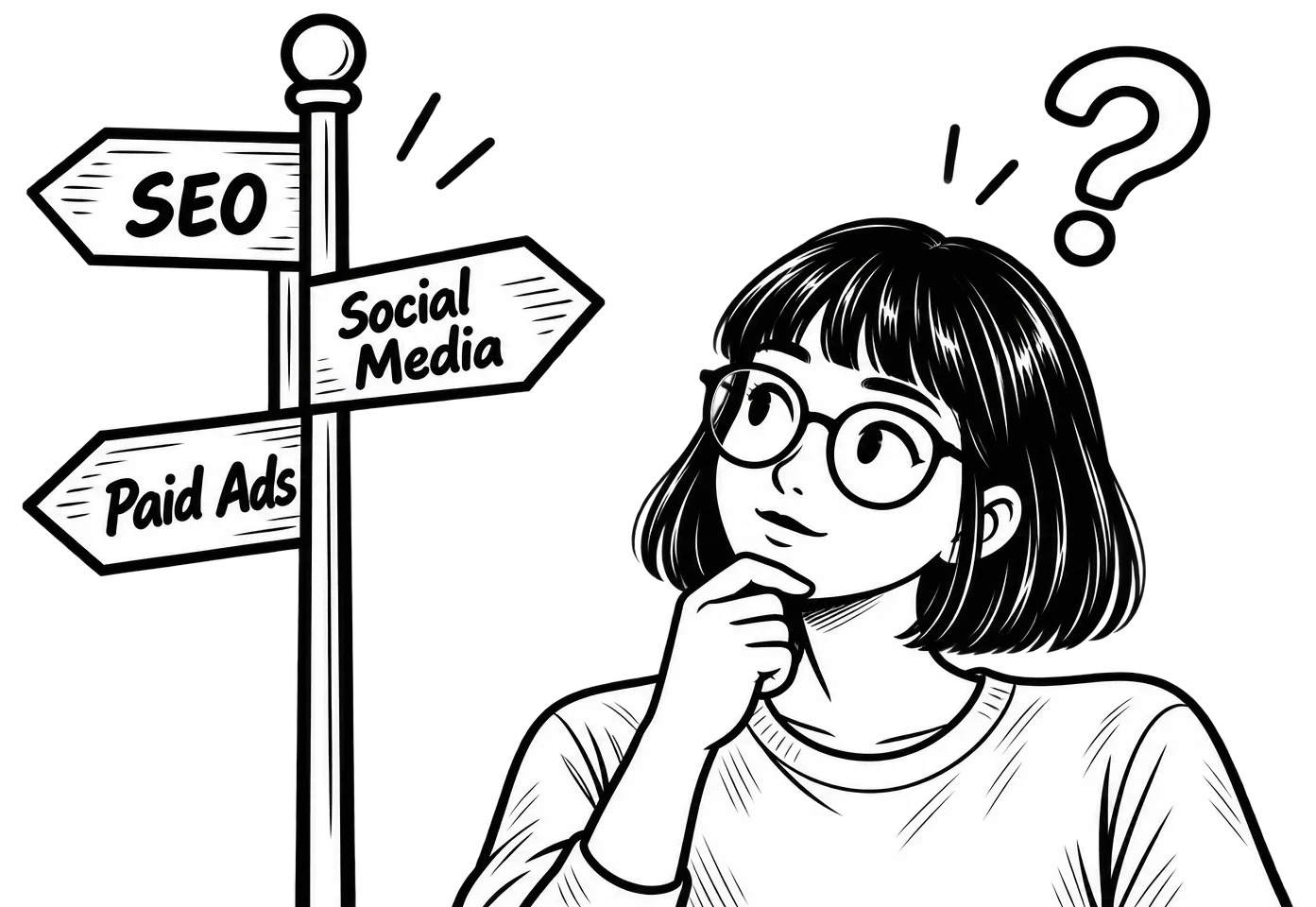
You do not need to market everywhere at once. Learn how to choose the digital channels that make the most sense for your audience, goals, budget, and stage of growth.


Digital marketing gives small businesses more ways than ever to reach customers, build awareness, generate leads, and compete for attention.
The challenge is not finding marketing channels.
The challenge is figuring out which ones actually deserve your time and budget.
SEO, social media, email, paid ads, content marketing, partnerships, and analytics can all play a role. But trying to do everything at once usually leads to scattered effort and inconsistent results.
A stronger approach starts with your business goals, your audience, and the role each channel should play in helping people discover, trust, and choose your business.
Start With Your Goals and Audience
Before choosing platforms or launching campaigns, decide what you are trying to accomplish.
Your marketing strategy might be designed to:
- Generate more qualified leads
- Increase online sales
- Build brand awareness
- Drive more website traffic
- Grow an email list
- Reach customers in a new market
- Support customer retention
- Promote a specific service or product
Once the goal is clear, think about the people you need to reach.
Where do they look for information?
What questions do they ask before making a decision?
Which platforms do they actually use?
What would make them trust one business over another?
Your answers should influence which marketing channels you prioritize.
Not every business needs to be everywhere.

Search Engine Optimization
SEO helps people discover your business when they search for information, products, or services related to what you offer.
A strong SEO strategy can include:
- Keyword research
- Useful, relevant website content
- Clear page titles and headings
- Strong internal linking
- Technical SEO
- Mobile usability
- Website performance
- Local optimization
- Relevant backlinks
SEO is usually a long-term strategy.
You are building visibility and authority over time rather than paying for every visit.
That makes it especially valuable for businesses that want sustainable search traffic and have topics, services, or questions customers search for regularly.
The goal is not to force keywords into every paragraph.
It is to understand what your audience is trying to find and create pages that answer those needs clearly.
Content Marketing
Content gives your business something useful to say before someone is ready to buy.
That may include:
- Blog articles
- Guides
- Videos
- Case studies
- FAQs
- Infographics
- Downloadable resources
- Email content
- Social posts
Good content should help your audience understand a problem, compare options, learn something useful, or make a decision.
A content calendar can help you stay consistent, but consistency should not come at the expense of quality.
Publishing five weak posts is not automatically better than publishing one strong resource.
You can also get more value from good content by repurposing it.
A detailed article might later become:
- Several social posts
- A short video
- An email
- A downloadable checklist
- A sales resource
- A FAQ
That allows one strong idea to support several parts of your marketing strategy.
Social Media Marketing
Social media can help businesses build familiarity, stay visible, communicate with customers, and create community around the brand.
But you do not need to maintain an active presence on every platform.
Start with the places where your audience is most likely to spend time.
Then focus on consistency and relevance.
Strong social media marketing may include:
- Educational content
- Behind-the-scenes content
- Customer stories
- Short-form video
- Company updates
- User-generated content
- Helpful answers
- Community interaction
Posting is only part of the work.
Responding to comments, messages, questions, and reviews can be just as important because social media is a conversation channel, not simply another place to broadcast advertising.
Email Marketing
Email gives businesses a direct way to communicate with people who have already shown interest.
Unlike social platforms, where algorithms affect how many followers see your content, email allows you to reach your own audience more directly.
Email marketing can support:
- Lead nurturing
- Promotions
- Customer retention
- Product updates
- Educational content
- Event promotion
- Re-engagement
Segmentation makes email more useful.
Someone who just downloaded a resource may need different information than a longtime customer.
You can also use automation for certain workflows, such as welcome sequences, follow-ups, reminders, or re-engagement campaigns.
The goal is not to send more email.
It is to send useful email to the right people.
Paid Advertising
Paid advertising can create visibility faster than most organic channels.
Depending on your goals, that might include:
- Google Ads
- Paid social campaigns
- Retargeting
- Display advertising
- Sponsored content
Paid campaigns work best when the audience, offer, landing page, and conversion path are clear.
Start with a budget you can measure.
Then increase spending based on performance rather than assumptions.
A campaign generating qualified leads at an acceptable cost may deserve additional budget.
A campaign generating clicks but no meaningful action probably needs to be adjusted before you spend more.
Paid advertising can create quick visibility, but it should still support a broader marketing strategy.
Influencer and Partnership Marketing
Not every business needs influencer marketing, but strategic partnerships can help you reach audiences that already trust someone else.
That could include:
- Industry influencers
- Local creators
- Professional organizations
- Community partners
- Complementary businesses
- Referral partners
The size of an audience is not the only thing that matters.
Relevance and trust matter more.
A smaller creator whose audience closely matches your customer base may be more valuable than someone with a much larger but less relevant following.
Before entering a partnership, establish:
- Who the campaign is trying to reach
- What content will be created
- What each party is responsible for
- What action you want the audience to take
- How results will be measured
Partnerships work best when they feel natural to the audience rather than forced.
Conversion Rate Optimization
Getting people to your website is only part of digital marketing.
The website still has to help them take the next step.
Conversion rate optimization, or CRO, focuses on improving the percentage of visitors who complete an important action.
That might be:
- Filling out a form
- Calling your business
- Requesting a quote
- Booking an appointment
- Signing up
- Making a purchase
- Downloading a resource
Look for friction in the experience.
Ask questions like:
- Is the value of the offer clear?
- Is the call to action easy to find?
- Is the navigation confusing?
- Is the form longer than necessary?
- Does the page provide enough trust?
- Is important information missing?
- Does the website load quickly?
You can test different headlines, calls to action, layouts, or page elements, but CRO is not just about constant experimentation.
Often, the first improvements come from fixing obvious barriers that make it harder for visitors to act.
Mobile Experience Matters Across Every Channel
Your mobile website is not a separate part of your marketing strategy.
It affects nearly everything.
Someone may find you through Google, tap an Instagram ad, open an email, or follow a link from another website and arrive on a phone.
If the experience is difficult, the marketing that brought them there may be wasted.
Pay attention to:
- Responsive layouts
- Readable text
- Button size
- Navigation
- Forms
- Page speed
- Images
- Calls to action
Mobile optimization is not just about making a desktop design fit a smaller screen.
The experience should be easy to use from the beginning.
Analytics and Measurement
Digital marketing gives you access to a large amount of data.
That does not mean every metric deserves equal attention.
Start with the business goal.
Then choose metrics that help you understand progress toward that goal.
Depending on the campaign, that could include:
- Website traffic
- Leads
- Conversion rate
- Sales
- Cost per lead
- Cost per acquisition
- Email clicks
- Search visibility
- Engagement
- Return on ad spend
- Revenue
Avoid judging marketing entirely by surface-level numbers.
More traffic is not automatically better if none of that traffic converts.
More followers are not automatically valuable if they never interact with the business.
Use analytics to understand what is working, what needs improvement, and where your next dollar or hour is most likely to make an impact.
If you want a simpler way to connect those numbers to actual business results, see our guide to measuring marketing ROI.
How to Prioritize Digital Marketing With a Limited Budget
Small businesses rarely have unlimited marketing resources.
That makes prioritization important.
Instead of dividing a small budget across every possible channel, identify the few areas most likely to support your current goals.
A business might begin with:
- A website that clearly explains the offer and converts visitors.
- SEO and content to build long-term visibility.
- Email to stay connected with leads and customers.
- One or two social platforms where the audience is active.
- Paid advertising when there is a clear offer and conversion path.
The order will vary by business.
A new company trying to generate demand quickly may use paid advertising sooner.
An established local business may get more immediate value from search visibility.
An ecommerce company may rely heavily on email and retargeting.
The important part is understanding why you are investing in each channel.
Balance Short-Term and Long-Term Marketing
One of the most common marketing mistakes is expecting every tactic to produce results on the same timeline.
Some channels are designed to create faster visibility.
Others build value over time.
Paid advertising can generate exposure quickly.
SEO and content often take longer to mature.
Email can support both immediate promotions and long-term customer relationships.
Social media can help maintain ongoing awareness and engagement.
A strong digital marketing strategy usually includes a mix.
That way, your business is not completely dependent on one source of traffic or leads.
Build a Marketing Mix That Can Grow With You
Your marketing strategy should evolve as your business changes.
A channel that makes sense today may become less important later.
Another may deserve more investment as you learn where your best customers come from.
Review performance regularly.
Ask:
- Which channels are producing meaningful results?
- Where are qualified leads coming from?
- What content is attracting the right audience?
- Which campaigns are costing more than they return?
- Where are customers getting stuck?
- Which efforts are taking time without supporting a clear goal?
Then adjust.
Digital marketing works best when it is treated as an ongoing process rather than a collection of unrelated campaigns.
Final Thoughts
Small businesses do not need to master every digital marketing channel at once.
They need a strategy that connects the right audience, the right message, and the right channels to clear business goals.
Start with the fundamentals.
Build visibility through SEO and useful content.
Stay connected through social media and email.
Use paid advertising strategically.
Improve the website experience so traffic has somewhere useful to go.
Measure what matters.
Then invest more in the areas that prove they deserve it.
The strongest digital marketing strategies are not built around chasing every new tactic.
They are built around understanding what your business needs, what your customers need, and how the two connect.