Omnichannel Marketing for Startups: How to Connect Your Customer Experience
Omnichannel Marketing for Startups: How to Connect Your Customer Experience
Omnichannel marketing helps startups connect customer experiences across websites, social media, email, and other touchpoints. Learn how to choose the right channels, integrate your tools, and measure results.


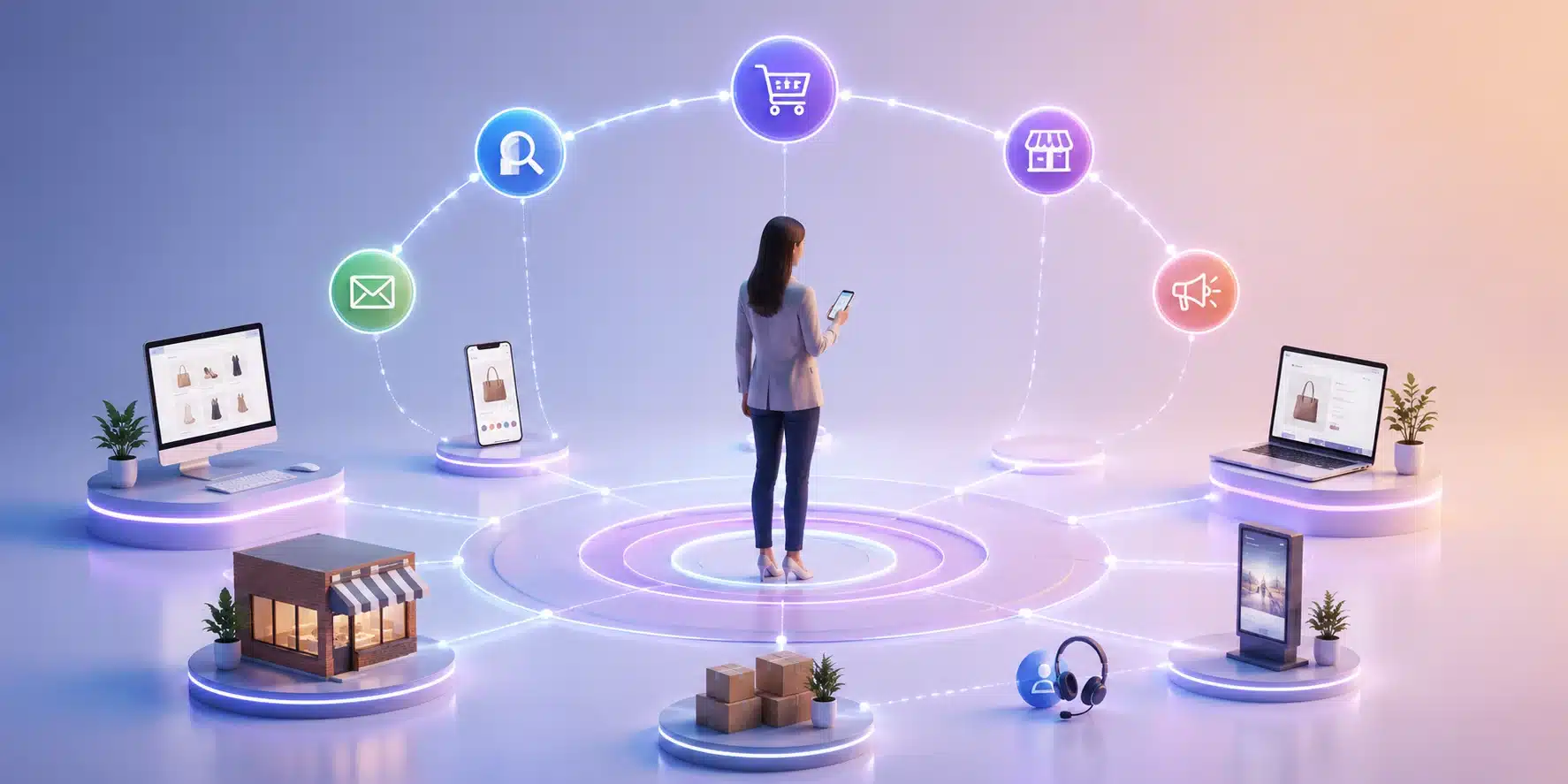
Your customers don’t interact with your business through just one channel. They might discover you on Instagram, visit your website, sign up for an email, and return later through a Google search before making a purchase.
An omnichannel marketing strategy connects those interactions so customers receive a consistent, relevant experience as they move between channels.
For startups, the goal isn’t to be everywhere. It’s to make the channels you’re already using work together.
That means connecting your messaging, customer data, website, marketing campaigns, and follow-up processes without creating unnecessary complexity.
Here’s how to build an omnichannel strategy that supports your customers and gives you useful information about what’s working.
What Is Omnichannel Marketing?
Omnichannel marketing is an approach that coordinates customer experiences across multiple channels, including websites, social media, email, advertising, mobile apps, and physical locations.
The goal is to maintain continuity as people move between those touchpoints.
Imagine someone sees an advertisement for a product, visits your website, and adds it to their cart without completing the purchase.
Later, they receive a relevant follow-up email, return to the same product, and finish checking out.
That experience becomes more useful when the messaging, product information, and customer interactions remain connected.
The important part isn’t how many channels were involved. It’s how well they supported the customer’s journey.
Omnichannel vs. Multichannel Marketing
These approaches are related, but they’re not interchangeable.
| Multichannel Marketing | Omnichannel Marketing |
|---|---|
| Uses multiple channels to reach customers | Connects channels around the customer experience |
| Channels may operate independently | Channels share relevant information and coordinated messaging |
| Performance is often evaluated separately | Performance is considered across touchpoints |
| Focuses on presence and reach | Focuses on continuity and customer experience |
A startup can have a website, Facebook page, Instagram account, and email newsletter without having an omnichannel strategy.
If those channels send conflicting messages, use disconnected customer information, or create unnecessary steps for visitors, they’re simply operating alongside one another.
Why Omnichannel Marketing Matters for Startups
Startups usually have limited time, budgets, and staff. Every marketing channel requires attention, and every new tool introduces another process to manage.
An omnichannel approach can help you use those resources more effectively by reducing disconnected experiences.
Three benefits are particularly relevant.
A More Consistent Customer Experience
Customers shouldn’t have to start over every time they interact with your business.
If someone submits an inquiry through your website and later contacts your sales team, it helps when the team can access that inquiry rather than asking the customer to repeat everything.
The same principle applies to products, pricing, promotions, and customer support.
Better Use of Customer Information
Connected systems can help you understand which interactions contribute to inquiries, purchases, and repeat business.
That information makes it easier to identify opportunities and improve how customers move through the buying process.
However, connecting tools doesn’t automatically create accurate data. Tracking must be configured correctly, and customer information must be collected and used appropriately.
More Efficient Marketing Decisions
When channels work together, you can evaluate their roles instead of treating each campaign as an isolated effort.
For example, social media may introduce potential customers to your business, while email helps bring them back and organic search captures demand when they’re ready to act.
Not every channel needs to generate the final conversion to provide value.
The challenge is understanding that contribution without assuming every interaction can be measured perfectly.
1. Map the Customer Journey Before Choosing More Channels
The first step is understanding how customers currently discover, evaluate, and purchase from your business.
Don’t start by purchasing software or launching accounts on every platform.
Start with the customer.
Identify Your Main Touchpoints
Think about what happens before, during, and after someone becomes a customer.
For a service-based startup, the journey might look like this:
- A potential customer discovers the business through LinkedIn.
- They visit the website to review available services.
- They download a guide or complete a contact form.
- They receive a relevant follow-up email.
- They schedule a consultation.
- The sales team continues the conversation using information already provided.
Each step should help the customer move forward.
Now identify where that process breaks down.
Does the contact form send inquiries to the right person? Does the follow-up email relate to the service the customer requested? Does the sales team know which information the customer has already received?
Those gaps are often more important than adding another marketing channel.
Look for Unnecessary Friction
Review whether customers encounter inconsistent offers, outdated information, duplicate forms, or unclear next steps.
A connected marketing strategy should reduce friction, not introduce additional technology into an already confusing process.
2. Connect Social Media With Your Website and Other Channels
Social media is often where startups introduce themselves to potential customers.
It can support awareness, engagement, community building, and traffic. But social activity should connect to a broader purpose.
Instead of treating each platform as a separate marketing project, think about what someone should do after interacting with your content.
A product demonstration might direct interested visitors to a product page. An educational LinkedIn post might lead to a more detailed guide. A customer question could inspire an email that explains the topic further.
The content can change by platform while supporting the same customer journey.
Keep Your Messaging Consistent
Your website, advertisements, and social media content should communicate the same core offer and brand identity.
That doesn’t mean every post needs identical wording.
It means people should recognize the same business and understand the same value proposition wherever they encounter it.
Measure Traffic Quality, Not Just Clicks
Use Google Analytics 4 to review which social platforms bring visitors to your website.
Compare sessions, engagement, and meaningful actions such as form submissions or purchases.
If Instagram sends more visitors than LinkedIn but LinkedIn produces more qualified inquiries, that difference should influence your strategy.
A larger audience isn’t necessarily a more valuable audience.
You can also extend useful content across platforms without creating everything from scratch. Our guide on how to repurpose content to maximize reach and ROI explains how to adapt existing material for different channels.
3. Use Email Marketing to Continue the Customer Conversation
Email helps reconnect with people who have already shown interest in your business.
That makes it an important part of many omnichannel strategies.
But sending the same promotional email to every subscriber isn’t necessarily creating a connected experience.
Start by considering what you know about each subscriber and what information would be relevant to them.
Segment Your Audience
An e-commerce startup might separate first-time customers from repeat buyers.
A service business could distinguish people interested in different services or those who have already requested a consultation.
These distinctions help you avoid sending messages that don’t match the customer’s needs.
Our article on email personalization techniques explains how segmentation, customer behavior, and timing can make campaigns more relevant.
Use Behavioral Triggers Carefully
Automation can help maintain continuity between channels.
Examples include:
- A welcome email after someone subscribes.
- A follow-up after a customer requests information.
- An abandoned cart reminder when appropriate.
- A post-purchase message with useful product information.
- A renewal reminder for subscription-based services.
These workflows should be based on accurate data and clear customer expectations.
If a customer has already purchased a product, continuing to send reminders to complete that purchase creates a disconnected experience.
Before enabling an automated sequence, check whether the necessary customer data is available and reliable.
Measure What Happens After the Email
Email open rates can be affected by privacy protections and automated image loading.
Look at clicks, website activity, purchases, and other meaningful outcomes instead.
A high open rate doesn’t necessarily mean the campaign helped your business.
4. Connect Your Website, CRM, and Marketing Tools
Your website is often the point where several marketing channels come together.
Visitors arrive from search engines, advertisements, email campaigns, social media, and referrals.
Your systems should help you understand those interactions and respond appropriately.
For many startups, a customer relationship management system (CRM) provides a useful starting point.
A CRM can organize contact records, track inquiries, document customer interactions, and support follow-up workflows.
Start With the Information You Actually Need
You don’t need to collect every possible data point.
For a service startup, useful information might include:
- Contact information.
- Service or product interest.
- Lead source when reliably available.
- Inquiry date and status.
- Relevant communication history.
- Next follow-up action.
That may be enough to prevent leads from getting lost and help your team respond more effectively.
Avoid Creating Duplicate Systems
Before connecting another marketing platform, check what your existing tools already provide.
If your CRM supports email automation, you may not need a separate system for every follow-up.
If your e-commerce platform already records purchases and customer details, determine which information actually needs to be shared with other tools.
More integrations aren’t automatically better.
Each connection requires configuration, ongoing maintenance, and consideration of how data moves between platforms.
Maintain Accurate and Secure Data
Connected marketing depends on reliable customer information.
Review how consent is collected, who can access customer records, and how data is stored and transferred.
Only share the information needed for legitimate business purposes.
Personalization should make communication more relevant without creating unnecessary privacy risks.
5. Decide Whether Your Startup Actually Needs a Mobile App
Mobile apps can support omnichannel experiences, particularly when customers interact with a business frequently.
For example, an app might provide account access, order tracking, loyalty rewards, appointment management, or personalized notifications.
But developing an app isn’t a requirement for omnichannel marketing.
For many startups, a responsive website, well-organized email marketing, and reliable customer support may meet customer needs without adding another platform.
When a Mobile App Might Make Sense
Consider an app when customers have a recurring reason to use it.
A subscription service might benefit from convenient account management.
A business with frequent orders could make reordering easier.
A membership organization might provide exclusive resources and communications.
The important question is whether the app solves a problem that your existing website and tools cannot address effectively.
Evaluate the Ongoing Costs
An app involves more than development.
You’ll also need to consider updates, compatibility, customer support, security, and ongoing improvements.
Before investing, estimate how many customers are likely to use it and what measurable business benefit it could provide.
If the expected value doesn’t justify the cost, focus on improving the channels you already have.
6. Use AI and Automation Where They Solve Real Problems
AI can support omnichannel marketing by helping organize customer information, identify patterns, draft content, and assist with routine processes.
Automation can also reduce repetitive work between platforms.
But neither should be implemented just because the technology is available.
Start by identifying a specific problem.
Perhaps your team takes too long to respond to incoming inquiries. Maybe customers receive duplicate emails. Or your marketing reports require several hours of manual work every week.
Those are problems worth investigating.
Match the Tool to the Task
For example, automation might route website inquiries to the appropriate team member or trigger a follow-up when a lead reaches a defined stage.
AI could assist with categorizing incoming questions or summarizing customer feedback.
However, automated responses and recommendations should be reviewed for accuracy, especially when they involve pricing, policies, or customer-specific information.
Check Whether the Process Works Before Automating It
If your lead management process is inconsistent, automating it may simply make those inconsistencies happen faster.
Document the workflow first.
Then test whether the automation produces the expected results.
Technology should support a reliable process, not substitute for one.
7. Track Performance Across Channels
One of the biggest challenges in omnichannel marketing is understanding how different interactions contribute to business results.
A customer might discover you through a social advertisement, return through organic search, and complete a purchase after clicking an email.
If you only credit the final visit, you may overlook earlier interactions.
Google Analytics 4 includes attribution reporting that can help evaluate how different channels contribute to important actions.
According to Google’s attribution documentation, attribution models determine how credit is assigned across customer touchpoints.
However, attribution reporting has limitations. Privacy settings, consent, cross-device behavior, and incomplete tracking can affect what can be observed.
Define Meaningful Key Events
In GA4, key events represent actions that matter to your business.
Examples include:
- Completed contact forms.
- Qualified lead submissions.
- Purchases.
- Appointment bookings.
- Account registrations.
Google explains how to configure and evaluate these actions in its key events documentation.
Don’t treat every page view or minor interaction as a conversion.
Choose actions that reflect meaningful progress toward your business objectives.
Use Consistent Campaign Tracking
UTM parameters help identify traffic from campaigns such as email newsletters, paid promotions, and partnership links.
For example, consistent campaign naming can help you compare email traffic with paid social campaigns.
Google’s campaign URL builder documentation explains how these parameters work.
Use a standardized naming convention across your team to avoid fragmenting reports.
Review More Than Channel Traffic
A simple performance review might include:
| Metric | What It Helps You Understand |
|---|---|
| Sessions | How much website traffic each channel generates |
| Engagement rate | Whether visits meet GA4’s engagement criteria |
| Key events | How frequently important actions occur |
| Lead quality | Whether inquiries match your intended customers |
| Cost per acquisition | How much you’re spending to acquire a customer |
| Customer retention | Whether customers continue purchasing or using your services |
Not every startup can measure all of these accurately from the beginning.
Start with reliable information and expand your reporting as your systems improve.
8. Build an Omnichannel Strategy Your Startup Can Maintain
You don’t need a complicated technology stack to get started.
A practical implementation process can be divided into four stages.
Stage 1: Audit Your Existing Channels
Review your website, social profiles, email platform, advertising accounts, and CRM.
Identify which channels are active, who manages them, and what information each system collects.
Pay attention to duplicate tools, disconnected processes, and inconsistent messaging.
Stage 2: Fix the Most Important Customer Journey
Choose one journey that matters to your business.
For a service company, that might be the process from website inquiry to booked consultation.
For an e-commerce business, it could be the process from product discovery to purchase.
Identify where customers encounter friction and correct those problems first.
Stage 3: Connect the Necessary Systems
Set up the integrations, tracking, and automation required to support that journey.
Test each connection before relying on it.
If a form should create a CRM contact and notify your sales team, submit a test entry and verify that both actions occur correctly.
Stage 4: Measure and Improve
Review the results after enough activity has occurred to provide useful information.
Look for missed inquiries, customer drop-offs, inaccurate attribution, and opportunities to simplify the experience.
Make adjustments based on those findings.
You can expand to additional channels after the initial process works reliably.
Common Omnichannel Marketing Mistakes
Even a well-planned strategy can become unnecessarily complicated.
Trying to Be Everywhere
Adding platforms without enough time or resources to manage them often creates inconsistent experiences.
Choose channels based on customer behavior, not popularity.
Investing in Technology Before Defining the Process
A sophisticated CRM won’t fix unclear sales responsibilities. An automation platform won’t improve follow-up if nobody has decided what should happen after an inquiry.
Define the workflow before selecting the tool.
Assuming Connected Systems Mean Accurate Reporting
Integrations can transfer information, but that information may still be incomplete, duplicated, or incorrectly attributed.
Verify your data before using it to make major budget decisions.
Measuring Every Channel in Isolation
A channel that doesn’t directly generate many purchases may still support awareness or consideration.
Review individual channel performance while considering the broader customer journey.
Ignoring the Customer Experience
Marketing coordination means little if customers encounter broken links, inconsistent offers, confusing forms, or repeated requests for information.
The experience needs to work, not just the technology behind it.
Start With Connected Experiences, Not More Platforms
An effective omnichannel strategy helps customers move between interactions without unnecessary friction.
For startups, that usually begins with understanding the customer journey, keeping messaging consistent, connecting essential systems, and measuring meaningful outcomes.
Social media, email marketing, websites, CRMs, automation, and mobile apps can all play a role. But each should have a clear purpose.
Before adding a new channel, ask what problem it solves, what information it needs, and how you’ll know whether it’s working.
If your startup needs help connecting marketing channels, improving tracking, or creating a more coordinated customer experience, explore MoDuet’s digital marketing services.