AI in Business: What’s Working Across Five Industries
AI in Business: What’s Working Across Five Industries
AI is already changing how businesses analyze data, serve customers, create marketing content, and manage operations. Explore practical applications across five industries, the limitations businesses should understand, and how to test whether an AI tool delivers measurable value.


In 2025, businesses were being told that artificial intelligence would transform entire industries by 2026, often with a neat percentage attached to the promise. Now that 2026 is here, the better question is simpler: what is AI actually useful for, and what still needs a person making the decision?
AI is helping teams analyze information, produce first drafts, handle routine questions, and spot patterns that might otherwise take hours to find. But access to a tool is not proof of better profits, safer decisions, or happier customers. The most useful business applications are the ones attached to a specific problem, reliable data, and a way to check the result.
The Biggest Change in 2026 Is Adoption, Not Guaranteed Results
The Stanford AI Index 2026 reports that 88% of organizations in the survey underlying its adoption figures used AI in at least one business function in 2025. It also notes that deployment of AI agents remained in the single digits across nearly all business functions.
Those numbers describe different levels of use. Asking a tool to summarize meeting notes is not the same as allowing an AI agent to update customer records, issue refunds, or approve a financial decision. The second requires permissions, reliable integrations, error handling, and someone accountable for what happens.
This distinction matters more than another prediction about AI changing everything. Business owners need to know which tasks can benefit now, where the risks increase, and how to recognize a result worth scaling.
Finance: Better Analysis Still Needs Explainable Decisions
Financial teams can use AI-assisted tools to organize transactions, flag unusual activity, forecast cash needs, and identify patterns in historical data. A small business might review seasonal cash flow or compare actual expenses with its budget. A bank may use more advanced models for fraud monitoring or lending analysis.
The useful distinction is between supporting a decision and making one automatically. A forecast depends on the quality and relevance of its underlying data; it is not a guarantee about future market conditions. An anomaly flag needs investigation before anyone treats it as fraud.
For lenders, the stakes are higher. The Consumer Financial Protection Bureau’s guidance on complex credit algorithms explains that creditors must still provide specific reasons for adverse credit decisions, even when complex models are involved. Using AI does not remove the legal requirement to explain the outcome.
What to evaluate: Forecast accuracy compared with an existing method, time saved preparing reports, and whether a qualified person can explain and correct important decisions. Our guide to using predictive analytics for business decisions goes further into the data side of this work.
Healthcare: Clinical Tools Are Real, but One Accuracy Claim Cannot Cover Them All
AI-enabled systems can assist with medical imaging, clinical workflows, and the identification of findings that deserve closer review. That is a real area of development, not merely a prediction. The FDA’s overview of AI-enabled medical devices describes devices authorized for marketing in the United States and the need to evaluate safety and effectiveness throughout their life cycle.
What does not follow is a blanket promise that AI will improve diagnostic accuracy by 40%. Performance depends on the specific device, intended use, patient population, quality of evidence, and how it is used in practice. A tool for one imaging task does not demonstrate an improvement across every medical specialty.
For healthcare organizations, the business questions are practical: Is the tool appropriate for its intended use? How will clinicians verify its output? Who can access patient information? What happens if the system produces a false alert or misses an important finding?
What to evaluate: Validated performance for the particular application, clinical oversight, privacy controls, staff training, and the time needed to manage exceptions. Faster output is not a clinical outcome by itself.
Retail: Chatbots and Recommendations Help Only When They Are Useful
Retailers can use AI to help shoppers find products, suggest relevant items, organize support requests, and summarize recurring customer questions. These applications can be particularly useful when a small team handles a large catalog or a steady stream of repetitive inquiries.
A chatbot, however, does not become good customer service simply because it answers at 2 a.m. If it invents a return policy, misstates delivery times, or prevents a customer from reaching a person, it creates more work than it saves. Personalized recommendations also depend on accurate product data and respect for customer preferences.
Begin with the information customers actually need. Connect answers to current product details, shipping policies, and available support channels. Make escalation straightforward for refunds, complaints, or questions the system cannot answer reliably.
What to evaluate: Resolution rates, incorrect answers, escalations, support workload, and customer satisfaction. A high number of automated replies is not the same as a high number of resolved problems.
Marketing: Faster Production Does Not Automatically Mean Better Campaigns
Marketing teams already use AI to structure research, draft copy, generate variations, analyze campaign results, and organize repetitive production work. That can free up time for positioning, creative judgment, and understanding the audience. It can also make it remarkably easy to publish more mediocre content.
The most useful workflow starts with verified business information: the offer, audience, customer questions, brand standards, and campaign goal. AI can then help organize or draft material, but someone still needs to check claims, review tone, and make sure the message matches what the business can deliver.
Our article on how AI is changing content writing covers this distinction in detail. For teams managing multiple channels, the future of content marketing addresses the systems behind research, publishing, and measurement.
The same caution applies to automated targeting and performance summaries. A platform may suggest a better audience or identify a trend, but the result still needs to be assessed against actual leads, sales, or other meaningful outcomes.
What to evaluate: Editing time, factual corrections, campaign quality, qualified leads, and business results. Do not claim a 35% return on investment merely because a tool makes drafts faster.
Ecommerce: AI Can Support Inventory and Fraud Reviews Without Running the Store
Online stores can use forecasting to estimate product demand, identify stock patterns, and prioritize replenishment. Fraud-detection systems may flag unusual transactions for review. Recommendation tools can help customers discover related products. These are separate applications with different risks and measures of success.
Dynamic pricing deserves particular care. Updating prices automatically based on demand or competitor information may be appropriate in some contexts, but it also introduces questions about margin limits, customer expectations, and the accuracy of the input data. An automated pricing mistake can spread across a catalog much faster than a manual one.
For a small ecommerce business, a more sensible first step may be to monitor low-stock items or highlight suspicious orders while keeping consequential actions subject to approval.
What to evaluate: Forecast error, stockouts, excess inventory, false fraud alerts, checkout completion, and actual profit after costs. There is no defensible universal promise that these tools increase margins by 20%.
The Next Competitive Advantage Is Knowing What Not to Automate
The common thread across these industries is that AI does not fix missing information, vague responsibilities, or a broken process. It can make those problems harder to notice because the output looks finished.
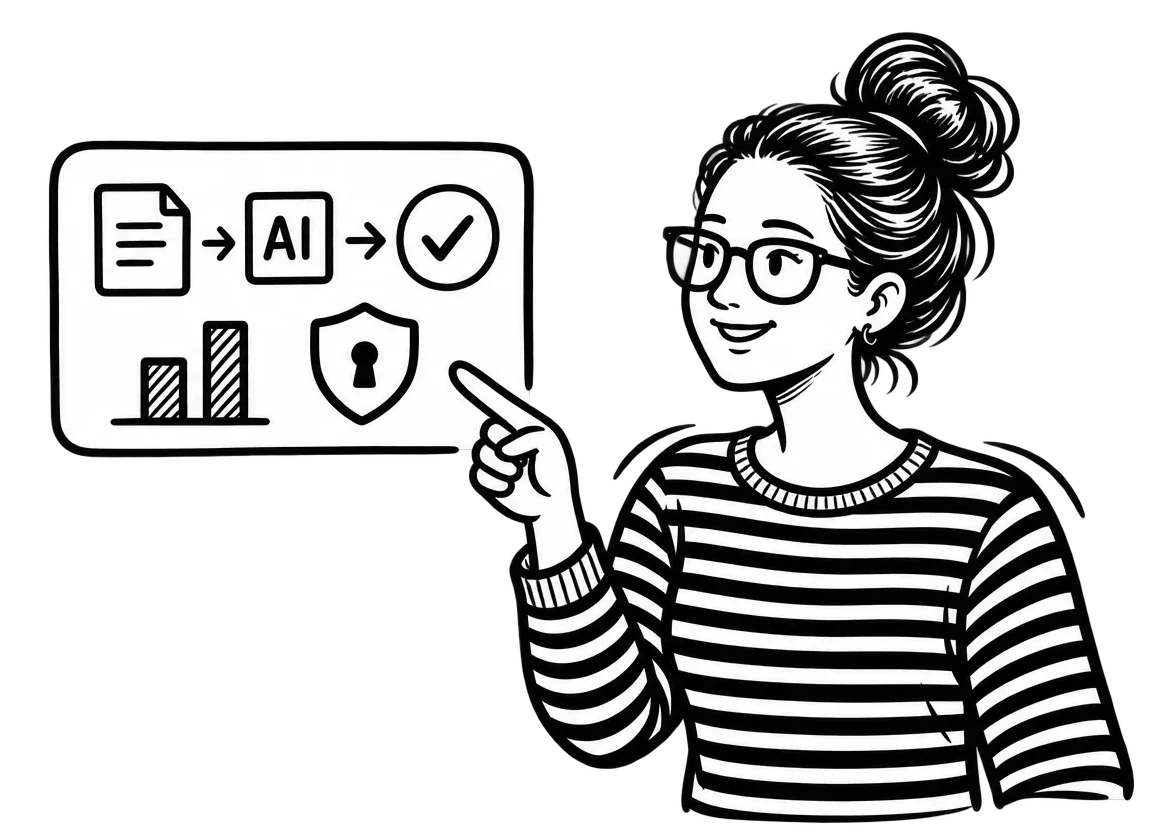
A useful AI workflow needs an owner, a reliable source of information, defined permissions, and a way to identify mistakes. The NIST AI Risk Management Framework Playbook organizes risk management around governing, mapping, measuring, and managing AI risks. A small business does not need to implement every suggestion to benefit from the underlying idea: decide what a system may do, evaluate the risks, and continue checking it after launch.
That matters especially when a tool handles customer data, sensitive records, financial decisions, or actions that are difficult to reverse. Start with assisting people before handing a system the authority to act without approval.
How to Test One AI Use Case Before Buying Into the Hype
You do not need an organization-wide AI transformation plan to begin. Choose one process where your team already spends time and where mistakes can be spotted easily.
- Define the problem. For example, preparing a weekly performance summary takes several hours, or the support inbox repeatedly receives the same questions.
- Record a baseline. Note the time involved, the error rate, and the business outcome before changing anything.
- Test with appropriate data. Check the tool’s permissions, privacy terms, and limitations. Keep sensitive or regulated information out of unapproved systems.
- Review the output. Assign a person to verify facts, handle exceptions, and approve customer-facing or consequential actions.
- Compare the result. Did you actually save time? Did errors increase? Was the quality at least as good? Is the cost justified?
If the answer is no, improving the underlying process may be more useful than adding another AI product. If the test succeeds, document the workflow, train the team, and expand deliberately. That is consistent with building a marketing strategy around business goals instead of collecting disconnected tools.
AI is already part of finance, healthcare, retail, marketing, and ecommerce. The question now is not whether a business can use it. It is whether a specific use improves work that matters, and whether the business can verify the result. That is a much stronger basis for a decision than another percentage attached to a prediction.