How Predictive Analytics Can Guide Smarter Business Decisions
How Predictive Analytics Can Guide Smarter Business Decisions
Predictive analytics uses patterns in existing data to help businesses anticipate customer behavior, improve planning, and make more informed marketing and growth decisions.

Most business decisions involve some uncertainty. You look at what has happened before, consider what you know now, and make the best decision you can.
Predictive analytics adds another layer to that process.
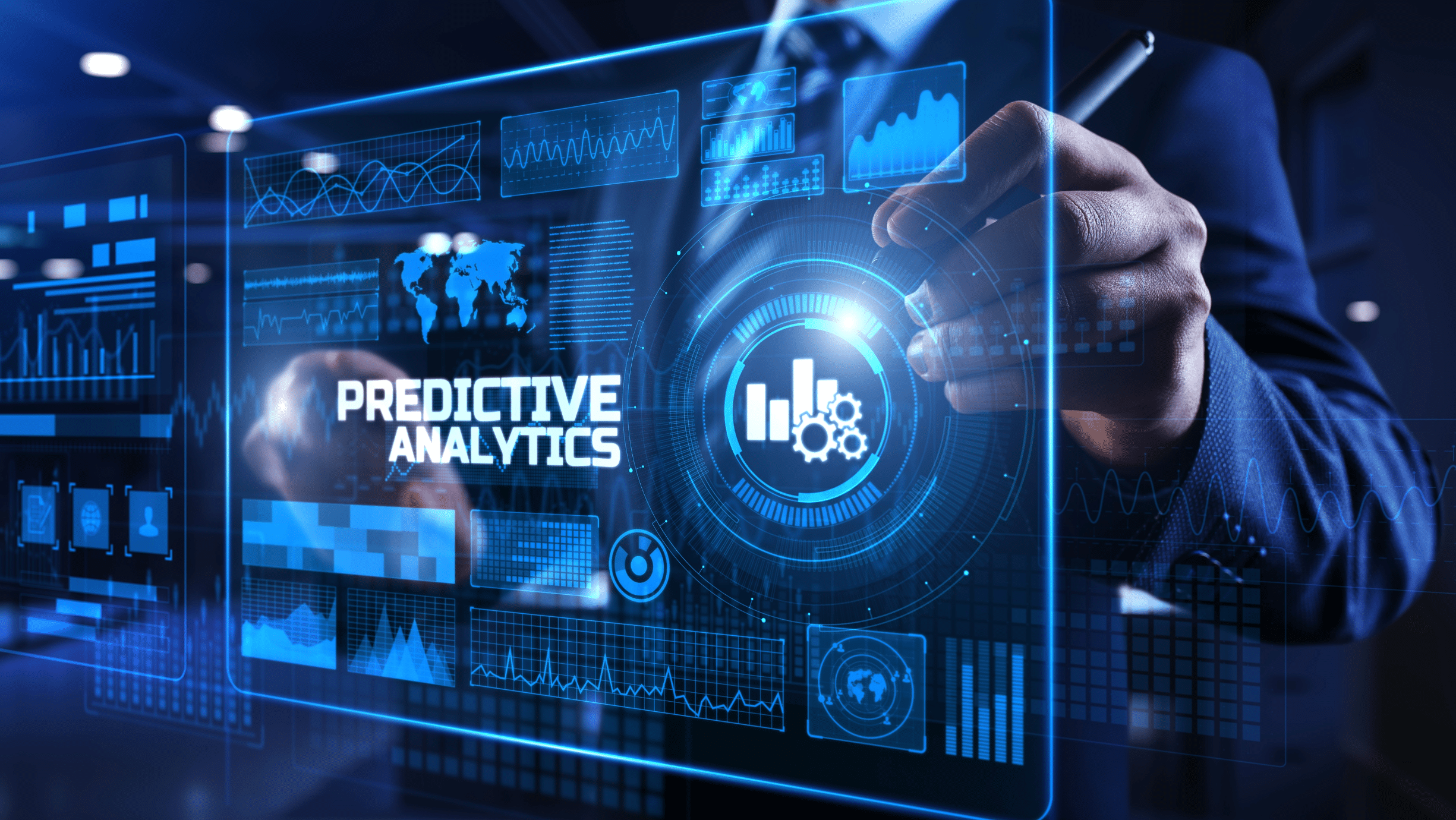
Instead of only telling you what already happened, it uses patterns in historical data to help estimate what is likely to happen next. That can help businesses make better decisions about customers, marketing, inventory, staffing, and growth.
You do not need a massive data team to start using it. Many businesses already collect useful information through their website, CRM, sales systems, email platform, and marketing campaigns.
The first step is learning how to turn that data into questions you can actually act on.
What Predictive Analytics Actually Means
Predictive analytics looks at historical data for patterns that can help forecast future outcomes.
Traditional analytics might tell you:
- Which products sold last month
- Where website traffic came from
- Which campaign generated the most leads
- How many customers returned
- Which landing pages converted best
Predictive analytics takes the next step.
It might help you estimate:
- Which customers are most likely to buy again
- Which leads appear closest to converting
- Which products may see increased demand
- Which customers may be at risk of leaving
- Which campaigns or audiences may deserve more investment
It does not predict the future with certainty.
It gives you a better-informed starting point for making decisions.
If you are still building the foundation for understanding what visitors do on your site, website analytics is where that process begins.

Where Predictive Analytics Can Help
The value of predictive analytics depends on the question you are trying to answer.
Understanding Customers Before They Act
Customer behavior often creates patterns.
Someone who has made several purchases, frequently visits a particular product category, and consistently opens your emails may behave differently from someone who has not engaged in months.
Predictive analytics can help businesses identify those differences.
An ecommerce business might use purchase history to estimate which products a customer could be interested in next.
A subscription business might identify customers whose behavior resembles people who previously canceled.
A service business might use CRM and website activity to help prioritize leads that appear closer to making a decision.
The goal is not to treat a prediction as a guarantee.
It is to use available signals to decide where attention may be most valuable.
Making Marketing Budgets Work Harder
Marketing data can also help businesses decide where to invest.
Instead of looking only at which channel performed best last month, predictive analysis can help identify patterns across previous campaigns, audiences, seasons, and customer behavior.
For example, you may discover that a particular audience consistently converts better during a certain part of the year, or that one type of campaign produces customers with greater long-term value.
Those insights can influence where you spend next.
Predictive analytics does not eliminate testing. It helps you make better decisions about what is worth testing.
And predictions still need to be compared with actual results. Our guide to measuring marketing ROI explains how to connect marketing activity with business outcomes.
Planning Inventory and Resources
Predictive analytics is not only useful for marketing.
Businesses that sell physical products can use historical sales patterns to estimate future demand.
Imagine a clothing retailer planning inventory for the winter season.
Past sales may show which products sold most often, when demand increased, which sizes moved fastest, and when sales began to decline.
That information can be combined with factors relevant to the business, such as seasonality, promotions, or regional demand, to make a more informed purchasing decision.
The purpose is simple: reduce the risk of ordering far too much of something customers do not want or running out of something they do.
Service businesses face a similar planning problem.
Instead of inventory, they may be trying to estimate:
- How many projects they can handle
- When demand usually increases
- When additional staff may be needed
- Which services are growing
- How much capacity to reserve for existing clients
Predictive analytics cannot remove uncertainty, but it can give planning a stronger foundation than instinct alone.
Your Website Is Already Producing Useful Signals
For many businesses, some of the most useful predictive data is already being collected.
Your website can show patterns such as:
- Which pages people visit before contacting you
- Which content attracts qualified leads
- Which traffic sources produce conversions
- Which products or services receive growing interest
- Which pages consistently lose visitors
- How behavior changes across devices or seasons
Individually, those data points describe what happened.
Over time, patterns can help you anticipate what may happen next.
For example, if interest in a particular service consistently begins increasing several weeks before your busiest season, that information can help you prepare content, campaigns, staffing, and sales follow-up earlier.
You Do Not Need to Start With a Complicated System
One of the biggest misconceptions about predictive analytics is that a business needs enormous datasets or custom machine learning models before it can benefit.
For most small and mid-size businesses, starting smaller makes more sense.
The older version of this content had a practical five-step process worth keeping because it turns the concept into something businesses can actually use. moduet.WordPress.2026-10-03
1. Define the Decision You Want to Improve
Do not begin with, “We want to use predictive analytics.”
Begin with a business question.
For example:
Which customers are most likely to buy again?
Which leads should our sales team prioritize?
When should we increase inventory?
Which campaigns are most likely to generate qualified leads?
Which customers appear at risk of leaving?
A specific question gives the analysis a purpose.
2. Identify the Data You Already Have
Once you know the question, determine what information could help answer it.
That might include:
- CRM data
- Sales history
- Website analytics
- Ecommerce transactions
- Email engagement
- Customer service records
- Advertising performance
- Loyalty program data
You may already have more usable data than you think.
The challenge is often not collecting more. It is organizing what already exists.
3. Choose Tools That Fit the Problem
Do not choose a complicated platform simply because it offers predictive features.
Start with the systems you already use.
Your CRM, ecommerce platform, analytics software, or email marketing platform may already include scoring, forecasting, segmentation, recommendations, or other predictive capabilities.
The right tool is the one that helps answer the business question without creating unnecessary complexity.
4. Turn the Insight Into an Action
This is the step that matters most.
Suppose the data suggests that customers who buy Product A frequently return for Product B.
That insight could lead to:
- A follow-up email
- A product bundle
- A recommendation on the website
- A cross-sell campaign
- A change to merchandising
Or perhaps your data suggests one service is gaining interest.
That could lead to new content, additional staffing, a campaign, or changes to your sales process.
A prediction that never changes a decision is just another report.
5. Measure and Refine
After acting on the prediction, compare it with what actually happened.
Did the campaign perform better?
Did repeat purchases increase?
Did inventory planning improve?
Did the leads you prioritized actually convert at a higher rate?
Predictive analytics should be treated as a cycle:
Observe → Predict → Act → Measure → Refine
The more consistently you complete that cycle, the more useful your data becomes.
Better Data Produces Better Predictions
Predictive analytics cannot compensate for unreliable data.
If customer records are incomplete, campaign tracking is inconsistent, or conversions are not recorded correctly, the resulting predictions may be misleading.
Before relying heavily on predictive tools, make sure your business has a reasonable data foundation.
That does not mean everything has to be perfect.
It means you should know where your information comes from, what it represents, and whether it is reliable enough for the decision you are trying to make.
Predictions Should Support Judgment, Not Replace It
Data rarely tells the entire story.
A model might identify a customer as less likely to buy, but it may not know that the customer recently spoke with your sales team.
A forecasting tool might predict strong demand based on historical sales without understanding that a competitor just entered the market.
A marketing model might recommend spending more on a channel without recognizing that the leads coming from that channel are difficult for your team to serve profitably.
Predictions are inputs.
Business knowledge, customer context, and human judgment still matter.
Connect Predictive Analytics to the Bigger Strategy
Predictive analytics becomes much more valuable when it is connected to the rest of the business.
Customer insights can influence messaging.
Sales patterns can influence inventory.
Website behavior can influence content.
Campaign performance can influence budget.
Lead behavior can influence sales priorities.
Retention patterns can influence email and customer service.
That is why predictive analytics should not sit inside an isolated dashboard.
It should support the decisions already being made across your broader marketing strategy.
Final Thoughts
Predictive analytics is not about finding a crystal ball for your business.
It is about using the information you already have to reduce some of the uncertainty around what comes next.
Start with one decision.
Identify the data that could help.
Look for patterns.
Take an action.
Then measure whether the prediction actually helped you make a better choice.
That process is much more valuable than collecting more data simply because you can.