How to Write Content for Google Search Without Chasing Algorithm Updates
How to Write Content for Google Search Without Chasing Algorithm Updates
Google uses multiple ranking systems, not one secret algorithm. Learn how to create useful, original, trustworthy content that can perform in traditional Search, AI Overviews, and AI Mode.


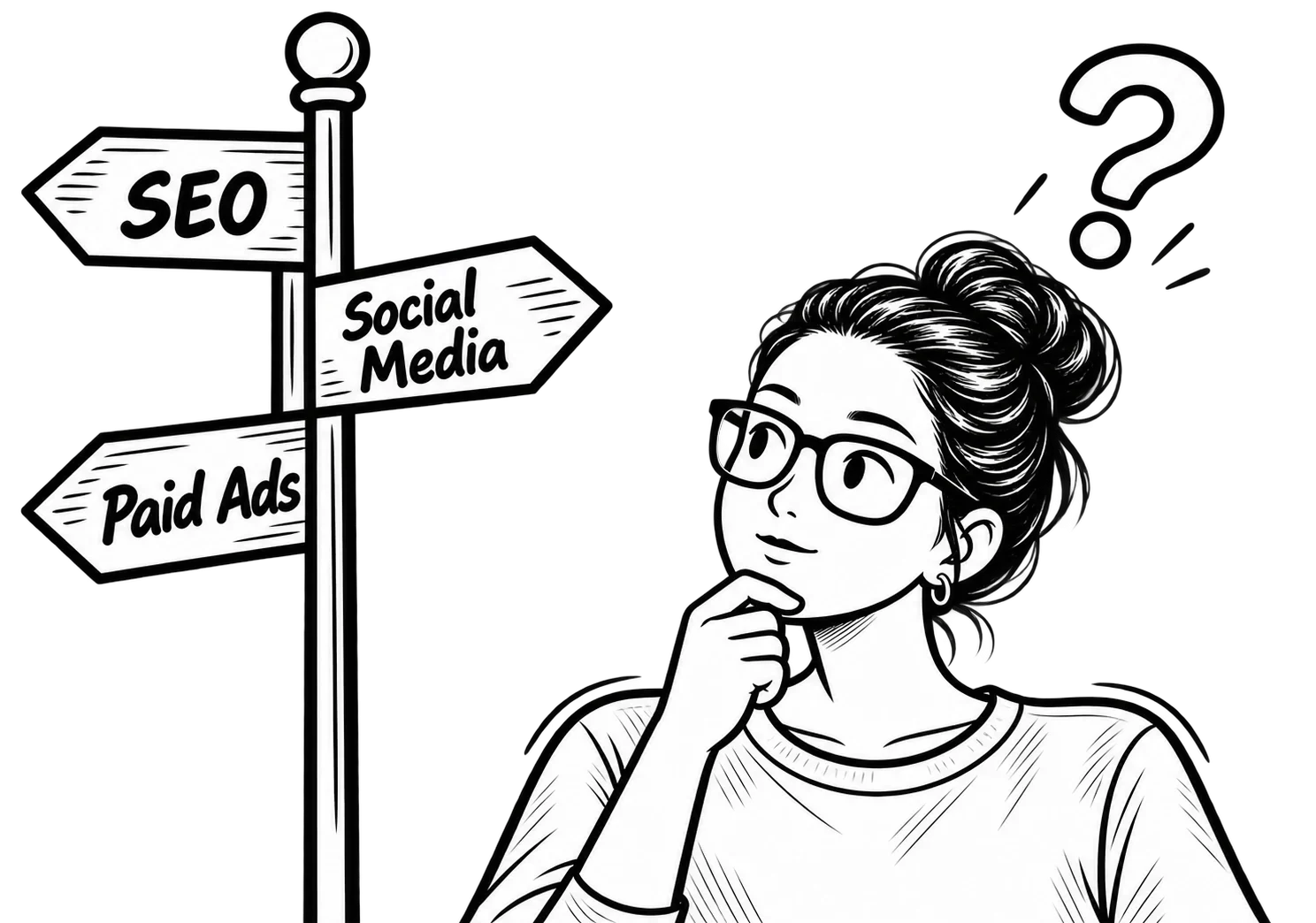
Google changes constantly.
Core updates roll out. Search features evolve. AI-generated answers appear alongside traditional results. New SEO theories spread across social media every time rankings move.
That can make content creation feel like a moving target.
But writing for Google does not require predicting the next algorithm update.
Google’s own guidance remains remarkably consistent: create useful content for people, make your expertise clear, help search engines understand what the page is about, and avoid producing content primarily to manipulate rankings.
The tools and search experiences around those principles have changed.
The fundamentals have not.
Google Does Not Have One Algorithm You Need to Write For
The phrase “Google algorithm” is useful shorthand, but it can also create the wrong mental model.
Google uses multiple automated ranking systems that evaluate many signals to determine which pages are relevant and useful for a search. Some systems operate primarily at the page level, while other site-wide signals can also contribute to Google’s understanding of individual pages.
That means there is no single writing formula that unlocks rankings.
You cannot simply:
- Hit a certain word count
- Repeat a keyword a specific number of times
- Add an FAQ section
- Mention an expert
- Use a particular number of headings
and expect Google to reward the page.
Instead, the content has to satisfy the reason someone searched in the first place.
The Helpful Content System Is No Longer a Separate System
The current version of this article refers to Google’s Helpful Content System as though it is still an independent ranking system.
That needs to be updated.
Google incorporated the Helpful Content System into its broader core ranking systems in March 2024. Its current ranking documentation lists the standalone system as retired.
The underlying idea still matters enormously.
Google continues to emphasize helpful, reliable, people-first content.
It simply is not something you optimize for as an isolated “Helpful Content algorithm.”
Start With Search Intent
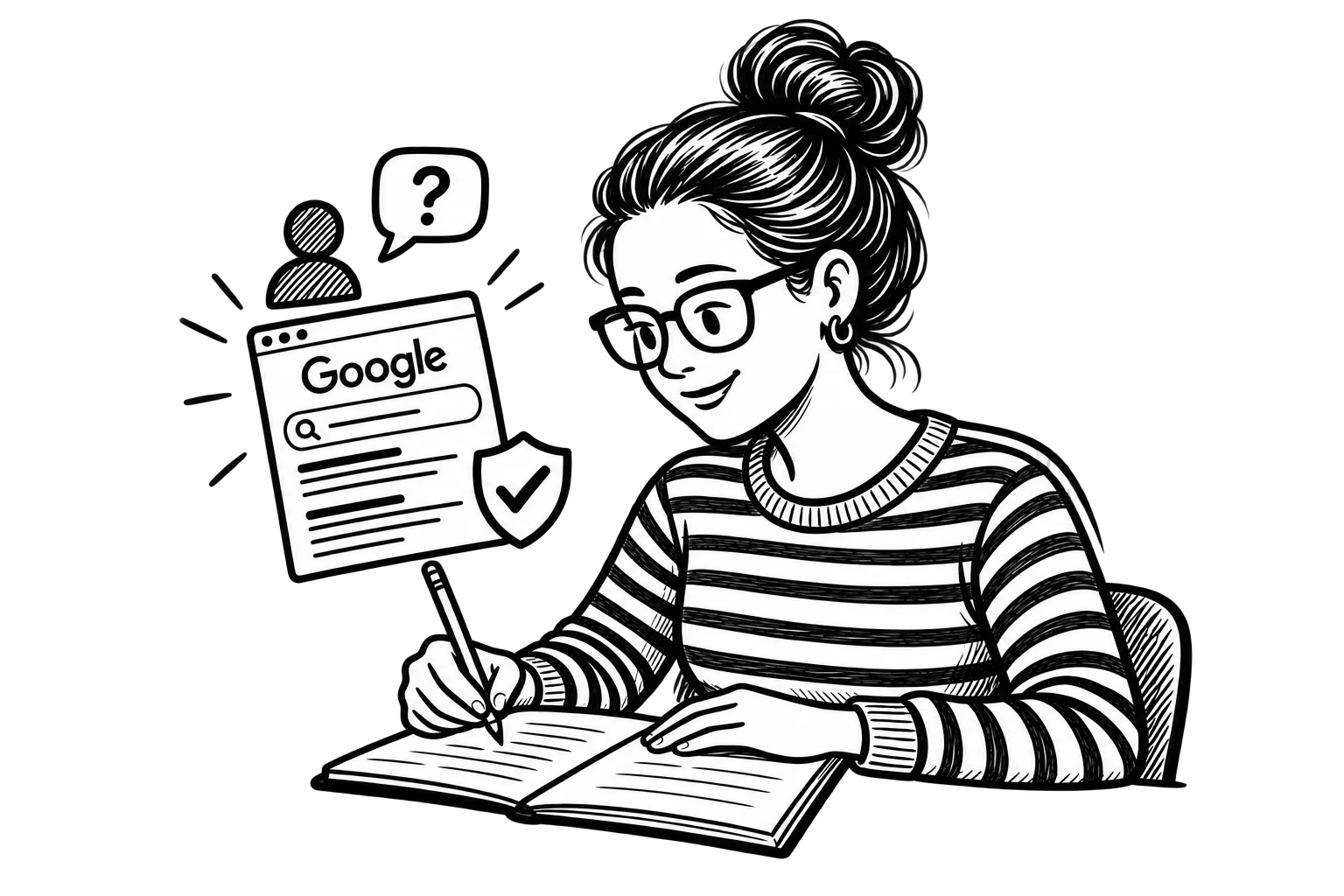
Before choosing headings, keywords, or word count, ask:
Why is someone searching this?
A person searching:
how much does a website redesign cost
probably wants ranges, factors affecting price, and enough context to understand what they might pay.
Someone searching:
WordPress vs Shopify
probably needs a comparison that helps them choose.
Someone searching:
why is my website slow
needs potential causes and a way to diagnose the problem.
Those are different intents and require different content structures.
A page can be beautifully written and still perform poorly if it does not solve the problem behind the search.
Answer the Main Question Early
Do not force readers through five paragraphs of background before giving them the information they came for.
If the question has a direct answer, give the reader a useful answer early, then provide the context they need to understand it.
That works for people.
It also makes the page easier for traditional search features and AI-powered systems to understand.
Our guide to SEO, AEO, and GEO explains how clear answers can support visibility across traditional search, answer-driven experiences, and generative search.
Use Keywords to Clarify the Topic, Not Control the Writing
Keywords still matter.
Google’s own Search Essentials recommends using words that people would use to find your content and placing them in prominent locations such as the title, main heading, alt text, and link text.
That is very different from repeating an exact phrase throughout the article.
For example, if the primary topic is Shopify mobile optimization, natural related language might include:
- Shopify mobile
- Mobile performance
- Product pages
- Mobile checkout
- Responsive design
- Core Web Vitals
- Store speed
The article should naturally develop the subject.
Do not mechanically replace every variation with the exact same keyphrase.
Modern search systems understand language, concepts, and relationships much better than the SEO formulas of twenty years ago assumed.
Create Something That Adds to the Search Results
One of the biggest challenges in content marketing now is that it is easy to produce another version of information that already exists.
AI makes that even easier.
Google’s current guidance for generative search specifically emphasizes valuable, non-commodity content. It recommends bringing original experience, expertise, perspective, and information instead of simply repackaging what everyone else has already said.
Ask what your page contributes.
Could you add:
- Experience from working with clients
- A process your team actually uses
- A real example
- A comparison based on hands-on experience
- Original screenshots
- Data from your business
- Common mistakes you repeatedly see
- A decision framework
- An expert opinion
- Updated information missing from older articles
This is increasingly important because a generic summary is something an AI system can produce almost instantly.
A business website needs to contribute something more.
Do Not Confuse Comprehensive With Long
Helpful content does not automatically mean long content.
Google explicitly says there is no ideal page length for generative search.
Some questions require 3,000 words.
Others require 500.
The correct length is the amount needed to solve the problem properly without stretching the article simply to satisfy an SEO tool.
If a section does not help the reader understand, decide, compare, or act, ask whether it needs to be there.
Show Who Knows What They Are Talking About
Google encourages creators to think about content in terms of Who, How, and Why.
Who Created the Content?
Readers should be able to understand who is responsible for the information when authorship matters.
Useful signals can include:
- Author names
- Author biographies
- Relevant professional experience
- Company expertise
- About pages
- Editorial review where appropriate
This becomes increasingly important when the subject requires specialized knowledge.
How Was the Content Created?
The answer depends on the article.
A product review may benefit from explaining that the product was actually tested.
A research article should cite its sources.
A comparison may explain which criteria were evaluated.
If AI helped with research, organization, or drafting, the important issue is not simply whether AI was involved.
It is whether the final content is accurate, useful, original, and responsibly produced.
Why Was It Created?
This is arguably the most important question.
Is the page being created because your audience genuinely needs the information?
Or are you publishing it only because an SEO tool showed search volume?
Google’s people-first guidance warns against producing large amounts of content across unrelated topics simply in hopes that some of it will rank.
Your content should have a logical relationship to the expertise and audience of the website.
Understand E-E-A-T Without Treating It Like a Score
The current article refers to E-A-T.
Google now describes the concept as E-E-A-T:
- Experience
- Expertise
- Authoritativeness
- Trustworthiness
Trust is the most important of the four.
But Google is also clear that E-E-A-T itself is not a specific ranking factor. Its systems use different signals that can help identify qualities associated with strong E-E-A-T.
So do not look for an “E-E-A-T score.”
Instead, think practically.
Can the reader tell why they should trust this information?
That may come from:
- First-hand experience
- Accurate facts
- Clear sourcing
- Relevant credentials
- Transparent business information
- Original research
- Real examples
- Consistency with trusted sources
For higher-risk subjects involving health, finance, safety, or other YMYL topics, expertise and trust deserve even more attention.
Link to Sources When the Claim Needs Evidence
Not every sentence needs an external link.
But factual claims should have support when readers would reasonably want to verify them.
For example, if you write:
Google requires bulk senders to use DMARC.
link to Google.
If you explain a specific Shopify feature, use Shopify’s documentation.
If you quote a legal requirement, go to the regulator or statute when possible.
Primary sources are usually better than a chain of blog posts repeating each other.
External links should add confidence or useful context.
They should not exist simply because an SEO checklist says every post needs three external links.
Build Internal Connections Between Related Content
Internal links help readers continue learning.
They also help search engines understand how pages on your website relate to one another.
Suppose you have a broad article explaining SEO, AEO, and GEO.
That article might link to deeper resources on:
- Technical SEO
- Generative engine optimization
- Content strategy
- Local SEO
- Website performance
Those deeper articles can link back to the broader resource.
Over time, that creates a connected body of knowledge rather than dozens of isolated blog posts.
Internal linking works best when the relationship is genuinely useful.
Do not force ten internal links into a paragraph simply because they contain keywords.
Give Content a Clear Structure
Well-organized content benefits readers first.
Use headings to make the progression of ideas obvious.
A useful hierarchy might look like:
H1: Main topic
H2: Major question or concept
H3: Supporting detail within that concept
Headings should describe what comes next.
Avoid vague headings like:
Things to Consider
when you could write:
How to Choose the Right Email Automation Trigger
The second heading provides context before the reader even reaches the paragraph.
Short paragraphs, bullets, tables, examples, definitions, and step-by-step sections can also help when they genuinely make information easier to use.
But do not break every sentence into a separate “chunk” because someone told you AI needs it.
Google explicitly says there is no requirement to chop content into tiny pieces for generative AI systems to understand it.
AI Can Help Create Content, but It Does Not Excuse Low-Value Content
Google does not prohibit content simply because AI helped create it.
Its guidance focuses on quality and purpose.
Generative AI can be useful for research, organization, brainstorming, and drafting.
The problem begins when businesses use automation to publish large amounts of unoriginal content primarily to manipulate rankings.
Google’s spam policies classify that behavior as scaled content abuse, regardless of whether the pages were produced by AI, humans, or another method.
A good AI-assisted workflow might look like:
- Identify a real customer question.
- Research the topic using reliable sources.
- Use AI to help organize ideas or create a draft.
- Add business expertise and original examples.
- Verify factual claims.
- Remove generic filler.
- Edit for brand voice.
- Add useful internal and external links.
- Review whether the final article actually answers the question.
AI should make good content production more efficient.
It should not turn your website into a publishing machine for interchangeable articles.
Writing for Google Also Means Writing for AI Search
Google Search now includes generative experiences such as AI Overviews and AI Mode.
That understandably created a new question:
Do we need to write differently for AI?
Google’s answer is largely no.
Its 2026 guidance says traditional SEO best practices remain foundational because Google’s generative experiences rely on its Search index, ranking systems, and quality systems.
That means the fundamentals still matter:
- Useful content
- Crawlable pages
- Clear site structure
- Original information
- Relevant internal links
- Accurate information
- Strong page experience
- Images and video where useful
There Is No Special Google GEO Schema
Google has also clarified several misconceptions.
You do not need:
- Special AI schema
- Artificially tiny content chunks
- An
llms.txtfile for Google Search - Every possible long-tail keyword variation
- A completely separate copywriting style for AI
Google says llms.txt neither helps nor hurts visibility in Google Search because Google ignores it. It also says no special structured data is required for generative search features.
That does not make GEO irrelevant.
It means good GEO should build on strong SEO and content practices instead of turning into another collection of hacks.
Update Existing Content Instead of Constantly Publishing More
A good content strategy is not only about creating new pages.
Older articles can become inaccurate.
Product features change.
Platform rules change.
Links break.
Statistics age.
Search intent evolves.
Sometimes the strongest SEO move is improving an existing page instead of creating another article about nearly the same topic.
That is exactly why keeping website content fresh and relevant matters.
Review existing content for:
- Outdated facts
- Old screenshots
- Dead links
- Obsolete recommendations
- Year-specific framing
- Search intent that has changed
- Overlap with other pages
- Opportunities for better internal linking
A substantial refresh can make an existing resource much stronger without creating another URL competing for the same search.
Do Not Panic Every Time Google Releases a Core Update
Google makes broad core updates several times a year.
They are not necessarily penalties against specific websites. They are broad changes intended to improve how Google evaluates and surfaces useful results.
If traffic changes after an update, do not immediately rewrite every article.
Google specifically advises against drastic changes when a page has only experienced a small ranking movement.
Instead:
- Wait until the update finishes.
- Compare performance over meaningful periods.
- Look at individual pages and queries.
- Identify whether the decline is small or substantial.
- Review the content objectively.
- Improve genuine weaknesses rather than searching for a secret reversal trick.
Sometimes another page simply became more useful.
Your goal is to make yours better.
Technical SEO Still Has to Support the Content
Excellent writing cannot rank if Google cannot properly access or index the page.
At a minimum, Google needs to be able to crawl the content, receive a successful page response, and access indexable information.
Content teams should still pay attention to basics such as:
- Crawlability
- Indexability
- Canonical URLs
- Mobile usability
- Site performance
- Internal linking
- Redirects
- Structured data when appropriate
- Image optimization
Content SEO and technical SEO work together.
Neither replaces the other.
A Practical Checklist Before Publishing
Before publishing an article, ask:
Does It Match the Search Intent?
Would someone who searched this topic feel that the article solved their problem?
Does It Answer the Main Question Clearly?
Can the reader understand the central answer without digging through unnecessary background?
Does It Add Something?
Are you contributing expertise, examples, judgment, data, or perspective beyond what could be summarized from the first five results?
Is It Accurate?
Have changing facts, product features, statistics, laws, platform rules, and technical claims been verified?
Can Readers Trust It?
Is authorship clear when relevant? Are factual claims supported? Does the content reflect actual expertise?
Is It Easy to Navigate?
Do headings clearly explain the structure? Are long sections broken up where helpful?
Are Keywords Natural?
Are important terms present where they help describe the topic rather than repeated mechanically?
Are Links Useful?
Do internal links help readers explore related topics? Do external sources support important claims?
Is the Page Technically Accessible?
Can search engines crawl and index it?
Would You Publish This Without Google?
This may be the most useful question.
If the article would still be valuable to your audience even if organic search traffic disappeared tomorrow, you are probably creating something with a real reason to exist.
Stop Writing for Updates and Start Building Useful Resources
Google Search will keep changing.
AI-powered search will keep evolving.
New ranking systems, interfaces, and discovery behaviors will continue to appear.
Trying to reverse engineer every update is not a sustainable content strategy.
A better approach is to create content that deserves to remain useful.
Understand what people are searching for.
Answer their questions clearly.
Bring real expertise and experience.
Support factual claims.
Organize information well.
Keep important pages updated.
Make sure search engines can access them.
Those practices support traditional SEO, answer-based search, and generative search at the same time.
You do not need to predict Google’s next update.
You need to keep giving Google good reasons to show your content.