How to Build a Strong Digital Presence for Your Small Business
How to Build a Strong Digital Presence for Your Small Business
A strong digital presence is not about being everywhere. Learn how to connect your website, search visibility, social media, content, email, and advertising into a system that helps customers find and trust your business.


A strong digital presence is not about being on every platform or publishing something every day. It is about making your business easy to find, easy to understand, and easy to trust wherever potential customers look for you online.
For most small businesses, that means having a professional website, accurate search information, useful content, active social profiles on the right platforms, a way to stay connected with customers, and reliable data showing what is actually working.
The important part is how those pieces work together. A customer might discover you on Google, check your social media, read reviews, visit your website, and come back days later before finally contacting you. Your digital presence needs to support that entire process.
What Does a Strong Digital Presence Actually Mean?
Your digital presence includes nearly every place someone can encounter your business online.
That can include:
- Your website
- Google Search and Maps
- Social media profiles
- Customer reviews
- Blog articles, videos, and other content
- Email marketing
- Paid advertising
- Online directories
- Mentions on other websites
- AI-assisted search experiences
You do not need to dominate every one of these channels.
In fact, trying to be everywhere usually creates the opposite problem. You end up with an outdated website, three neglected social profiles, an email list you have not contacted in eight months, and a growing collection of logins nobody remembers.
A stronger approach is to identify the places your customers actually use and make those touchpoints work together.
1. Make Your Website the Center of Your Digital Presence
Social platforms change. Algorithms change. Search results change. Your website is still the part of your online presence you control.
It should quickly answer a few basic questions:
- What does your business do?
- Who do you help?
- Why should someone trust you?
- What should they do next?
A website does not have to be complicated to do those things well.
Focus first on mobile usability, clear navigation, readable content, fast and reliable performance, visible contact information, and calls to action that make sense for the page.
Design matters, but good design should help people understand and use the website. A beautiful homepage that leaves visitors wondering what the company actually does is still a bad homepage.
If you are evaluating your current site, understanding what makes a website actually work for your business is more useful than simply asking whether it looks modern.
2. Make It Easy for People to Find You in Search
Search visibility is another major part of your digital presence, especially when customers already know what they need and are looking for someone who can provide it.
For local businesses, start with your Google Business Profile. Keep your business name, category, hours, phone number, website, address or service area, photos, and other relevant information accurate.
Google explains that local results are mainly based on relevance, distance, and prominence. Reviews, accurate business information, links, and the overall strength of your online presence can all contribute to how your business appears locally.
Your website also needs a solid SEO foundation. That means creating pages around the products, services, locations, and questions your customers actually search for, while making those pages easy for search engines to crawl and understand.
And yes, search now includes AI-powered experiences too. That does not mean small businesses need to throw out everything they know about SEO and invent an entirely separate strategy. Google says its existing SEO best practices continue to apply to AI features in Search.
Clear information, useful content, good website structure, strong internal linking, accurate business information, and original expertise still matter.
For a deeper breakdown, our guide to SEO for growing businesses explains how those pieces fit together.

3. Create Content That Answers Real Customer Questions
Content helps people understand what you know before they ever speak with you.
That does not mean your business needs to become a publishing company.
Start with the questions customers repeatedly ask during sales calls, consultations, emails, or in-store conversations. Those questions are often much better content ideas than whatever happens to be trending that week.
Useful content might include:
- How-to articles
- Service comparisons
- Product demonstrations
- Short educational videos
- Buying guides
- Case studies
- Frequently asked questions
- Checklists or downloadable resources
- Behind-the-scenes content that shows how your business works
AI has made it easier than ever to produce large amounts of content. It has not made generic content more valuable.
Original expertise, useful examples, clear explanations, and information based on what your customers actually need are much harder to replace.
One useful article that answers an important question thoroughly can do more for your digital presence than ten posts created because somebody said you should “publish consistently.”
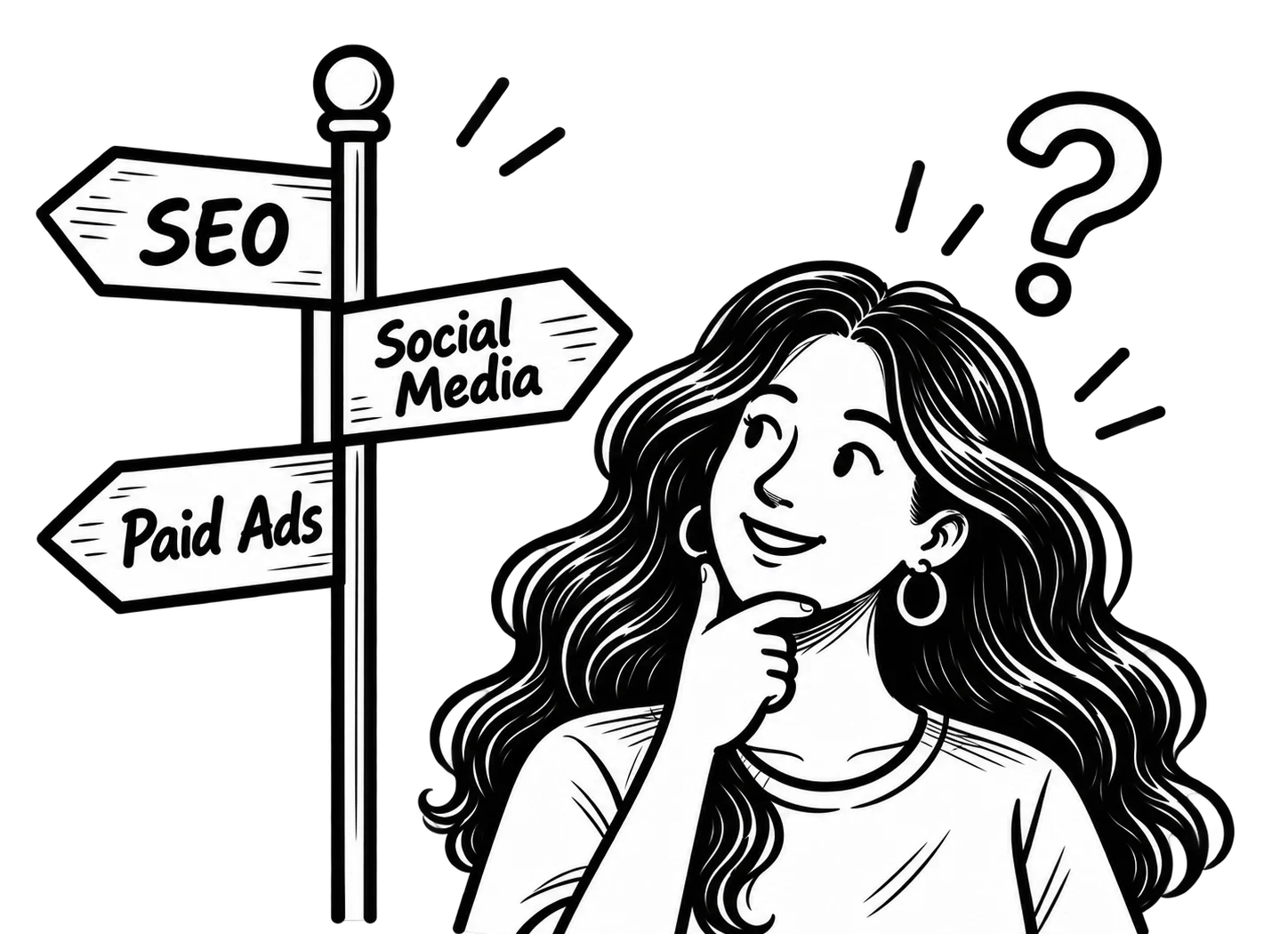
4. Choose Social Media Platforms Deliberately
Your business probably does not need every social platform.
The right channels depend on who you are trying to reach, what kind of content you can realistically create, and how your customers use those platforms.
Instead of starting with “Should we be on Instagram, LinkedIn, Facebook, or TikTok?” start with:
- Where does our audience already spend time?
- What are they doing there?
- What type of content makes sense for our business?
- Can we maintain this platform consistently?
- What do we want people to do after they see our content?
A business with strong visual work may benefit from a very different social strategy than a professional services company with a long sales cycle. Industry alone does not determine the answer.
If you are spread across too many channels, it may be worth reconsidering how to choose the right social media platforms for your business instead of continuing to feed every account simply because it exists.
Once you choose your platforms, focus on useful content and actual interaction.
Respond to questions. Join relevant conversations. Show real work. Introduce the people behind the business. Share information your audience would genuinely want to save, send, or come back to.
Posting more is not automatically a strategy.
5. Build an Audience You Can Reach Directly
Social media can help you build awareness, but you do not control the platform.
An email list gives your business a more direct way to maintain relationships with people who have already shown interest.
That does not mean sending constant promotions.
Useful email marketing can include:
- Company or product updates
- Helpful resources
- Educational content
- Event announcements
- Relevant offers
- Follow-up sequences
- Customer reminders
- Personalized recommendations based on previous actions
Give people a legitimate reason to subscribe and be clear about what they are signing up for.
Do not buy lists or add people simply because you happen to have their email address. Businesses sending commercial email in the United States should also understand applicable CAN-SPAM requirements, including rules around identifying commercial messages and providing a way to opt out.
The goal is not the biggest list possible. It is an audience that actually wants to hear from you.
6. Use Paid Advertising to Accelerate a Good Foundation
Paid advertising can put your business in front of the right audience quickly, but it works best when the rest of your digital presence is ready for that attention.
Sending paid traffic to a confusing website does not fix the website. It just lets you pay to discover the problem faster.
Start with the business goal.
Search advertising can make sense when people are actively looking for a service or product you offer. Social advertising can help introduce your business to an audience, promote specific offers, or reconnect with people who have already interacted with you.
Whatever channel you use, make sure you can answer:
- What action do we want people to take?
- Where are we sending them?
- Does that page support the ad message?
- Are we tracking leads, sales, calls, or another meaningful outcome?
- What would make us increase, change, or stop the campaign?
A small budget with a clear objective and useful tracking is usually more informative than spreading money across several platforms just to “have ads running.”
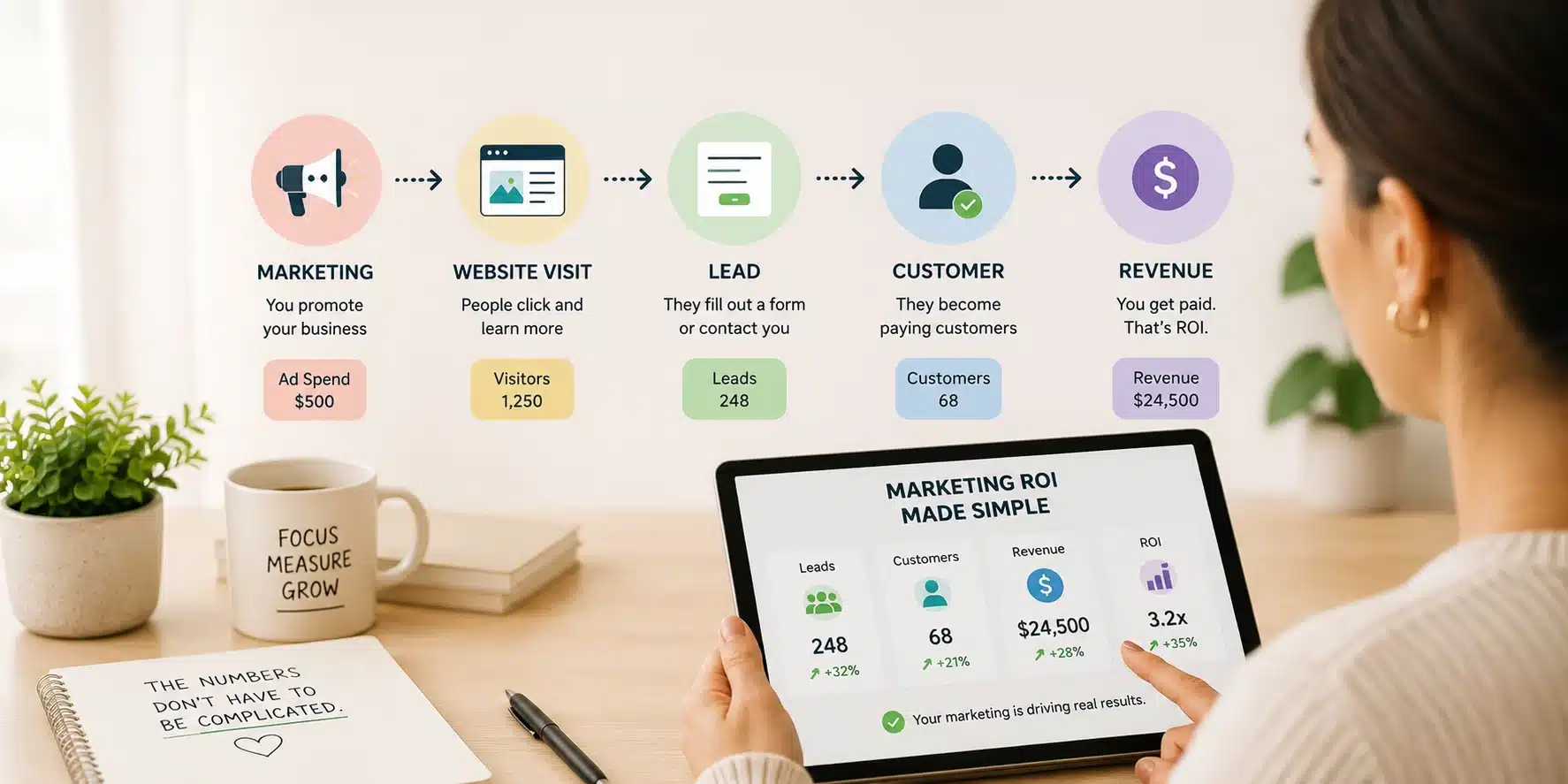
7. Measure What Customers Actually Do
A digital presence should produce something more useful than impressions and follower counts.
Decide what matters to the business and track those actions.
Depending on your goals, that might include:
- Contact form submissions
- Phone calls
- Appointment requests
- Purchases
- Quote requests
- Email signups
- Store visits
- Downloads
- Qualified leads
Google Search Console can help you understand how people are finding your website through Google Search, while Google Analytics can measure important actions such as form submissions and other key events on the site.
Social media and advertising platforms provide their own performance data as well.
The point is not to collect every metric available. It is to connect your marketing activity to decisions.
If one channel generates plenty of traffic but very few customers, investigate why. If another reaches fewer people but consistently generates strong leads, that deserves attention too.
More activity is not always better performance.
Keep Your Online Presence Consistent
Customers rarely experience your marketing one channel at a time.
They might see an ad, search your business name, visit your website, read your Google reviews, and then open Instagram to make sure you are still active.
Small inconsistencies can create unnecessary doubt.
Regularly check that your:
- Business name and contact information are accurate
- Hours are current
- Service descriptions still match what you offer
- Website and social profiles use consistent branding
- Calls to action lead to working pages
- Old promotions have been removed
- Reviews and customer questions are being monitored
- Important website content is still accurate
Your digital presence is not something you build once and finish. Businesses change, customers change, and the places people discover you change too.
What Should a Small Business Prioritize First?
If your time and budget are limited, do not try to improve everything at once.
Start with the foundation.
First, make sure your website clearly explains what you do and makes contacting or buying from you easy. Then review how your business appears in search, especially your Google Business Profile if you serve a local market.
After that, choose the one or two marketing channels most relevant to your audience and build a sustainable content rhythm around them.
Add email, paid advertising, additional content, or new platforms when there is a clear reason to do so, not because another business is using them.
The strongest digital presence is usually not the one doing the most things. It is the one connecting the right things around a clear customer journey.
Build a System, Not a Checklist
Your website, search visibility, social media, content, email, advertising, and reviews should not feel like seven separate marketing projects.
They should reinforce each other.
A useful social post can lead someone to your website. A strong article can appear in search and later become an email. A good customer experience can produce a review that helps the next person trust you. Paid advertising can bring the right person into that system faster.
That is what turns a collection of online accounts into a real digital presence.
Not sure which parts of yours are helping or hurting? MoDuet’s free Online Presence & Competitor Analysis Report can show you how your business appears online, where competitors may be stronger, and which opportunities are worth prioritizing next.