Google Ads Changes: How to Adapt Your Search Strategy
Google Ads Changes: How to Adapt Your Search Strategy
Google Ads is giving AI a larger role in targeting, creative, bidding, and landing page selection. Learn what has changed and how to adapt your Search strategy without giving up control.

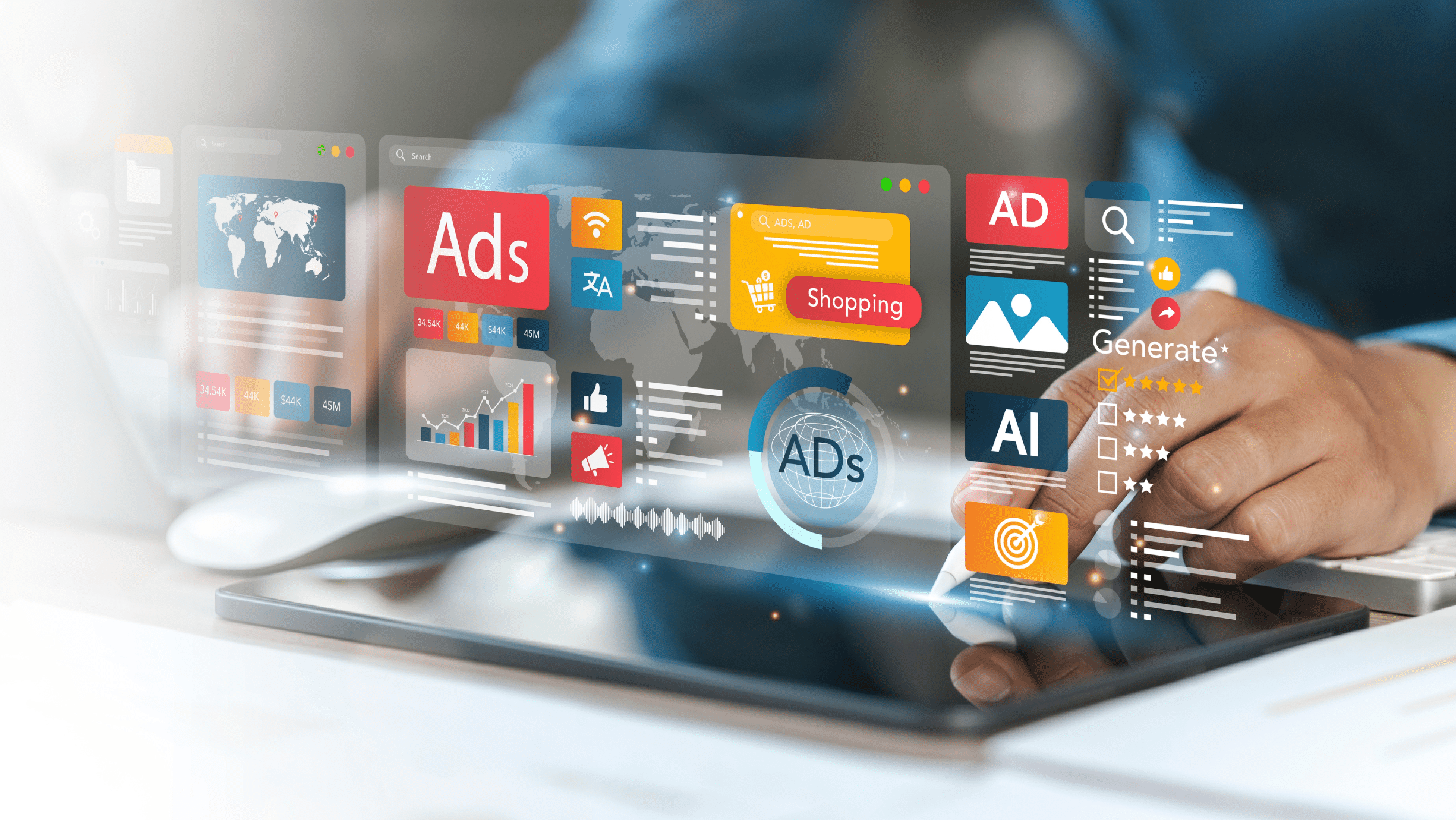
Google Ads has always changed quickly, but the direction is becoming much clearer.
Search campaigns are relying more heavily on artificial intelligence to understand intent, expand targeting, generate or customize creative, choose landing pages, and optimize bidding.
At the same time, the way people search is changing. Queries can be longer, more conversational, and more complex as Google incorporates AI-powered experiences into Search.
For advertisers, this does not mean strategy matters less.
It means the parts humans need to get right are changing.
Instead of spending most of your time making small manual adjustments, you increasingly need to give Google better goals, stronger conversion data, useful creative assets, relevant landing pages, and clear boundaries around where automation should and should not go.
Search Advertising Is Becoming More AI-Driven
Google has been moving toward automated campaign management for years, but that shift is accelerating.
Smart Bidding already uses machine learning to adjust bids based on signals available at auction time. Performance Max expanded automation across Google inventory. Now AI Max is bringing more AI-powered targeting and creative capabilities directly into traditional Search campaigns.
This matters because Search itself is becoming less dependent on short, predictable keyword combinations.
Someone looking for a service may still search:
commercial HVAC repair Louisville
But another person could search:
Who can repair the HVAC system in my restaurant without shutting us down for the day?
Both searches may represent valuable intent, even though the second query does not neatly match the way an advertiser might have traditionally built a keyword list.
Google’s direction is increasingly focused on understanding that intent rather than requiring advertisers to anticipate every possible search phrase.

AI Max Is Changing How Search Campaigns Work
AI Max for Search campaigns is not a separate campaign type. It is an optimization layer within Search campaigns that expands how Google can match searches, customize ads, and select landing pages.
Google now turns AI Max on by default when creating new Search campaigns, although advertisers can control individual features.
Search Term Matching Goes Beyond Your Keyword List
AI Max search term matching can use broad match technology along with information from your ads, assets, and landing pages to identify relevant searches.
That does not mean keywords have disappeared.
Keywords still provide important information and controls, but advertisers should expect Google to interpret intent more broadly when AI-powered matching is enabled.
This makes the search terms report even more important.
If Google is exploring beyond the exact keywords you entered, you need to know which searches are actually triggering your ads and whether they represent customers you want.
Negative keywords, brand controls, geographic settings, and other exclusions remain important ways to guide that expansion.
Ad Copy Can Adapt to the Search
AI Max also includes text customization, which can use information from your existing ads, landing pages, and other assets to create messaging that better matches a particular search.
That makes your website part of the advertising input.
If your landing pages are vague, outdated, or poorly structured, Google has weaker information to work with.
Clear service descriptions, accurate product information, useful page titles, and strong messaging become important not only for the visitor who reaches the page but also for the systems determining how your ads should appear.
Google Can Choose a Different Landing Page
Final URL expansion allows Google to send someone to a different relevant page on your website when the system determines that page better matches the person’s intent.
That can be useful for websites with several strong service or product pages.
It can also create problems if your website contains pages you would never want to use as paid advertising destinations.
Before enabling broader landing page expansion, review the pages Google can access and use URL exclusions where necessary.
Automation works much better when the website underneath it is organized properly.
Some Older Search Features Are Moving Into AI Max
Google is also consolidating some existing Search features around AI Max.
In September 2026, Google began automatically upgrading campaigns using automatically created assets and the campaign-level broad match setting into corresponding AI Max functionality.
Dynamic Search Ads are also moving toward AI Max, although Google extended that transition. The automatic DSA upgrade is now scheduled to begin in February 2027.
If you use any of those features, do not wait until they disappear from the interface to understand what will replace them.
Review your current Search campaigns and identify which ones depend on Dynamic Search Ads, automatically created assets, or campaign-level broad match.
Then test how the equivalent AI Max controls affect performance before the transition forces the decision for you.
Automation Makes Conversion Tracking More Important
Google’s automation can only optimize toward the goals you give it.
If your account treats every form submission, phone click, newsletter signup, and purchase as equally valuable, automated bidding receives a distorted picture of success.
The same problem happens when conversion tracking is incomplete.
Imagine a service company generating 20 leads from Google Ads.
Ten are spam. Six are legitimate inquiries that never become customers. Four become profitable jobs.
If Google only sees 20 form submissions, it has no way to know which leads actually created business value.
This is why better Google Ads management increasingly depends on better measurement.
Define the Conversions That Actually Matter
Review which conversion actions are set as primary goals.
For a lead-generation business, that might include:
- Qualified form submissions
- Phone calls that meet a meaningful duration
- Appointment bookings
- Sales-qualified leads
- Closed customers
For e-commerce, the most important signal may be completed purchases and revenue rather than add-to-cart activity.
Secondary actions can still be useful for analysis without telling automated bidding that every small interaction deserves the same value.
Use First-Party Data to Improve Measurement
First-party data remains important, but not for the outdated reason that third-party cookies are simply disappearing everywhere.
The more immediate issue is that automated advertising needs reliable information about what happens after someone interacts with an ad.
Google’s enhanced conversions use hashed customer information that customers provide directly, such as an email address or phone number, to improve conversion measurement.
In April 2026, Google simplified its enhanced conversions setup by combining web and lead configurations into a unified setting and supporting user-provided data through website tags, Data Manager, and API connections.
For lead-generation businesses, connecting offline outcomes can be especially valuable.
If Google knows which inquiries become qualified leads or customers, bidding can optimize toward something much closer to business results instead of simply maximizing form fills.
Smart Bidding Still Needs Human Direction
Automation does not mean turning on Target CPA or Target ROAS and never looking at the campaign again.
Automated bidding needs a clear objective and enough useful data to learn from.
Before changing bidding strategies, ask:
- Are the conversion actions accurate?
- Are low-value actions being counted as primary conversions?
- Does the campaign have enough meaningful conversion data?
- Is the target CPA realistic?
- Is the ROAS target based on actual margins and business goals?
- Are offline sales being fed back into the account when appropriate?
A technically sophisticated bidding system cannot compensate for a goal that does not make business sense.
Google has also expanded AI Max experiments and planning tools so advertisers can test automation rather than applying major changes blindly. Experiments can compare performance within existing Search campaigns, while Performance Planner can model the potential effect of changes to budgets and bidding targets.
Search Ads Are Entering AI-Powered Search Experiences
The Search results page itself is also changing.
Google is testing new ad experiences within AI Mode, including formats designed to respond to more detailed, conversational searches.
That does not mean traditional Search ads have disappeared or that every advertiser is suddenly showing inside AI Mode.
It does mean advertisers should prepare for a Search environment where the path from question to recommendation to ad can look different from the familiar list of sponsored and organic results.
The practical response is not to build an entirely separate “AI ads strategy.”
It is to make sure Google has enough useful information to understand your business, your products or services, your landing pages, and the outcomes you value.
Creative Quality Matters More When Google Can Generate Variations
When Google can create or customize more of the ad itself, the quality of the information you provide becomes increasingly important.
Your headlines, descriptions, images, video, brand messaging, product feeds, and website content give automated systems material to work with.
Generic inputs tend to produce generic outputs.
For example, compare:
Quality HVAC service. Contact us today.
with:
Commercial HVAC repair for restaurants, offices, and retail properties across Louisville.
The second version gives both the customer and Google’s systems more useful context.
The goal is not to write dozens of slightly different ads manually.
It is to provide enough accurate, distinctive information for automation to build from something worthwhile.
Landing Pages Are Part of the Google Ads Strategy
A Google Ads campaign does not end when someone clicks the ad.
The landing page still has to convert that attention into an action.
As Google uses more landing page content to understand campaigns and select destinations, the relationship between the ad and the website becomes even more important.
A useful landing page should clearly explain:
- What you offer
- Who it is for
- Where you provide it, when location matters
- Why someone should choose you
- What the visitor should do next
It should also load quickly, work properly on mobile, and make the conversion action easy to complete.
Driving more traffic to a weak page simply allows you to pay for more people to encounter the same problem.
Better Reporting Should Help Advertisers Evaluate AI
One concern with increasing automation has always been visibility.
Advertisers need to know what the system is doing, not just whether Google recommends turning another feature on.
Google has continued adding reporting and testing tools around AI Max. In September 2026, Google announced a new AI Max reporting view designed to connect the search term, creative assets shown, and landing page used in a single view.
That kind of reporting matters because advertisers need to evaluate not only whether conversions increased, but also how Google produced those results.
Look at the queries generating traffic.
Review which landing pages receive paid visits.
Watch lead quality.
Compare cost per qualified lead or actual sale, not only cost per form submission.
And connect Google Ads with your broader web analytics so campaign metrics can be evaluated alongside what visitors actually do after they reach the site.
What Businesses Should Do Now
You do not need to rebuild every Google Ads campaign simply because Google releases another AI feature.
Start by making sure the foundation is strong.
Audit your conversion tracking. Confirm that the actions Google is optimizing toward represent real business value.
Review your landing pages. Make sure Google can understand the services or products on each page and that visitors have a clear conversion path.
Check your search terms. Broader AI-powered matching makes query monitoring and exclusions more important, not less.
Test before scaling. Use AI Max experiments when possible instead of applying major automation changes across an entire account at once.
Review your controls. Brand settings, locations, negative keywords, URL exclusions, budgets, and conversion goals still give advertisers ways to shape how automation operates.
Strengthen your first-party measurement. Use enhanced conversions and offline conversion data when they make sense for your business.
Evaluate business outcomes. Clicks and impressions tell you what happened in Google Ads. Leads, sales, acquisition cost, and marketing ROI tell you whether it was worthwhile.
If you are still building the fundamentals, our guide to Google Ads for small businesses covers the basic campaign structure and terminology before you move deeper into automation.
The Role of the Advertiser Is Changing
Google Ads is becoming more automated, but successful campaigns still require decisions that AI cannot make for your business.
Google does not know which customer is most profitable unless you provide that information.
It does not know whether a lead was a waste of your sales team’s time unless that outcome is measured.
It does not know which parts of your brand voice are non-negotiable unless you define them.
And it cannot fix a landing page that does not persuade people to act.
The advertisers best prepared for the next stage of Google Ads will not necessarily be the ones who automate everything.
They will be the ones who know what to automate, what to measure, what to control, and what business result they are actually trying to improve.