The Future of Social Media: Trends Shaping Strategy and Growth
The Future of Social Media: Trends Shaping Strategy and Growth
Social media is becoming more AI-driven, search-oriented, creator-led, and connected to business results. See the trends shaping how brands reach, engage, and convert their audiences.

Social media changes quickly, but not every new feature deserves a place in your marketing strategy.
The bigger changes are happening in how people use social platforms. They are no longer just places to follow friends, brands, and creators. People increasingly use them to search, discover products and businesses, research decisions, participate in communities, communicate with brands, and make purchases.
At the same time, artificial intelligence is changing how content is created, recommended, discovered, and measured.
For businesses, preparing for the future of social media is less about predicting the next platform and more about understanding how these shifts affect the way people find and interact with brands.
Social Media Is Becoming a Discovery Engine
People do not always begin their search on a traditional search engine.
They may open TikTok to look for a restaurant, search Instagram for inspiration, watch YouTube reviews before purchasing a product, or turn to LinkedIn for professional advice.
TikTok’s 2026 trend research reflects this shift toward active discovery. The platform reports that one in four users starts searching within the first 30 seconds of opening the app, and more than half continue exploring even after finding what they originally searched for.
That changes the role of social content.
A post does not only have to catch someone’s attention while they scroll. It may also need to answer a question, explain a topic, demonstrate a product, or help someone make a decision.
Clear captions, descriptive language, useful on-screen text, and content built around real customer questions can make social posts more useful beyond the initial feed.

AI Is Changing How Social Content Is Created and Distributed
Artificial intelligence has been part of social media algorithms for years, but its role is expanding.
Platforms now use AI to recommend content, identify audiences, support advertising, analyze performance, assist creators, and generate or modify creative assets.
Meta introduced Creator Assistant on Facebook in 2026, using a creator’s content, audience, engagement, and performance to provide personalized recommendations and ideas.
TikTok has also expanded AI throughout campaign planning, audience insights, creator discovery, advertising, and the path between product discovery and purchase.
For brands, these tools can make social media more efficient. AI can help brainstorm ideas, create variations, summarize performance, repurpose content, and identify patterns in audience behavior.
But easier content creation also creates a new problem: everyone can produce more content.
That means volume alone is unlikely to become a competitive advantage. Strategy, originality, expertise, and a recognizable point of view matter more when audiences have more content competing for their attention.
Original Content Is Becoming More Important
As AI makes content easier to produce, platforms are also placing more emphasis on originality.
In 2026, Meta clarified its Facebook guidelines around original content and said it is increasing distribution for creators who produce something genuinely new while reducing the reach of duplicated or low-value content. The company also reported that views and watch time for original Reels approximately doubled in the second half of 2025 compared with the same period a year earlier.
For businesses, originality does not mean every post needs to be groundbreaking.
It means giving people something that actually comes from your business.
That might include:
- Real employees and subject-matter experts
- Customer questions your team regularly answers
- Behind-the-scenes processes
- Examples from actual projects
- Product demonstrations
- Customer experiences
- Original observations from your industry
- Opinions based on firsthand experience
A business that simply recreates whatever is already trending may get occasional reach.
A business that consistently provides something useful or distinctive has a better chance of becoming recognizable.
Video Still Matters, but Not Every Brand Needs the Same Video Strategy
Video continues to play a major role across TikTok, Instagram, Facebook, YouTube, and increasingly professional platforms such as LinkedIn.
LinkedIn has continued investing in both video and creator-led content for B2B audiences, including expanded creator sponsorship opportunities introduced in 2026.
But “use more video” is not enough of a strategy.
The format has to make sense for the business and the platform.
A restaurant might benefit from quick visual content showing food, atmosphere, or behind-the-scenes preparation.
A consultant may get more value from answering a common client question directly to the camera.
A B2B company could use short expert interviews, demonstrations, or customer stories.
The goal is not to recreate the same Reel across every platform just because vertical video is popular.
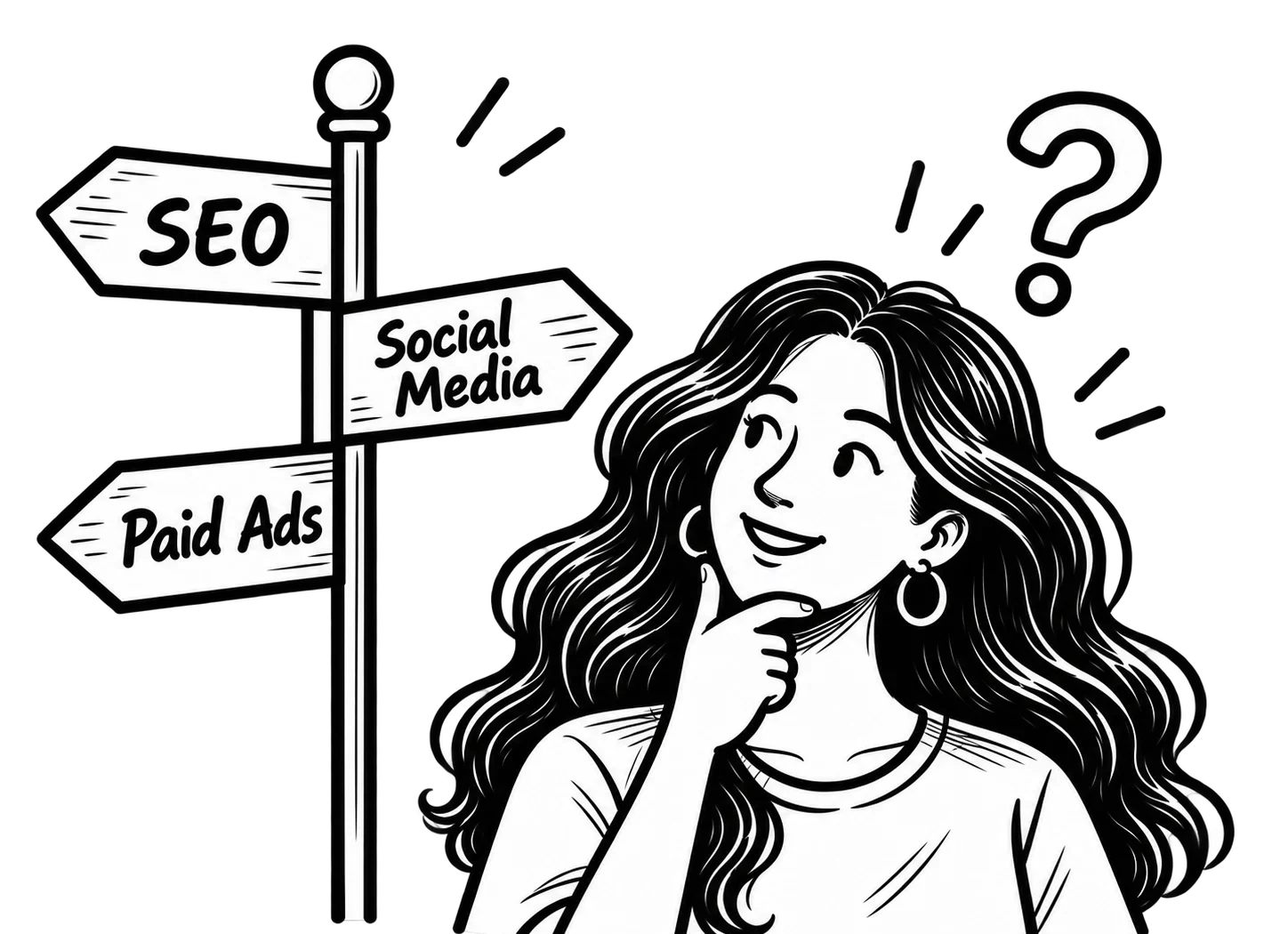
Choosing the right social media platforms for your business should come before deciding what formats you need.
Creators Are Becoming Part of Broader Marketing Strategies
Influencer marketing is also becoming more integrated with the rest of digital marketing.
Brands are increasingly working with niche creators, industry voices, local personalities, employees, and subject-matter experts instead of looking only at accounts with the largest follower counts.
The relationship can also extend beyond a single sponsored post.
Creator content may be reused in paid advertising, product pages, emails, social campaigns, or other marketing materials.
LinkedIn’s continued expansion of professional creator partnerships shows that this shift is not limited to consumer products. Creator-led marketing is also becoming increasingly relevant in B2B environments.
The important question is not simply how many followers someone has.
It is whether that person has credibility with an audience the business actually wants to reach.
That is why current influencer marketing trends are moving toward relevance, stronger partnerships, and measurable outcomes instead of follower count alone.
Communities Matter More Than Audience Size
A large follower count does not automatically mean a brand has a valuable audience.
Social platforms are increasingly shaped by smaller communities organized around specific interests, professions, lifestyles, problems, and identities.
TikTok’s 2026 trend forecast emphasizes curiosity, niche communities, active participation, and meaningful interaction rather than passive consumption.
For businesses, this makes community more important than simply accumulating followers.
A smaller audience that regularly asks questions, shares posts, recommends the company, attends events, or eventually becomes customers can be far more valuable than thousands of people who rarely interact.
That requires businesses to participate.
Respond to comments. Pay attention to recurring questions. Join relevant conversations. Ask customers what they want to learn. Create content in response to what the audience is actually telling you.
Social media works differently when it is treated as a relationship rather than a publishing schedule.
Our Social Media Management: The Boutique Approach guide explores this kind of strategy in more detail.
Social Commerce Is Shortening the Customer Journey
The distance between discovering something on social media and taking action is getting smaller.
Platforms increasingly connect content, creators, search, advertising, messaging, and shopping within the same environment.
TikTok continues to build around what it describes as the path from discovery to business results, with new 2026 tools connecting audience intent, AI, advertising, and commerce more closely.
For e-commerce businesses, that can mean fewer steps between seeing a product and purchasing it.
But the principle applies to service businesses too.
Someone may discover a local contractor through a social video, visit the website, read reviews, and request an estimate within a few minutes.
Social media may start the journey, but the rest of the experience still has to work.
If the landing page is confusing, the website is slow, the offer is unclear, or contacting the business is difficult, social engagement will not automatically become business growth.
Search and Social Are Becoming More Connected
Social media and search marketing used to feel like separate channels.
That distinction is getting weaker.
People search within social platforms, social content appears in search results, creators influence what people research elsewhere, and customers move between social, search, websites, reviews, and AI tools while making decisions.
For brands, that creates an opportunity to think more intentionally about topics.
If customers repeatedly ask a question during sales calls, that question might become:
- A blog article
- A short social video
- A carousel
- A FAQ
- An email
- A longer educational video
The information does not have to live in only one channel.
A strong content strategy can adapt the same useful expertise to the different ways people prefer to discover it.
Immersive Content Still Has a Role, but It Is Not the Whole Future
Augmented reality and interactive experiences still have practical uses in social media.
Virtual product try-ons, product visualization, interactive filters, and similar tools can help customers understand or experience something before purchasing.
But businesses should not invest in immersive technology simply because it sounds futuristic.
It needs to solve a real problem.
A furniture company that helps shoppers visualize a sofa inside their home has a clear use case. A business adding an AR filter with no connection to its customer journey may simply be adding another piece of content to manage.
For businesses where it genuinely fits, augmented reality in social media marketing can still create useful interactive experiences.
For many smaller businesses, however, improving content quality, video, customer interaction, creator relationships, and conversion paths will have a more immediate impact.
Measurement Is Moving Beyond Likes and Followers
Social media metrics are also becoming more connected to business performance.
Reach, views, likes, comments, and follower growth can help marketers understand whether content is getting attention.
They do not necessarily tell you whether that attention is helping the business.
Depending on the goal, more useful measurements may include:
- Website visits from social media
- Qualified direct messages
- Lead form submissions
- Email signups
- Product views
- Purchases
- Bookings
- Calls
- Cost per lead
- Cost per acquisition
- Revenue from social campaigns
A post with fewer views can be more valuable than a viral post if it reaches the right audience and moves people toward a meaningful action.
That is why brands need to define the purpose of social media before deciding which numbers represent success.
If engagement is high but nothing happens afterward, the problem may be the path between the social post and the next step. Our guide to turning social media engagement into real business conversions looks specifically at that gap.
What Brands Should Do Next
Preparing for the future of social media does not require adopting every feature a platform launches.
It requires building a strategy flexible enough to change without losing direction.
Start by understanding where your audience actually spends time and what they use those platforms to do.
Create original content around questions, problems, expertise, and experiences that are genuinely connected to your business.
Use video where it makes sense, but do not force every idea into the same format.
Use AI to make your team more efficient, not to remove the personality that makes your business recognizable.
Pay attention to communities and creators that already have the attention of the people you want to reach.
And measure social media based on what you want it to accomplish, not simply the numbers that are easiest to see.
The Future of Social Media Will Keep Changing
No brand can predict exactly what social media will look like several years from now.
Platforms will change. New tools will emerge. Algorithms will evolve. AI will continue changing how content is created, distributed, and measured.
A strong strategy does not depend on predicting all of those changes correctly.
It depends on knowing your audience, creating something worth their attention, choosing platforms intentionally, and making it easy for people to take the next step when they discover your business.
The brands that understand those fundamentals will be in a much better position to adapt when the next change arrives.