Share this article

If you have ever held your phone up to your face to try on a pair of sunglasses you found on Instagram, or watched a friend send you a video of themselves with some ridiculous filter that turned them into a cartoon character, you have already seen augmented reality marketing at work. It might not have felt like marketing in the moment. That is kind of the point.
Augmented reality, or AR, is one of those technologies that snuck its way into everyday life before most people realized it had arrived. And for businesses paying attention, it represents one of the more exciting shifts in how brands can connect with people on social media.

So What Exactly Is AR on Social Media?
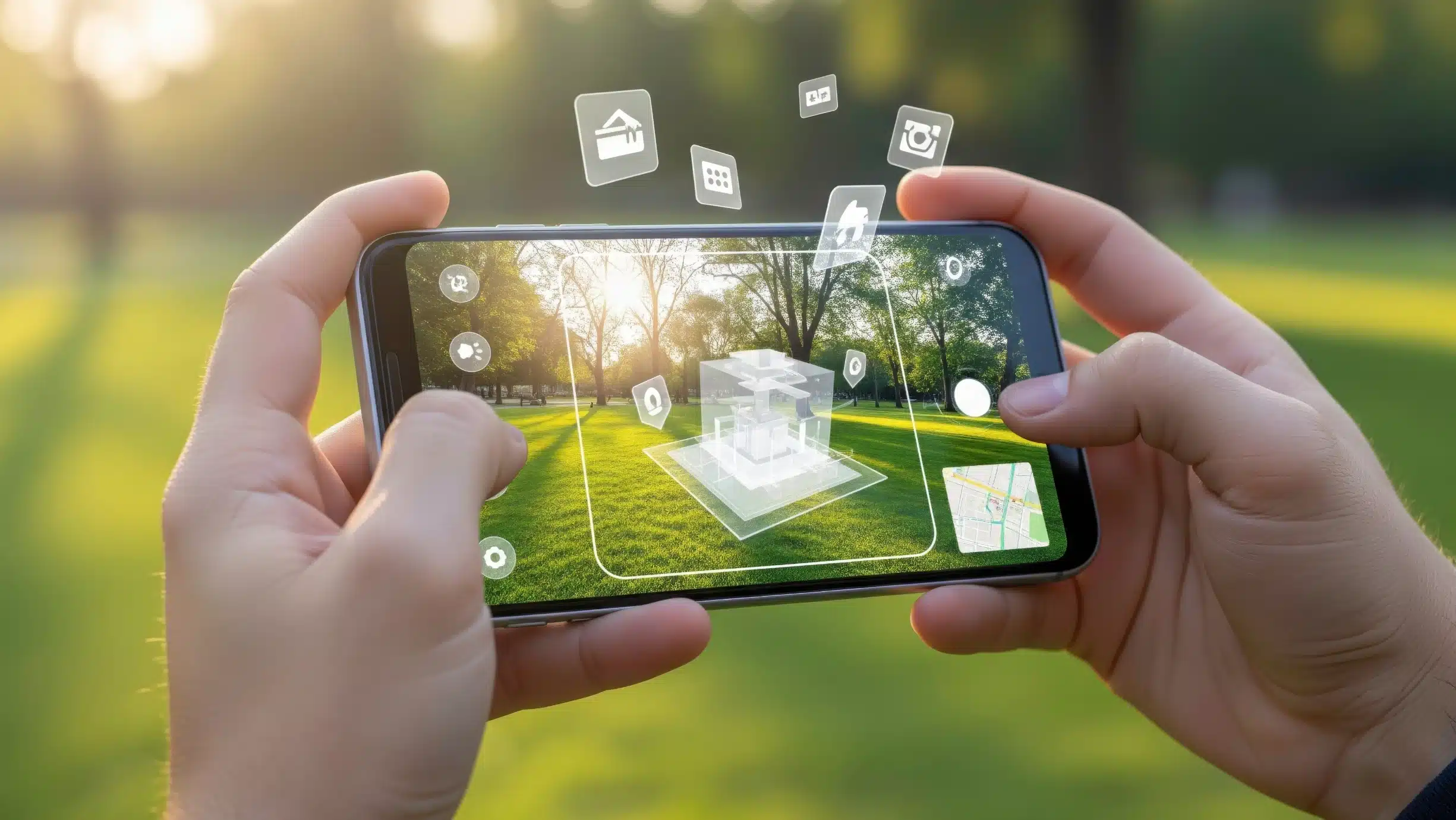
At its core, augmented reality overlays digital content onto the real world through your phone’s camera. On social media, that translates into things like interactive filters, virtual try-ons, 3D product previews, and branded experiences users can actually play with. Not just watch. Play with.
That distinction matters more than it might seem. Most social media content is passive. People scroll, glance, maybe pause for a second, and move on. AR flips that dynamic. When someone is holding up their phone to see how a lipstick shade looks on their actual face, or using your branded lens to goofy-up a photo with their friends, they are engaged. Fully. And that kind of attention is genuinely rare right now.
Where This Is Actually Happening
Instagram and Meta
Meta has built an entire AR creation platform called Spark AR, and it has made branded filter creation surprisingly accessible. Cosmetics companies figured this out early. Brands like MAC and NYX let customers virtually try on products directly through Instagram, which does something clever: it removes one of the biggest mental hurdles in online shopping. You are no longer guessing. You can see it on your face, right now, before you spend a dollar.
The other benefit that often gets overlooked is distribution. When someone uses your branded filter and posts it, your brand travels with that content to every single person in their network. That is not paid reach. That is earned reach, baked into a piece of content someone made themselves.
Snapchat
Snapchat got here first, and the platform is still doing some of the most interesting things in the AR space. Brands like Nike and Gucci have used Snapchat lenses to build product launch experiences that feel like events rather than advertisements. For businesses trying to reach younger audiences, particularly Gen Z, Snapchat’s AR tools are worth taking seriously. This demographic has seen every advertising trick in the book. Interactive, immersive experiences tend to land differently.
TikTok
TikTok’s approach to AR is a little different. Effects tied to hashtag challenges can give a branded experience a viral life of its own. When the algorithm picks up an AR-powered challenge and starts spreading it, the reach can be extraordinary. Millions of people, in a matter of days, all creating content connected to your brand. The math on that kind of exposure is hard to argue with.
Why Should Business Owners Actually Care?
Here is the honest version: AR is not a magic button. It will not fix a weak product or save a brand that has not done the foundational work. But for businesses that have something real to offer, it solves some genuine problems.
Conversion hesitation is one of them. A huge reason people abandon online purchases is uncertainty. They like the product, but they are not sure how it will look, fit, or feel in the real world. Virtual try-on tools speak directly to that hesitation. Customers who interact with AR before buying tend to convert at higher rates and return products less often. That is a meaningful outcome for any product-based business.
There is also the shareability factor. User-generated content is one of the most powerful things a brand can earn, and AR experiences practically invite it. When your filter is fun or useful enough that people want to share the content they made with it, you are getting marketing that does not look like marketing. That is hard to manufacture any other way.
You Do Not Have to Be Nike to Use This
One of the more exciting things about where AR currently sits is that the entry point has come down significantly. You do not need an enormous development budget or a dedicated tech team to create a branded Instagram filter or a Snapchat lens.
If you sell physical products, a virtual try-on experience could genuinely move the needle on your online sales. If you are in real estate, interior design, or home services, giving potential clients the ability to visualize your work in their own space is a compelling differentiator. Even service businesses can use seasonal AR experiences tied to promotions or campaigns to drive engagement and build brand recognition.
The real question to ask yourself is this: what is my customer unsure about before they decide to buy? Whatever that answer is, there is probably an AR experience that addresses it.
AR Does Not Work in a Vacuum
This is worth saying clearly, because it gets skipped over a lot. A viral AR filter that drives a wave of traffic to a slow, confusing website is not a win. An immersive TikTok challenge that generates real excitement but leads to a checkout experience that falls apart is not a win either.
AR works best when it is part of a strategy that is connected all the way through. The content experience, the landing page, the SEO that helped someone find you in the first place, the branding that makes everything feel coherent. All of it matters. The businesses that see real returns from AR investment are usually the ones that have already built a solid digital foundation underneath it.
The Window Is Still Open
AR in social media marketing is not brand new, but it is not saturated either. There is still real opportunity here for brands that move with some intention. Think about how early short-form video adopters built audiences that their competitors spent years trying to replicate. The same dynamic tends to play out with emerging formats, and AR feels like it is in that window right now.
Getting ahead of a trend is always easier than catching up to one. The brands building familiarity with these tools today will have an advantage that is genuinely difficult to close later.
If you are curious about how strategies like this might fit into your broader marketing plan, the team at MoDuet helps businesses across the United States build digital presences that are designed for where things are heading, not just where they have been. We would love to talk through what that could look like for your brand.

We Want To Talk To You About Your Marketing Goals.
Let’s Supercharge Your Online Growth!
By submitting the form, you agree to the Terms of Service and Privacy Policy
We Want To Talk To You About Your Marketing Goals.
Let’s Supercharge Your Online Growth!