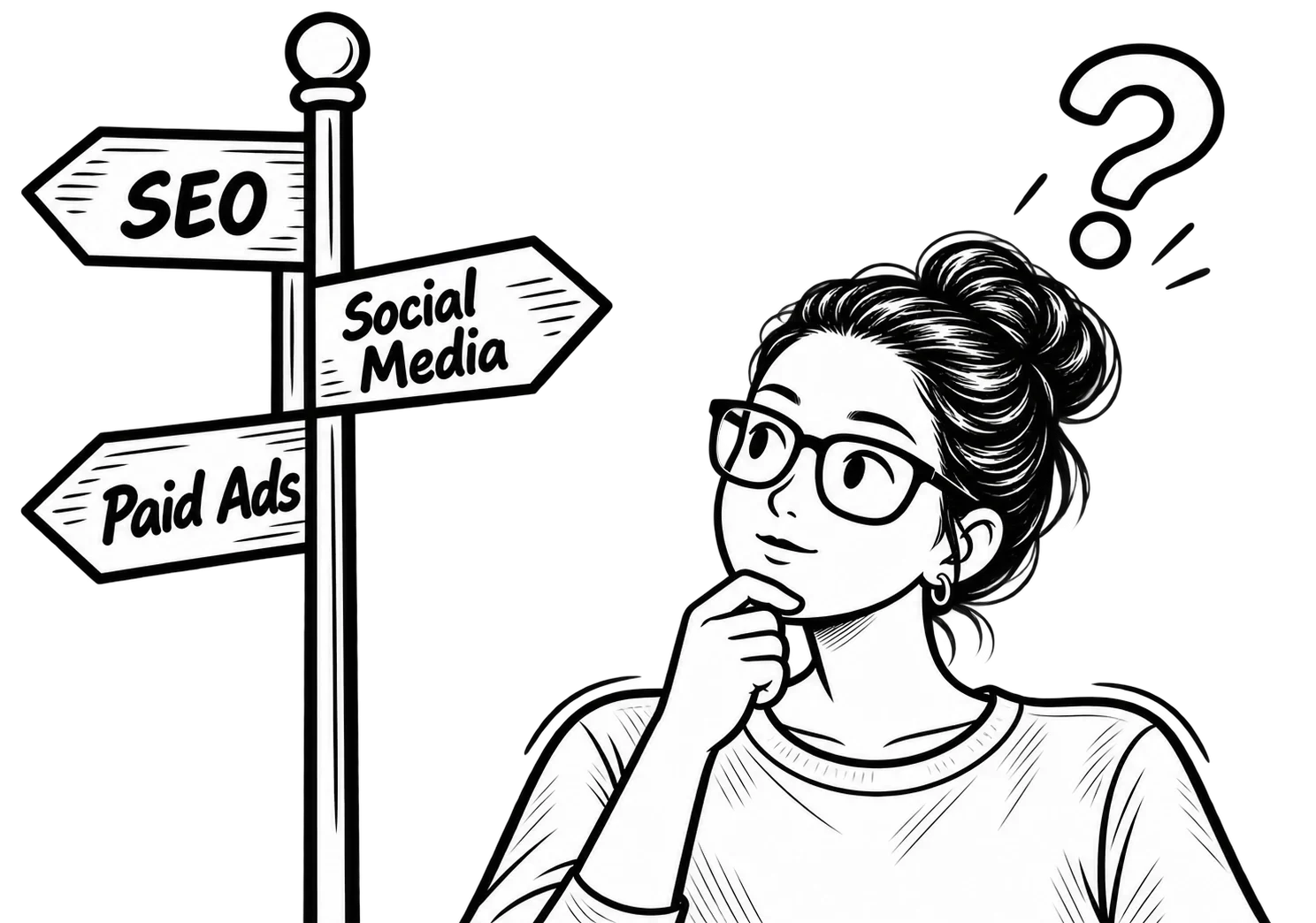
Why Every Business Needs a Branding Guide
Why Every Business Needs a Branding Guide
A branding guide gives your team clear standards for how your business should look, sound, and communicate. Learn what to include and how it supports consistency, trust, and growth.


As a business grows, branding becomes more complex than most teams expect.
What may start as a logo, a few colors, and a preferred font eventually expands across websites, social media, email marketing, advertising, sales materials, presentations, signage, and more.
Without clear standards, those pieces can slowly drift apart. Messaging changes from platform to platform. Designers make slightly different visual choices. New team members interpret the brand differently. Over time, the business begins to look and sound less consistent.
A branding guide gives your team a shared framework for how the brand should be presented. It helps protect consistency, speeds up decision-making, and makes it easier to grow without losing the identity your audience recognizes.
What a Branding Guide Actually Includes
A branding guide goes beyond instructions for where to place your logo.
It defines how your business should communicate visually and verbally across different channels.
Depending on the business, that may include:
- Logo usage
- Color palettes
- Typography
- Photography and imagery
- Illustration or icon styles
- Brand voice
- Tone
- Messaging pillars
- Positioning
- Mission and values
More importantly, those elements should connect back to the way the business wants to be perceived.
If your brand positions itself around innovation, your design and messaging should support that idea. If trust and professionalism are central to your positioning, the way your brand looks and communicates should reinforce stability, clarity, and credibility.
When those standards are documented, teams can make decisions faster and with more confidence.
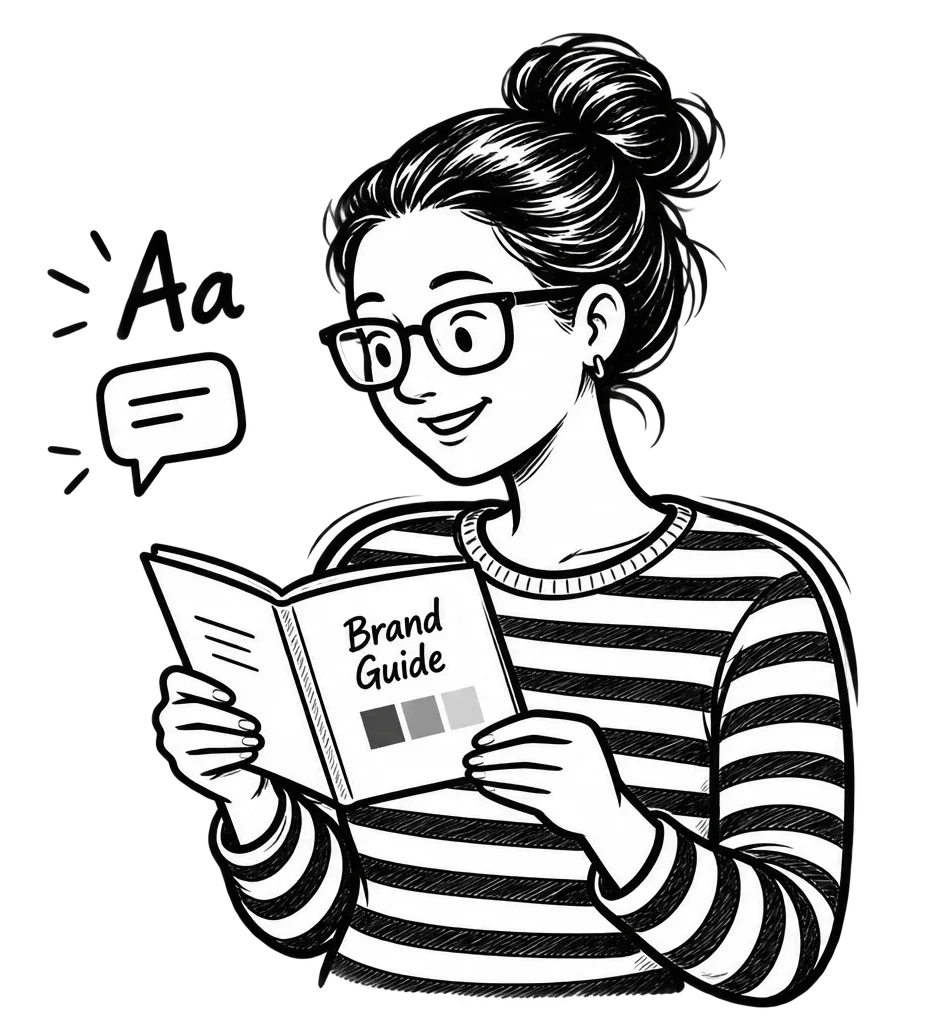
What Should a Branding Guide Include?
A useful branding guide should give your team enough direction to make everyday brand decisions without having to reinvent the rules each time.
The exact contents will vary by business, but most strong branding guides include several core elements.
Brand Purpose, Mission, and Positioning
Your guide should explain what the brand stands for, who it serves, and how it wants to be perceived.
This gives context to the visual and messaging decisions that follow.
It can include:
- Mission
- Vision
- Brand values
- Target audience
- Positioning statement
- Core value proposition
These elements help people understand not only what the brand looks like, but why it communicates the way it does.
Logo Guidelines
Document the approved versions of your logo and how they should be used.
This may include:
- Primary and secondary logo versions
- Minimum sizing
- Clear space requirements
- Approved background treatments
- Horizontal and vertical variations
- Examples of incorrect logo usage
Clear logo standards help prevent stretched, recolored, crowded, or otherwise inconsistent versions from appearing across your marketing.
Color Palette
Your branding guide should define the colors associated with your brand.
Include primary and secondary colors along with the appropriate values, such as:
- HEX
- RGB
- CMYK
You can also provide guidance on when particular colors should be used so every campaign does not interpret the palette differently.
Typography
Define the fonts used throughout the brand and how they should be applied.
This might include:
- Heading fonts
- Subheading styles
- Body copy
- Accent fonts
- Font weights
- Basic hierarchy
A clear typography system keeps websites, ads, presentations, social graphics, and other materials visually connected.
Imagery and Visual Direction
A brand can become inconsistent even when the logo and colors are correct.
Photography, illustrations, icons, graphics, and other visual elements should also follow a recognizable direction.
Your guide might explain whether imagery should feel:
- Clean and minimal
- Bold and energetic
- Professional
- Editorial
- Playful
- Technical
- Lifestyle-focused
The goal is to help people choose visuals that actually feel like they belong to the same company.
Voice and Tone
Your brand should also sound consistent.
Document how the business communicates and the personality you want that communication to reflect.
For example, your brand might be:
- Professional but approachable
- Direct and practical
- Friendly without being overly casual
- Educational and authoritative
- Confident without sounding aggressive
It can also be helpful to include examples of language that fits the brand and language that does not.
Messaging Guidelines
Messaging standards help teams communicate the business consistently across campaigns and platforms.
These may include:
- Core value propositions
- Key messages
- Positioning statements
- Product or service descriptions
- Approved terminology
- Common phrases
- Calls to action
The goal is not to script every sentence.
It is to make sure different teams are reinforcing the same ideas rather than creating a new version of the brand every time they publish something.
Why Every Business Needs a Branding Guide for Consistency
Consistency helps build recognition, and recognition supports trust.
Customers may interact with your company through your website, social media, email campaigns, advertising, sales materials, or physical locations.
Those experiences should feel connected.
If your social presence feels modern and polished but your website looks completely different, the disconnect can create uncertainty.
The same applies to messaging. If one campaign sounds highly formal and another feels casual and playful, customers may have difficulty understanding the personality of the brand.
A branding guide gives each channel a common foundation.
Your website, ads, emails, presentations, printed materials, and social content do not need to look identical, but they should clearly feel like they come from the same business.
A Branding Guide Saves Time and Reduces Rework
Brand inconsistency does not only affect customers.
It also creates operational problems.
Without documented standards, teams repeatedly make the same decisions:
Which font should we use?
Which version of the logo is correct?
What shade of blue is the official one?
How should this service be described?
Does this graphic feel like us?
A branding guide answers many of those questions before they become production delays.
Designers spend less time guessing.
Marketing teams do not have to recreate messaging from scratch.
New employees have a clear reference.
Agencies and freelancers can work within established standards from the beginning.
That reduces unnecessary revisions and helps teams move faster.
Branding Guides Help Protect Your Brand as You Scale
Growth introduces more people into the marketing process.
You may hire new employees, work with outside agencies, add locations, expand into new markets, or launch additional products and services.
Without documented standards, every new contributor can introduce a slightly different interpretation of the brand.
One person changes the tone.
Another changes the typography.
Another creates a new visual style.
Individually, those changes may seem minor. Over time, they can create a fragmented brand.
A branding guide acts as a central source of truth.
It gives everyone the same foundation and makes delegation easier because expectations are already documented.
Branding and Digital Marketing Work Together
Branding and marketing should not operate independently.
Clear brand messaging can make your marketing easier to understand and more consistent across channels.
Your service pages can reinforce the same value proposition as your ads.
Blog content can reflect the same expertise and tone as your sales materials.
Calls to action can sound consistent across your website, email campaigns, and social content.
When the experience feels connected, customers are less likely to feel like they have moved from one company to another as they travel through the buying journey.
A branding guide helps create that alignment.
Branding Guides Support Stronger Customer Experiences
Customers rarely experience a brand in only one place.
Someone may discover you through social media, visit your website, receive an email, speak with your team, and later see an advertisement.
Each interaction contributes to their overall perception of the business.
A branding guide helps make those interactions feel related.
That does not mean everything must look exactly the same.
It means the brand maintains recognizable standards for how it presents itself, communicates, and responds.
Consistency creates familiarity, and familiarity can make the business easier to recognize and remember.
When Should a Business Create a Branding Guide?
The best time to create a branding guide is before inconsistencies become difficult to manage.
Startups can benefit from creating one early so their identity develops with more direction.
Growing businesses often need one when:
- New employees are joining the team
- Multiple people are creating marketing materials
- The company begins working with agencies or freelancers
- The business is redesigning its website
- A rebrand is underway
- New services or products are launching
- The business is expanding into additional locations or markets
- Marketing looks or sounds inconsistent across platforms
You do not need to wait until your business becomes large.
If multiple people are making decisions about how your company looks or communicates, documenting those decisions can already save time and prevent inconsistency.
A Branding Guide Should Evolve With the Business
Creating a branding guide does not mean your brand can never change.
Businesses evolve.
Services change.
Audiences change.
Markets change.
Visual identities and messaging may need to evolve with them.
The difference is that those changes should be intentional.
Instead of allowing the brand to drift through dozens of small, unplanned decisions, you can update the guide when the business makes a deliberate strategic change.
That keeps the brand flexible without making it inconsistent.
Final Thoughts
Every business needs a branding guide because branding influences far more than design.
It shapes how customers recognize the company, how teams communicate, how marketing stays aligned, and how confidently the brand can scale.
A strong guide creates structure without removing creativity.
It gives employees, designers, marketers, agencies, and partners enough direction to make good decisions while still allowing the brand to grow.
If your business is expanding, preparing for a redesign, refining its marketing, or simply trying to create more consistency across platforms, a branding guide gives everyone a clearer foundation to work from.