AI and Human Collaboration in Content Creation: Who Does What?
AI and Human Collaboration in Content Creation: Who Does What?
AI can help businesses create content faster, but speed alone does not make that content useful. Explore a practical workflow for combining AI tools with human strategy, creativity, fact-checking, and editorial oversight across blogs, email, social media, and visual content.


AI can produce a blog outline, five email subject lines, and a month’s worth of social captions before a team finishes discussing the campaign. Speed is useful. It is not a content strategy.
The strongest approach to AI and human collaboration in content creation is to let AI assist with repeatable production tasks while people remain responsible for the audience, message, evidence, and final decisions. That division gives businesses a way to use the technology without publishing content that sounds polished but says remarkably little.
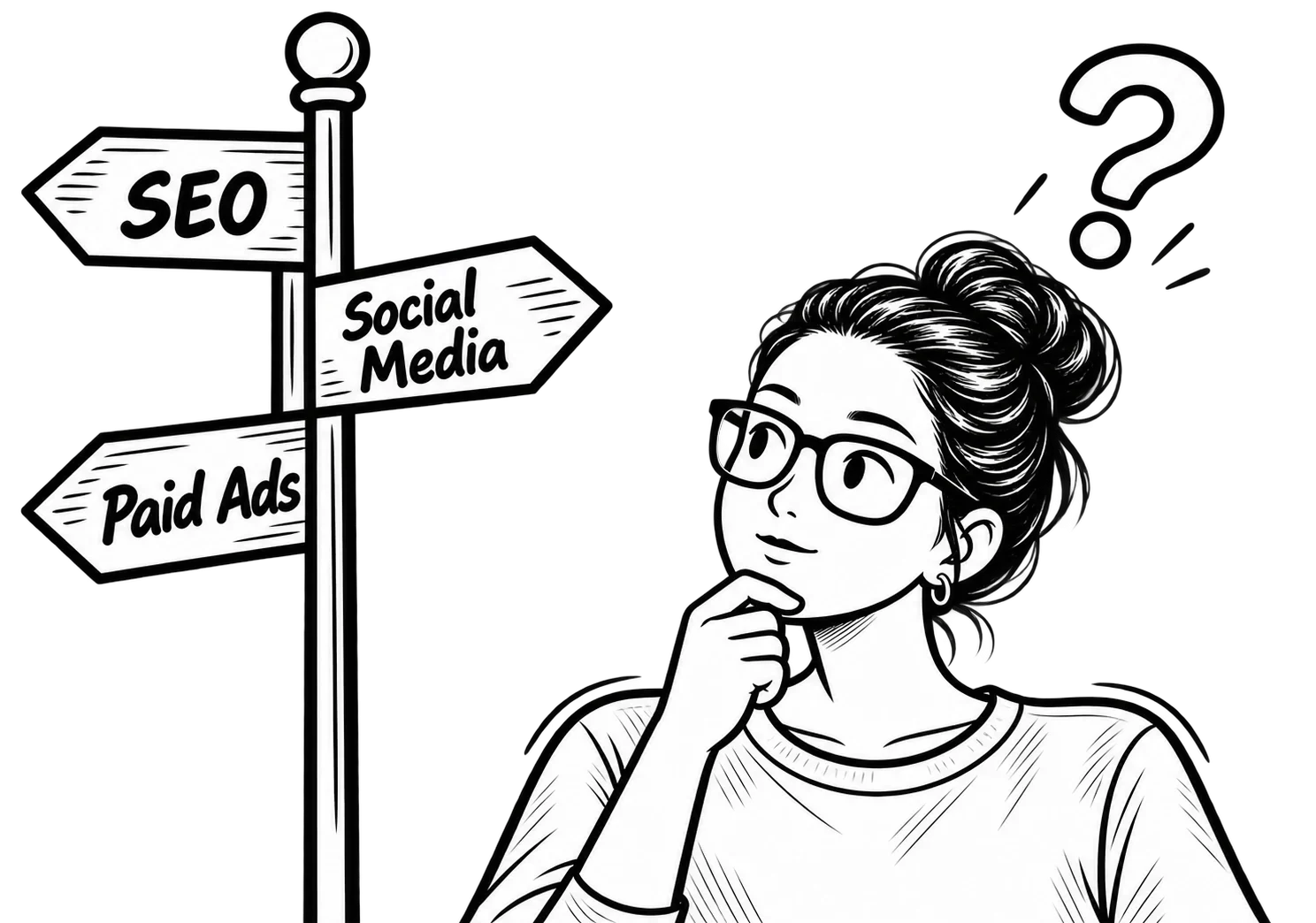
Stop Asking Whether AI Can Replace a Content Creator
AI tools can brainstorm topics, organize research notes, summarize material you provide, suggest headlines, rework a draft, and help adapt an approved idea for different formats. They can also assist with image concepts, storyboards, captions, and video-editing tasks. Those uses were emerging when this article was first published; they are ordinary options in many content workflows now.
But generating text and deciding what should be said are different jobs. A system can draft a convincing explanation of a service it has never seen, invent a statistic that fits the paragraph, or confidently describe a promotion your business does not offer. Fluency is not verification.
The useful question is not whether AI is creative enough. It is which parts of the work can be accelerated without handing over the decisions that give the content its value. AI can produce ten versions of a weak idea very efficiently. You still need someone to recognize that the idea was weak.
Give Humans the Brief, Not Just the Final Proofread
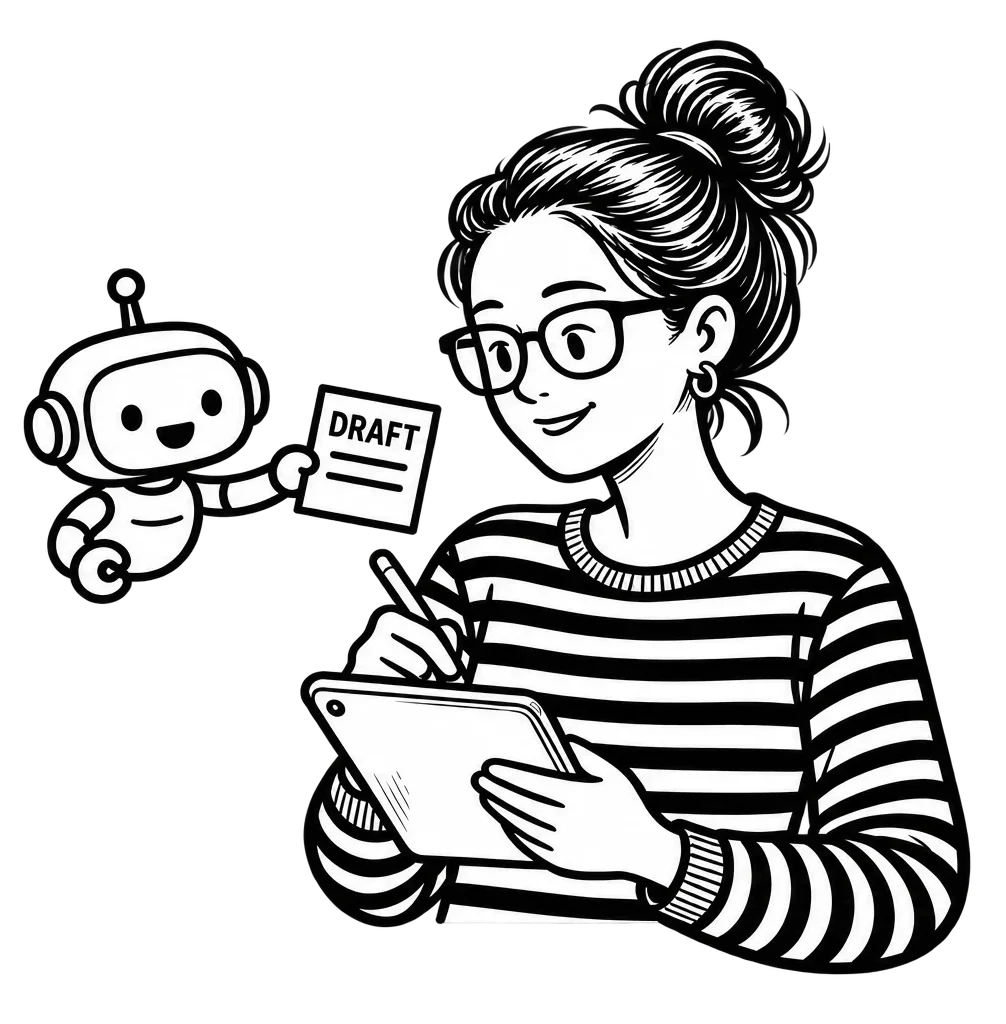
A human reviewer cannot fix a missing strategy by correcting punctuation at the end. Before anyone prompts a tool, the team should decide what the content needs to accomplish and what it must not promise.
A useful brief identifies the audience, the question the content answers, the offer or next step, the brand’s point of view, and the sources the writer can rely on. It should also name any sensitive claims that require approval. This is the same discipline behind strategic content writing. The tool does not remove the need for it.
Consider a hypothetical home services company preparing an email about fall maintenance. AI can suggest an outline and draft subject lines. A person needs to confirm which services are available, which areas the company serves, whether seasonal advice is accurate, and what appointment capacity actually exists. Otherwise, the copy may be persuasive right up until a customer tries to book something the business cannot deliver.
A Practical AI-Assisted Content Workflow
The workflow does not need to be complicated. For many small marketing teams, five defined checkpoints are more useful than an expensive collection of disconnected AI tools.
1. Decide the purpose and provide the source material
Start with one content goal: answer a customer question, explain a service, support a campaign, or help an existing customer take the next step. Give the AI tool approved product details, current policies, target audience information, brand guidance, and relevant research.
Do not ask it to fill gaps with plausible information. If a fact is unavailable, the draft should flag the gap so a person can investigate it. An AI assistant should not become the unofficial source of truth for your business.
2. Use AI to explore options, then select an angle
AI is useful for generating alternative outlines, comparing possible headlines, and organizing a messy set of notes into themes. Ask for different approaches to the same customer question, not twenty interchangeable paragraphs.
A person should decide which angle is worth publishing. That choice requires judgment about the audience, competition, brand positioning, and what the business can actually contribute. If every proposed article simply paraphrases material already available online, generating the draft faster has not solved the real problem.
3. Draft with clear boundaries
Use the tool for a first pass, a short section, a summary of supplied material, or variations of approved copy. Different formats call for different levels of AI assistance. A routine event announcement is not the same as a technical article, a medical claim, or a customer testimonial.
Give the person responsible for the content control over structure, examples, transitions, and tone. Keep original interviews, first-hand observations, and verified customer information intact. Never ask AI to invent a client experience to make a paragraph feel more credible.
4. Review facts, voice, rights, and the customer journey
Editing is more than making the sentences smoother. Verify statistics against the original source, check product and service claims, review links, and confirm that the content matches the landing page or offer. If the copy promises a phone consultation, someone should confirm that the booking path works.
Review whether it sounds like your brand, not merely like a grammatically correct marketing post. Many common content writing mistakes become easier to reproduce at scale when the team skips this stage.
For images, audio, and video, review the rights to source materials, the accuracy of what is depicted, and whether any synthetic people or voices could mislead viewers. Those questions belong in the approval process, not in a cleanup task after publication.
5. Publish, measure, and maintain
Record who approved the final content, where it was published, and which parts may need updating. AI can help turn an approved article into a newsletter summary or social post, but someone should verify that the shorter version preserves the original meaning.
After publication, assess what the content achieved. Look at the audience’s next action, qualified inquiries, useful engagement, or support questions answered, depending on the goal. A calendar filled ahead of schedule is an operational achievement. It is not evidence that the content worked.
The Division of Work Changes by Format
The same boundaries apply differently depending on what you are producing.
- Blog posts: AI can help group research, compare outlines, and identify sections needing clearer explanations. The writer must verify claims, add original analysis, and make the article worth reading rather than merely longer.
- Email campaigns: AI can draft variations from an approved offer and help adapt copy for different audience needs. People must confirm segmentation, claims, links, and timing. More subject-line options do not guarantee higher open rates or more sales.
- Visual and video content: AI can assist with concepts, scripts, captions, and editing. Human designers and editors still need to evaluate consistency, context, accessibility, and whether the assets accurately represent the product or service.
- Personalized website content: AI may help develop versions for clearly defined audiences, but personalization depends on reliable data, appropriate permissions, and a real reason to change the message. Calling every visitor by a different label is not a customer experience strategy.
This is collaboration in a practical sense: assigning the right work to the tool and keeping the decisions with the team.
Brand Voice Is More Than a Prompt That Says “Sound Human”
A brand voice includes what you choose to emphasize, how you explain tradeoffs, which claims you avoid, and how you treat the reader. An adjective list such as friendly, professional, authentic is rarely enough. Those three words could describe half the businesses on the internet.
Give the AI tool examples of approved writing and explain why they work. Then review the draft for meaning, not just vocabulary. Does it answer a useful question? Is it accurate? Does it make promises the business can support? Does it reflect a real point of view, or could another company swap its logo onto the page without changing a word?
Human review should also protect consistency over time. Service details, campaign messages, and product information change. A documented content maintenance process matters whether the first draft came from a person or a model.
Know the Risks Before You Turn Up Production
Google does not prohibit website content simply because AI helped create it. Its guidance on generative AI content emphasizes accuracy, quality, relevance, and manual fact-checking. Using automation to generate many pages without adding value can violate its spam policies. The question is whether the published page actually helps someone.
Ownership also deserves attention. The U.S. Copyright Office’s guidance on AI-generated material explains that copyright protection depends on sufficient human creative authorship. Using AI as an assistant does not automatically eliminate copyright protection, but supplying prompts alone does not necessarily establish authorship of the resulting expression. A business should understand its rights before building campaigns around generated assets.
Finally, review privacy and security. Customer records, unpublished campaigns, internal financial information, and sensitive material should not be pasted into unapproved tools. The NIST generative AI risk profile provides a framework for thinking about risks such as reliability, privacy, and misuse. For a small team, that can translate into approved tools, rules for sensitive information, and a named person responsible for final approval.
Measure the Value of Collaboration, Not the Volume of Output
A useful test compares a real workflow before and after AI assistance. Choose a recurring task, record how long it takes, and measure how much editing and correction the output requires. Include the cost of tools and review time. Then compare content quality and business outcomes, not just drafts produced per hour.
If an AI-assisted newsletter takes less time to prepare but introduces wrong dates or confusing offers, the saved minutes may disappear into corrections and customer support. If it reduces repetitive editing while the team maintains accuracy and performance, that is a reasonable case for continued use.
The goal is not to prove that humans or AI are better at content creation. It is to build a process where each has a defined role, important decisions remain accountable, and the published work gives customers something useful. The technology can help you make more content. Your strategy still has to answer why anyone should care.