Social Media Strategies for E-Commerce: From Discovery to Sale
Social Media Strategies for E-Commerce: From Discovery to Sale
Social media can do more than build awareness for an online store. Learn how product content, creators, communities, social commerce, paid campaigns, and better measurement can turn discovery into sales.


Social media has become part of the shopping journey.
Customers use social platforms to discover products, watch demonstrations, compare options, read comments, follow creators, ask questions, and decide whether a brand feels trustworthy enough to buy from.
For e-commerce businesses, that changes the goal.
Social media is not only a place to build followers or keep a content calendar full. It can help introduce products to new customers, create demand, provide social proof, and move shoppers toward a purchase.
The strongest strategy connects all of those pieces instead of treating every post as an isolated marketing activity.
Social Media Is Part of Product Discovery
People do not always open Instagram, TikTok, or YouTube already knowing exactly what they want to buy.
Often, the product finds them first.
A short video might demonstrate a problem they did not realize a product could solve. A creator might recommend something that fits a specific need. A customer review might introduce a brand they had never heard of.
That discovery behavior is particularly important for e-commerce because visual products can often be understood faster when someone can see them being used.
The opportunity is not simply to advertise products in a social feed.
It is to create content that helps someone understand why the product might matter to them.
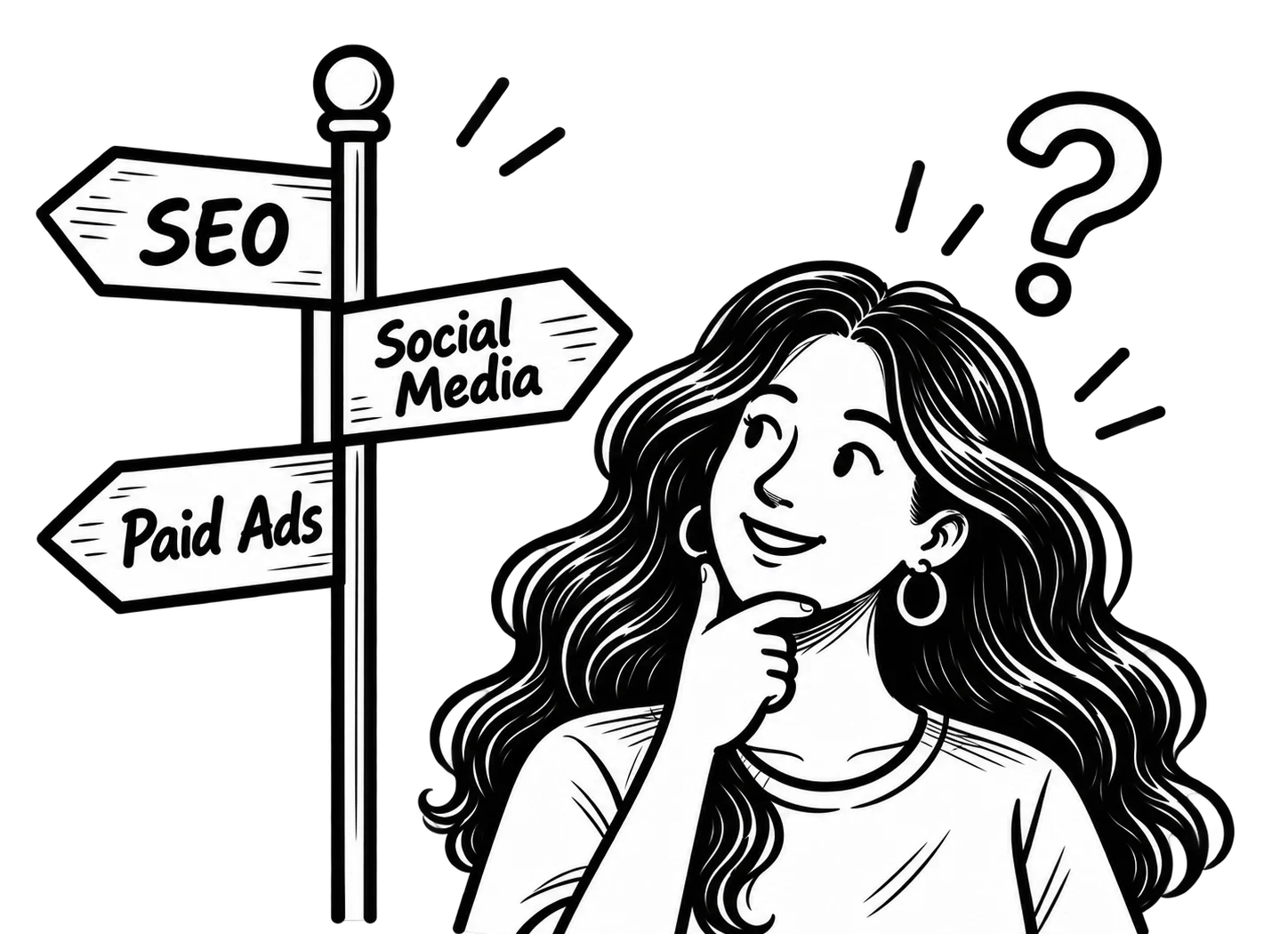
Choose Platforms Based on the Customer and Product
An e-commerce store does not need to be active on every social network.
Different products are easier to discover and evaluate in different environments.
A visually driven fashion or beauty brand may have strong reasons to prioritize Instagram or TikTok.
A product that requires demonstrations, comparisons, or tutorials may benefit from YouTube.
Home, food, fashion, wedding, and design products may also have opportunities on Pinterest because people use it heavily while planning and collecting ideas.
The decision should come from:
- Where your customers spend time
- How people research your type of product
- Which content formats show the product effectively
- Whether the platform supports the shopping experience you need
- How much content your team can realistically maintain
If you are spreading the same limited resources across five platforms, narrowing your focus may produce better results than simply increasing posting frequency.
Our guide to choosing the right social media platforms for your business goes deeper into making that decision.
Create Content That Shows the Product in Context
Product photos still matter.
But social media gives e-commerce brands an opportunity that a traditional product catalog does not: showing the product being used.
A good social content mix can answer questions such as:
- What does it look like in real life?
- How does it work?
- How large is it?
- How do I use it?
- What makes it different?
- Who is it designed for?
- What problem does it solve?
- What can I pair it with?
A skincare company can demonstrate application and texture.
A cookware brand can show the product preparing an actual meal.
A clothing company can show the same item styled several ways.
A furniture retailer can show scale and placement inside a real room.
The goal is not merely to make the product look attractive.
It is to remove uncertainty.
Short-Form Video Should Have a Job
TikTok, Instagram Reels, and YouTube Shorts make short-form video useful for quick product demonstrations, comparisons, tips, before-and-after examples, and customer stories.
But not every video needs to follow a trend.
A useful 20-second demonstration can be more valuable than a clever video that receives views from people who have no interest in the product.
Before creating the video, decide what it needs to accomplish.
Does it introduce the product?
Explain a feature?
Answer an objection?
Show the result?
Compare two options?
The format should support the message, not become the strategy itself.
Make Social Content Shoppable Where It Makes Sense
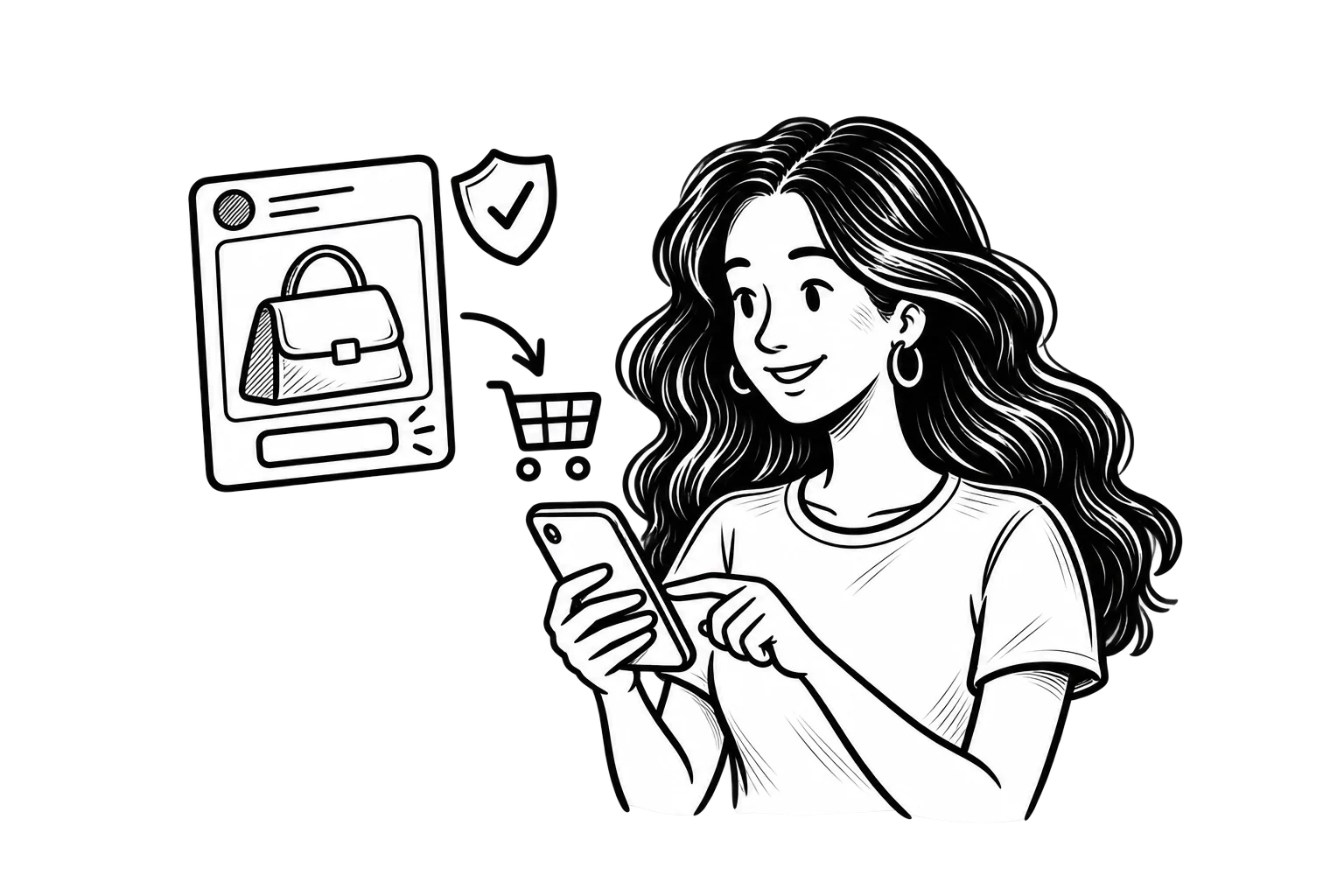
The distance between seeing a product and getting to the product page should be as short as reasonably possible.
Social commerce tools can help.
Shopify currently supports social commerce sales channels that connect product catalogs with platforms including Facebook, Instagram, and TikTok. Merchants can sync products and use supported shopping features while managing product and order information through Shopify.
TikTok Shop goes further by combining product discovery and purchasing through shoppable videos, livestreams, creator content, and its Shop marketplace. TikTok describes this model as discovery e-commerce because customers often encounter products through content rather than beginning with a traditional product search.
YouTube is also expanding commerce around creator content. In 2026, YouTube Shopping expanded affiliate eligibility to more creators, allowing eligible creators to tag products in Shorts, long-form videos, and livestreams.
The right setup depends on the platform and store.
The principle is simpler:
If someone becomes interested in a product through social content, make it easy for them to find the product and continue shopping.
Live Shopping Works Best When the Product Benefits From Demonstration
Live commerce is not necessary for every e-commerce brand.
It can be particularly useful when customers benefit from seeing the product demonstrated or asking questions before buying.
A live session can:
- Demonstrate products
- Compare options
- Answer questions
- Show new arrivals
- Launch limited products
- Explain product features
- Create bundles
- Feature a creator or expert
- Address common purchase objections
TikTok continues to invest heavily in LIVE commerce alongside short-form and creator-led selling, and YouTube continues to connect livestreams with product tagging and shopping features.
But live shopping requires more than turning on a camera.
Plan what you will demonstrate, which products will be featured, who will answer questions, and how someone can purchase while the interest is still fresh.
Customer Content Can Provide the Proof Brand Content Cannot
A business can say its product is useful.
A customer showing that product in their own home, routine, outfit, or workflow provides a different kind of evidence.
User-generated content can include:
- Customer photos
- Product videos
- Reviews
- Unboxings
- Tutorials
- Before-and-after content
- Social posts mentioning the product
- Customer questions and answers
UGC works particularly well when it reduces uncertainty.
A studio product photo may show exactly what a dress looks like.
Customer content may show how that dress fits on different body types, how people style it, and what it looks like outside professional lighting.
Both have value.
They answer different questions.
Ask for Permission Before Reusing Customer Content
A customer tagging your brand does not mean every piece of their content should automatically become advertising creative.
Ask for permission before republishing customer photos or videos outside the context in which they were originally shared.
And if someone was paid, received free products, or has another material relationship with the brand, that relationship should be disclosed clearly.
The FTC says influencers and creators should disclose material relationships with brands in a way that is easy for the audience to notice and understand.
Creators Can Help Products Reach the Right Communities
Creator marketing can extend product discovery beyond the brand’s own followers.
But audience fit matters more than simply choosing the largest available account.
A smaller creator who regularly talks about running may be much more valuable to a specialty running product than a general lifestyle creator with ten times the audience.
Look at:
- Audience relevance
- Content quality
- Engagement quality
- Previous brand partnerships
- Platform fit
- Communication style
- Brand alignment
- Whether followers appear genuinely interested in the creator’s recommendations
Creator relationships can also extend beyond one sponsored post.
Strong creator content may later support paid advertising, product pages, email campaigns, or other marketing materials when usage rights allow it.
That is one reason current influencer marketing is increasingly connected to broader content and advertising strategy rather than treated as a separate experiment.
Build Community Around More Than Promotions
An e-commerce social feed filled entirely with product announcements and discounts gives people very little reason to stay connected between purchases.
Community-oriented content can expand the relationship.
A brand might talk about:
- How customers use its products
- Questions customers regularly ask
- Topics related to the product category
- Behind-the-scenes work
- New product development
- Customer stories
- Care or maintenance advice
- Ideas and inspiration
- The people behind the business
The objective is not to avoid selling.
It is to make the brand useful or interesting enough that every interaction does not depend on another coupon.
Comments and direct messages also provide information the business can use.
Repeated questions may reveal something missing from a product page.
Frequent complaints may expose friction in shipping or sizing.
Unexpected ways customers use a product may inspire future content.
Social media can be a research channel as well as a publishing channel.
Use Paid Social to Extend Content That Already Works
Organic content and paid advertising do not need to operate separately.
If a product demonstration, customer video, or creator collaboration performs particularly well organically, it may be worth testing as paid creative.
That is often more useful than creating every ad from scratch.
Paid campaigns can help e-commerce brands:
- Introduce products to new audiences
- Retarget interested visitors
- Support product launches
- Promote seasonal collections
- Amplify creator content
- Reconnect with previous customers
- Test different messages and creative approaches
But more reach does not fix weak creative or a weak product page.
Paid social can send more people into the customer journey.
It cannot guarantee that the rest of the journey will convert.
The Product Page Has to Continue the Social Experience
A social post may do a great job creating interest and still fail to produce sales if the click leads to a poor product page.
The transition should make sense.
If a video highlights one specific feature, the product page should make that feature easy to find.
If an ad promotes a bundle, customers should not land on a generic homepage and search for it.
If creator content shows a specific product variant, that option should be easy to locate.
Product pages should clearly communicate:
- What the product is
- Price
- Images
- Variants
- Availability
- Benefits and important features
- Shipping expectations
- Return information
- Reviews or social proof
- What the customer should do next
For Shopify merchants, improving the social strategy and improving the Shopify store should be treated as part of the same conversion process.
Use Retargeting Without Depending on It for Everything
Many customers will not buy the first time they encounter a product.
Social advertising can help reconnect with shoppers who have already shown interest.
Depending on your platform, tracking setup, and privacy requirements, audiences might include people who:
- Visited the store
- Viewed a product
- Added a product to cart
- Engaged with social content
- Purchased previously
- Joined an email list
Those audiences can support more relevant follow-up.
Someone who viewed the same product several times may need a different message from someone who has never heard of the brand.
But retargeting should support the customer journey, not substitute for having a strong one.
If people repeatedly visit and never buy, the issue may be pricing, shipping, trust, product information, checkout, or the offer itself.
Connect Social Media With Email and Retention
Social media platforms are valuable for discovery.
They are also rented channels.
Algorithms change. Reach changes. Accounts can be restricted. Platform priorities shift.
That is one reason e-commerce brands should look for opportunities to turn social attention into longer-term customer relationships.
That may include:
- Email signups
- SMS opt-ins
- Customer accounts
- Loyalty programs
- Completed purchases
Once someone becomes a customer or subscriber, the business has more opportunities to continue the relationship without depending entirely on the next social post reaching them.
Social media can start the conversation.
It does not need to carry the entire customer relationship by itself.
Measure Sales, Not Just Social Activity
Likes, followers, shares, saves, views, and comments can help explain whether content is getting attention.
For an e-commerce business, they are not the final result.
Connect social activity to what happens afterward.
Useful metrics can include:
- Product page visits
- Add-to-cart rate
- Checkout starts
- Conversion rate
- Revenue from social traffic
- Cost per purchase
- Average order value
- New customer acquisition
- Repeat purchases
- Creator or affiliate sales
- Revenue from paid campaigns
Use UTM parameters where appropriate so analytics can distinguish campaigns and sources.
Platform attribution can also be useful, but do not rely on one dashboard to tell the entire story.
A customer might discover a product on TikTok, visit from Instagram later, search the brand on Google two days afterward, and finally purchase from an email.
That does not make the original social discovery irrelevant.
It means the buying journey involved several touchpoints.
Our guide to turn social media engagement into real business conversions looks more closely at what needs to happen after attention is created.
Test Content Against Business Outcomes
Not every e-commerce business will get the same result from the same strategy.
A successful TikTok format for a beauty product may be completely wrong for premium furniture.
Live shopping may work well for a product that benefits from demonstration and add unnecessary effort for another store.
A creator partnership may outperform brand content in one category and do very little in another.
Test deliberately.
For each experiment, define:
What are we changing?
Maybe the content format.
What are we trying to improve?
Product visits, purchases, email signups, or another meaningful outcome.
How long will we test it?
Long enough to collect useful information.
What would make us continue?
Decide that before looking at the result.
That turns social media into something you can improve rather than a stream of unrelated posts.
A Strong E-Commerce Social Strategy Connects Content and Commerce
The best social media strategy for an e-commerce business is not simply to post more video, chase trends, or appear on every platform.
It is to make the shopping journey easier.
Choose the platforms where your customers actually spend time.
Create content that helps people understand the product.
Use customer and creator content to build trust.
Make products easy to find when interest is high.
Connect social activity to a store that can convert the traffic.
And measure whether that attention eventually contributes to sales.
Social media can create discovery at a scale that would be difficult for many e-commerce brands to generate on their own.
The businesses that benefit most will be the ones that connect that discovery to everything that happens next.