How to build trust with Hispanic customers in the US
How to build trust with Hispanic customers in the US
Building trust with Hispanic customers takes more than Spanish-language ads. Learn how language access, authentic representation, community relationships, and a consistent customer experience help businesses earn credibility over time.


Trust is not something a brand earns by adding Spanish to an ad and calling it a multicultural strategy. It grows when customers can understand an offer, get answers, feel respected, and receive the service they were promised.
To build trust with Hispanic customers in the United States, businesses need to understand whom they serve, respect language preferences, participate consistently, and deliver a reliable customer experience. That may involve Spanish-language marketing, bilingual support, culturally relevant content, and genuine community relationships. The right combination depends on the audience, not on assumptions about what every Hispanic consumer wants.
Start With the Customer, Not a Cultural Assumption
Hispanic Americans are not a single consumer segment with identical language habits or expectations. Country of origin, generation, community, age, and individual preferences can shape how people interact with a business. None of those characteristics tells you everything about one customer.
Language is a useful example. Pew Research Center’s research on Latinos and Spanish found that 78% of U.S. Hispanic adults surveyed said speaking Spanish is not necessary to be considered Hispanic. Offering Spanish support can be important without assuming that every Hispanic customer prefers Spanish.
Before changing your marketing, ask what you actually know. Do customers request Spanish assistance? Which questions come up before a purchase? Are there local organizations or customer groups you should listen to? Research is less glamorous than a campaign launch, but it gives the campaign something real to work with.
Make Language Access a Real Service
If a customer contacts your business in Spanish, a helpful Spanish-language response can remove friction. But publishing Spanish content when nobody on the team can answer the follow-up creates a different problem.
Look at each place a customer might need help: social messages, phone calls, forms, appointment scheduling, quotes, checkout, confirmation emails, and support. Decide which interactions you can serve in Spanish today and which require a staffing or process change. Make those capabilities clear instead of promising more than you can deliver.
The choice between Spanish-only, bilingual, and English-language content should follow the audience and purpose. Our article on Spanish ads versus bilingual ads explores that decision in more detail. The point here is simpler: give customers a practical way to communicate in their preferred language, then follow through.
Carry the Experience Through the Website and Follow-Up
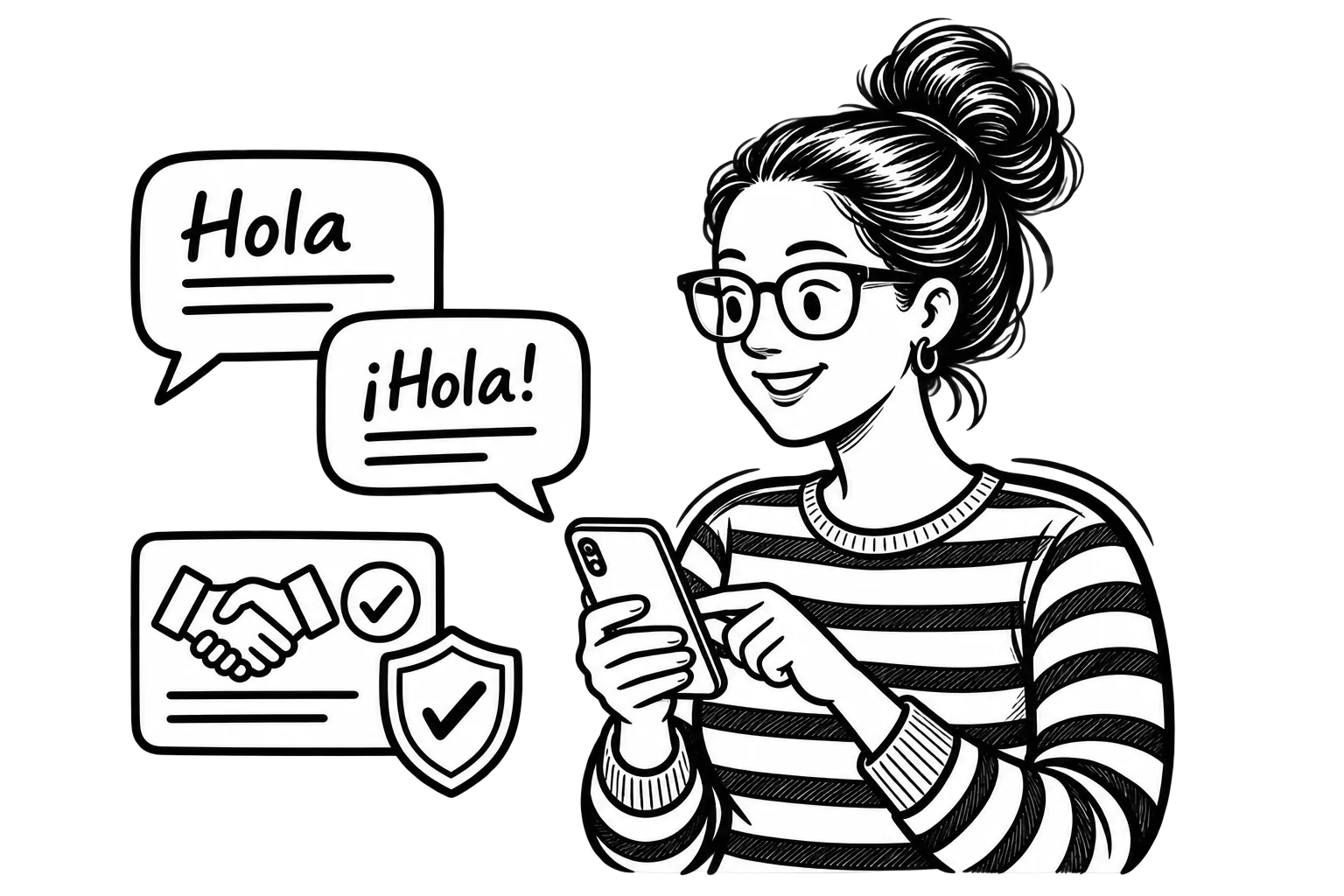
Imagine a homeowner clicking a Spanish-language ad for a repair service. The landing page is in Spanish, but the estimate form is in English. After submitting it, the customer receives an English confirmation and a call from someone who cannot answer basic questions in Spanish.
The ad did its job. The experience did not.
Businesses do not have to localize every page overnight. Start with the pages and interactions tied directly to an offer, then expand where customer demand justifies the work. Make important details understandable: services, prices or pricing processes, availability, payment terms, and what happens after someone submits a request.
Where a website has multiple language versions, Google Search Central recommends separate URLs and clear language choices. It also advises against automatically redirecting visitors based on assumed language preferences. That supports discoverability, but the main customer benefit is having control over which language they use.
Words matter, too. Sometimes accurate translation is sufficient; sometimes a headline or story needs creative adaptation. Translation versus transcreation helps clarify which investment makes sense for each type of content.
Show Up Beyond Hispanic Heritage Month
National Hispanic Heritage Month runs from September 15 to October 15. It is an opportunity to recognize contributions and stories, not a complete marketing calendar.
A business that publishes Spanish content once a year and then disappears should not expect one cultural celebration to establish a lasting relationship. That does not mean posting in Spanish every day or joining every community event. It means treating the customers you want to serve as part of your ongoing business, including customer service, content planning, and local involvement.
Consistency should be visible in ordinary interactions. Are your business hours accurate? Do you answer questions? Can a customer recognize the same promises in your ads and on your website? Those details may seem less exciting than a cultural campaign. They are also easier for customers to test.
Represent People Without Performing an Identity
Authentic representation begins with the story, not the casting. A photograph of a Hispanic family is not proof that an offer fits Hispanic customers. Neither is adding a flag, a familiar phrase, or a cultural reference that nobody involved in the campaign can explain.
Work with people who understand the specific audience early in the creative process. Ask whether the situation, language, imagery, and message feel credible. Seek permission before featuring customers or their stories. Avoid treating one person’s feedback as a verdict on an entire population.
You also do not need to pretend your company is Hispanic-owned or deeply rooted in a community if it is not. Be clear about who you are, why you want to serve that market, and what you can actually offer. A business can be new to a community and still behave respectfully. Pretending to have a history it does not have is a poor place to start.
Build Community Relationships That Are More Than Transactions
A trusted local creator or community organization may help introduce your business to people who have not heard of it. But credibility does not automatically transfer from a partner to a brand. The relationship has to be useful and believable for everyone involved.
Consider collaborations that fit the business and community: a relevant workshop, a local event, educational content, or a creator who can honestly explain a product they know. Give partners input into the work rather than handing them a script full of cultural assumptions.
When a creator has a material relationship with your company, the FTC’s disclosure guidance for influencers calls for clear disclosures, including in the language of the endorsement itself. Paying someone to recommend your product is not inherently a problem. Hiding the relationship is.
Community involvement should also survive beyond the photo opportunity. Show up when there is no promotional post to publish and no discount code to track.
Prove Trustworthiness in Everyday Decisions
Trust is built or lost in small, repeatable moments. A transparent quote, an accurate delivery estimate, an honest answer about availability, or a professional response to a complaint can matter more than polished brand messaging.
Make sure your team understands the promises marketing is making. If an ad says Spanish-speaking assistance is available, establish how customers reach that assistance. If you promote a special offer, make eligibility and restrictions easy to understand. If the business makes a mistake, explain what you can do to resolve it rather than retreating into generic corporate language.
At MoDuet, we work with businesses at different stages of reaching Hispanic audiences. Some already have established relationships in their communities; others are just beginning. The practical starting point is the same: do not promise a customer experience that operations cannot support.
Measure Whether People Are Becoming More Confident in Your Business
Trust is not a campaign deliverable you can report as a single number. But you can look for signals that the experience is working better.
- Response quality: Are Spanish-language inquiries answered accurately and within a reasonable time?
- Customer friction: Where do people abandon forms, ask for clarification, or need repeated help?
- Meaningful actions: Do relevant inquiries turn into appointments, purchases, or completed services?
- Customer feedback: What do people say about clarity, communication, and how they were treated?
- Repeat relationships: Are customers returning or referring others, where the business can measure that responsibly?
Do not assume a rise in repeat purchases proves that one Spanish campaign created trust. Consider the offer, service quality, audience, and other changes. Our article on common mistakes in Hispanic marketing explores the planning errors that can undermine the customer experience. Track enough information to make better decisions without turning customers into a collection of stereotypes.
For the broader audience and channel decisions behind this work, the complete guide to Hispanic marketing in the U.S. provides additional strategic context.
Trust Has to Hold Up After the Campaign Ends
Trust isn’t a campaign deliverable. It’s not something you can buy with a bigger ad budget or manufacture with the right hashtag.
Businesses earn it by understanding the customers they want to serve, making communication easier, respecting cultural differences without exaggerating them, and doing what they said they would do. The strongest test is not how the message sounds in an ad. It is what happens when someone actually becomes a customer.