How to Create Content That Supports Long-Term Brand Growth
How to Create Content That Supports Long-Term Brand Growth
Publishing more content doesn't necessarily build a stronger brand. Learn how consistent messaging, evergreen content, SEO, and ongoing improvements support long-term growth.


Here is a scenario most business owners recognize.
You invest in content. Blog posts go up, social media picks up, maybe you even hire someone to help. And for a little while, it feels like something is happening.
Then the momentum stalls, the results never quite materialize, and eventually someone in the room says, “We tried content. It just did not work for us.”
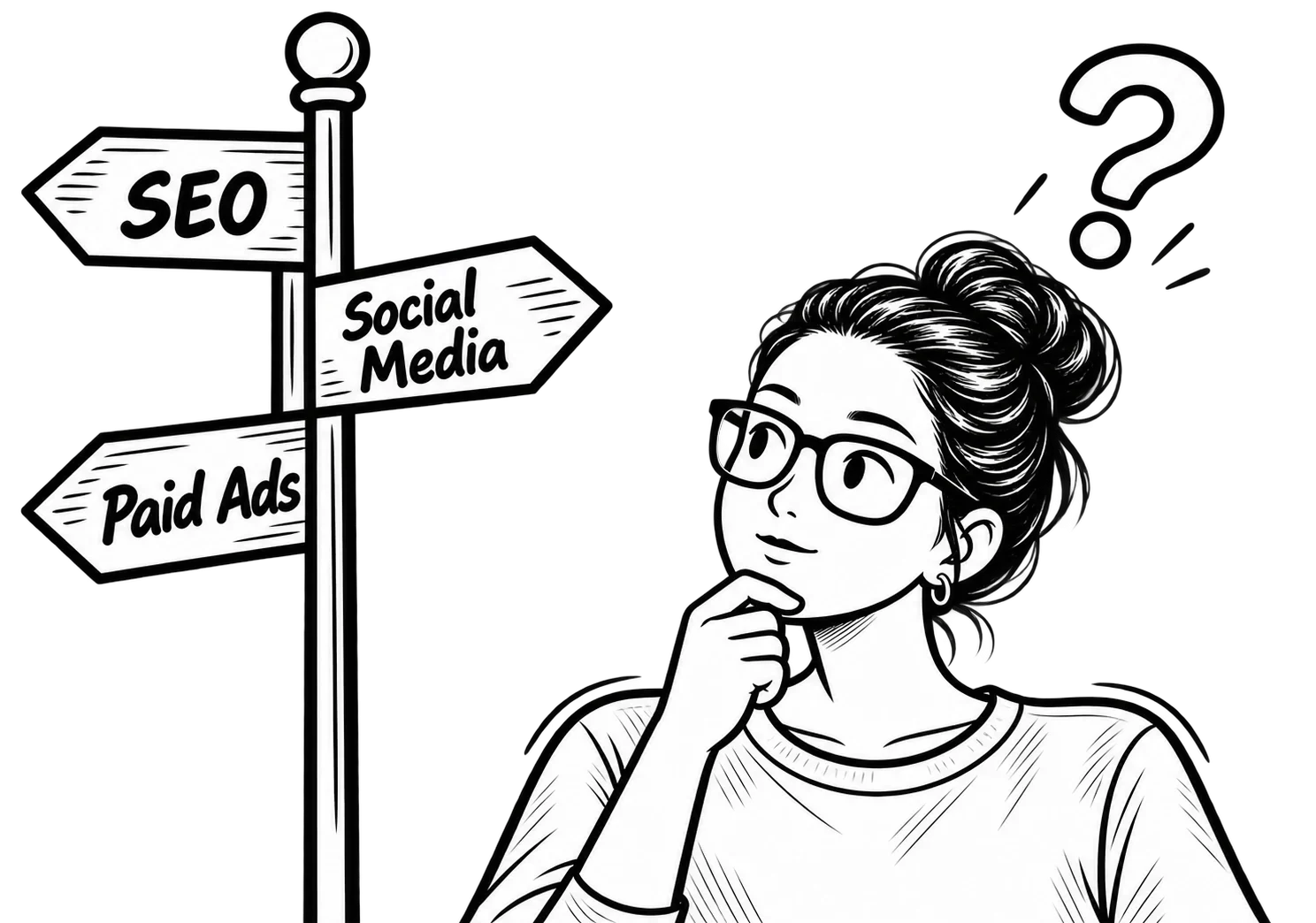
But here is the thing: content often struggles because there was never a real strategy underneath it.
Publishing without purpose is just noise.
Content supports long-term brand growth when it consistently communicates what your business stands for, answers meaningful customer questions, and gives people reasons to recognize and trust your brand over time.
That requires more than a publishing calendar. It requires a clear perspective, content worth returning to, and a way to evaluate whether the work is contributing to your business.
Why Most Content Never Gets Traction
A lot of companies approach content the same way they approach advertising: spend some, see what happens, repeat.
The problem is that content doesn’t always produce immediate, easily attributable results.
An article may introduce someone to your business months before they request a proposal. A useful email might help an existing customer understand another service. A social media post may reinforce something a potential buyer has already heard about your company.
Those interactions matter, even when they don’t produce a sale that afternoon.
But none of that means content deserves unlimited time or money simply because it might work someday.
You still need a strategy.
Consistency Is More Than Publishing Regularly
Publishing every Tuesday doesn’t automatically make your brand recognizable.
What matters is whether people consistently encounter the same level of quality, a recognizable perspective, and information that supports what your business actually offers.
When one article sounds authoritative, the next sounds like a sales pitch, and the third could have been written for any company in your industry, readers have little reason to remember who published them.
Consistency should reinforce your identity, not just fill your calendar.
That is how content begins to support brand recognition instead of becoming another collection of disconnected posts.
Build Your Content Strategy on Something Real
Before anyone opens a Google Doc or schedules a shoot, you need to know what your brand stands for and who you are genuinely trying to help.
That sounds basic, but it’s surprisingly easy to skip.
A business starts researching popular topics, reviews competitors’ blogs, and fills a calendar with subjects that seem relevant.
Six months later, it has plenty of content and very little that explains why someone should choose the company.
A more useful question is:
What does our ideal customer need to understand, and are we the right people to explain it?
That question helps define your content territory.
For example, a commercial HVAC company might create content about maintenance planning, equipment replacement decisions, energy efficiency considerations, and common operational problems.
Those topics connect to the company’s expertise and the decisions its customers need to make.
Publishing an unrelated article because a keyword tool suggests it might attract traffic is a different proposition.
Traffic without a relevant audience isn’t necessarily growth.
Make Your Brand Voice Recognizable
Your brand voice is not your logo or color palette. It is how your business thinks out loud in public.
It shapes how you explain problems, present recommendations, challenge assumptions, and communicate with customers.
A recognizable brand voice should carry across your website, blog, emails, and social media, even when different people create the content.
That doesn’t mean every channel needs identical wording.
A LinkedIn post may be more concise than a detailed website guide. An email may address an existing customer differently than an introductory article.
The expression can change while the brand’s perspective remains consistent.
For more on that distinction, read how to maintain brand consistency across channels.
Write About Questions Customers Actually Ask
One of the most useful sources of content ideas is already inside your business.
Your sales and customer service teams hear questions every day.
What do prospective customers misunderstand? Which objections come up repeatedly? What information do people need before they’re comfortable making a decision?
Those questions are often more valuable than another list of trending blog topics.
Google Search Console can also help you identify queries that bring people to your website, along with search impressions and clicks.
Use that information alongside customer conversations to understand where useful content may be missing.
The goal is not to publish something for every possible keyword. It’s to answer questions that matter to the people your business is trying to reach.
Evergreen vs. Timely Content: Why You Need Both
Evergreen content should form a substantial part of many content strategies.
These are articles, guides, and resources built around questions that remain relevant beyond a particular news cycle or campaign.
A guide explaining what website maintenance includes, for example, can remain useful long after publication.
But evergreen doesn’t mean permanent.
Software changes. Customer expectations change. Pricing, regulations, and technical practices change.
An article can address an evergreen topic and still contain outdated information.
What Evergreen Content Does Well
Evergreen content can help you:
- Answer recurring customer questions.
- Build a useful library of information.
- Support relevant search visibility.
- Provide resources for sales and customer service conversations.
- Create material that can be updated and reused.
These benefits depend on quality, relevance, accessibility, and ongoing maintenance. Publishing an article doesn’t guarantee that it will attract traffic for years.
When Timely Content Makes Sense
Timely content serves a different purpose.
A significant industry change, new regulation, platform update, or relevant market development may create a reason to publish something quickly.
But speed alone isn’t the objective.
Your business should have something useful to contribute.
A brief explanation of what changed, who it affects, and what customers should do can provide more value than another generic reaction to industry news.
A practical content strategy allows room for both.
Evergreen resources support recurring information needs. Timely pieces address meaningful developments when your expertise is relevant.
Depth Matters More Than Word Count
The internet has no shortage of articles that explain very little in a remarkable number of words.
AI-generated content has made producing large quantities of text easier, but producing more text is not the same as producing useful information.
Google’s guidance on creating helpful, reliable, people-first content emphasizes usefulness, originality, and content created to benefit readers rather than primarily manipulate search rankings.
That doesn’t mean Google rewards a particular word count or that every short article outperforms a long one.
Length should follow the question you’re answering.
A focused explanation may need 700 words. A detailed comparison of software platforms may require significantly more.
Neither becomes better simply because someone added another thousand words.
Give Readers Something Specific
Strong content goes beyond repeating definitions.
It explains tradeoffs, identifies mistakes, answers follow-up questions, and helps readers understand what to do next.
For example, an article about choosing a website platform becomes more useful when it explains how hosting, customization, maintenance, and ongoing costs affect the decision.
An article that only lists platforms and describes each one as “powerful” or “user-friendly” gives the reader very little to work with.
Before publishing, ask:
- Does this answer a question our customers actually have?
- Is the information accurate and specific?
- Does it reflect our expertise or perspective?
- Are we explaining important limitations and tradeoffs?
- Would someone be better informed after reading it?
If the answers aren’t clear, the content probably needs more work.
Not necessarily more words.
Your Website Has to Support the Content
A useful article still needs a website that people can navigate.
If visitors can’t find your services, follow relevant links, or contact your business, content has a limited opportunity to contribute to growth.
Technical SEO, navigation, mobile usability, and internal linking provide the infrastructure.
This is why content strategy and website strategy shouldn’t operate independently.
Connect Information to Relevant Next Steps
A blog post may help someone understand a problem before they’re ready to buy.
When they want more information, the website should make the next step clear.
That might involve another relevant article, a service page, a comparison guide, or an opportunity to contact the business.
Not every paragraph needs a sales pitch.
A useful internal link should help the reader continue a logical path, rather than interrupt the article to promote something unrelated.
Our article on the evolution of blogging and what it means for your brand explains how blogging connects to search visibility and broader marketing goals.
Fix Technical Issues That Limit Access
Slow pages, broken navigation, inaccessible content, and indexing problems can affect the usefulness and discoverability of your articles.
Use Google’s SEO Starter Guide to review foundational practices such as crawlability, site structure, and useful content.
Technical improvements won’t guarantee rankings.
But publishing more articles while important pages remain inaccessible is not a particularly efficient use of your content budget.
Build a Content Calendar Around Priorities
A content calendar should help execute a strategy, not become the strategy itself.
Start with a small number of topics that connect your expertise to your customers’ questions.
For each planned piece, define its purpose.
For example:
| Content Type | Primary Purpose | Example |
|---|---|---|
| Educational guide | Help customers understand a recurring problem | How to evaluate website maintenance needs |
| Service-focused article | Support a business decision | What to consider before a website redesign |
| Timely industry update | Explain a meaningful change | How a new platform requirement affects website owners |
| Customer resource | Support existing customers | A checklist for preparing website content |
You don’t need to publish all four types every month.
Choose what your audience needs and what your team can produce well.
If your resources only support two useful articles per month, that’s a better starting point than committing to eight and spending the following weeks rushing to fill the schedule.
Measure Whether Your Content Is Building Something Valuable
Long-term content performance cannot be reduced to a single metric.
Organic search traffic may tell you whether people are discovering your articles through Google.
Returning visitors may suggest continued interest. Branded searches may indicate growing awareness.
But none of those measurements proves that a specific article created a new customer or caused someone to trust your business.
To evaluate content properly, connect visibility and engagement to meaningful actions.
What Should You Measure?
Start with the purpose of each piece.
For content intended to attract new visitors, review relevant search queries, impressions, and traffic trends.
For content intended to support consideration, look at whether readers continue to relevant service pages or resources.
For content supporting lead generation, examine inquiries and conversions associated with the content, recognizing that attribution may be incomplete.
Also pay attention to qualitative signals.
Are customers referencing your articles in conversations? Is the sales team regularly sharing a particular guide? Are readers asking questions that suggest the content is useful but incomplete?
Those findings can inform future improvements.
Review Content Before Producing More
Your best opportunities may already exist on your website.
Before filling the next content calendar, review what you’ve published.
Identify articles with outdated information, overlapping topics, weak internal links, or opportunities to answer a question more thoroughly.
An article that still addresses a useful customer need may deserve an update rather than a replacement.
And a poorly performing article isn’t automatically worthless. It may need a clearer audience, a better explanation, stronger distribution, or a different role in your content strategy.
The point is to make decisions based on evidence rather than treating every new post as another box to check.
Repurpose Content Without Repeating Yourself
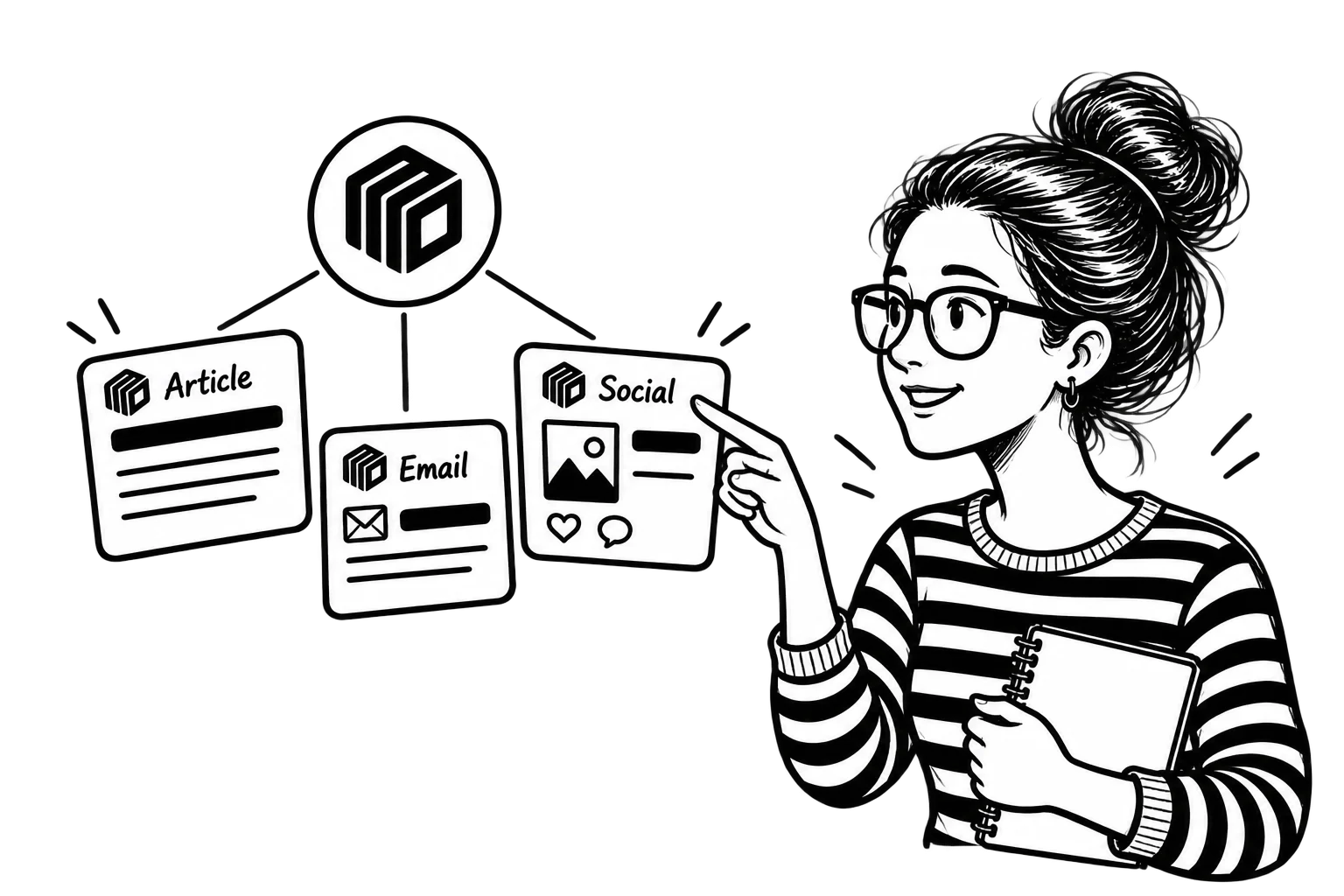
A useful piece of content can support several channels.
One detailed article might become:
- A short email highlighting its most important recommendation.
- A LinkedIn post explaining one common mistake.
- A brief video answering a related question.
- A downloadable checklist that helps readers take action.
But repurposing should involve more than copying the same paragraphs into a different format.
Each channel has its own context and audience expectations.
A social post may need one practical takeaway. An email may need a reason for existing subscribers to care. A video may work better as a demonstration than a spoken version of the entire article.
Keep the underlying message consistent while adapting the presentation.
That is how you get more value from good work without simply increasing the amount of content your team has to maintain.
Long-Term Brand Growth Requires a Long-Term Content Strategy
Content can contribute to brand growth by helping customers understand your expertise, recognize your perspective, and make more informed decisions.
But none of that happens simply because your business publishes regularly.
Start with what your brand stands for and what your customers need to know.
Build a manageable collection of useful content. Keep the voice consistent, connect articles to the rest of your website, and review performance before deciding what to create next.
Most importantly, treat your existing content as something worth improving.
Publishing more is not always the answer.
Sometimes the better investment is making what you’ve already published genuinely useful.
If your business needs help connecting content strategy, SEO, and website performance, explore MoDuet’s SEO and content marketing services to build an approach that supports your long-term goals.