Share this article

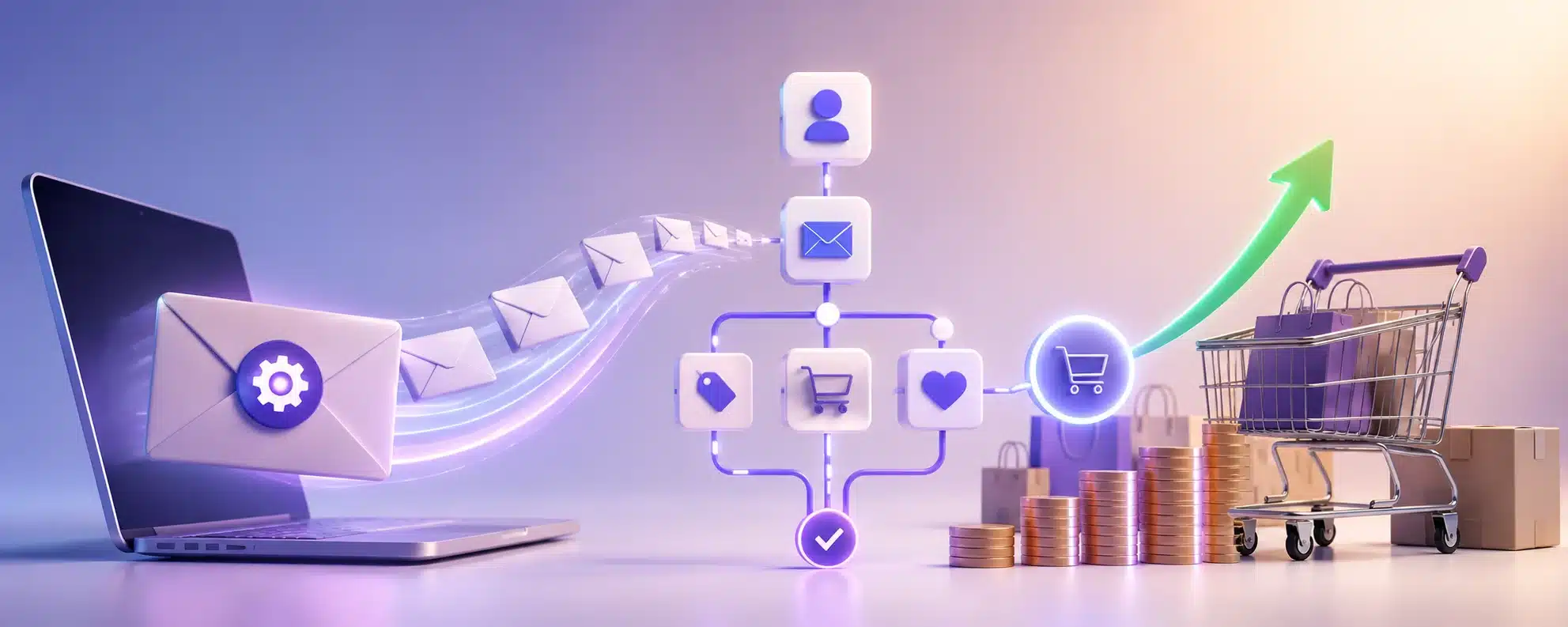
Getting traffic to your online store is one thing. Actually turning those visitors into paying customers, and then keeping them coming back, is where most businesses struggle. Email automation is one of the most powerful tools you have for solving that problem, yet a surprising number of e-commerce brands are either ignoring it entirely or only using a fraction of what it can do.
Let’s change that.

Why Email Automation Deserves Your Attention
Here’s something worth thinking about. Social media reach is unpredictable. Ad costs keep going up. But your email list is yours. Nobody can take it away, throttle it, or charge you more to reach the people already on it. That’s a rare kind of stability in digital marketing, and it’s one of the reasons email consistently delivers some of the strongest returns of any channel.
What separates basic email marketing from automation is timing. An automated email isn’t just a message. It’s the right message sent at the exact moment a customer is most likely to respond to it. That’s why a well-built automated sequence can pull open rates that feel almost embarrassingly good compared to a standard broadcast email.
The Sequences That Actually Move the Needle
Welcome Series
When someone joins your list, their interest in your brand is at its peak. It’s fleeting, so you have to act on it. A welcome series, usually three to five emails spread over the first week or two, gives you a window to tell your story, introduce your best products, and start building the kind of trust that eventually turns into a purchase.
Picture two skincare brands side by side. One sends a generic “thanks for subscribing” and goes quiet. The other follows up with the founder’s backstory, then a helpful guide to finding the right products, then a modest discount for first-time buyers. You already know which one gets the sale.
Abandoned Cart Recovery
About 70 percent of online shopping carts never make it to checkout. That number sounds alarming until you realize what it actually represents: a massive pool of warm leads who were genuinely interested in what you sell. They just needed a nudge.
A simple three-email sequence handles this well. Send a friendly reminder within the first hour. Follow up a day later with something that addresses common hesitations, shipping costs, return policies, that kind of thing. If they still haven’t converted, a third email with a small incentive often does the trick. The tone matters here. “Hey, you left something behind” feels very different from a countdown timer screaming at someone to buy immediately. One builds trust. The other erodes it.
Post-Purchase Follow-Up
A lot of e-commerce brands treat the sale as the finish line. It isn’t. It’s actually the starting point of the customer relationship, and what you do in the days after someone buys from you shapes whether they ever come back.
Order confirmation and shipping updates are the basics. But the brands that really nail post-purchase automation go further. They follow up after delivery to check in, suggest complementary products based on what was purchased, and invite customers to leave a review. Someone who just bought a pour-over coffee maker probably wants to know about your single-origin beans or your brewing guides. That kind of thoughtful follow-up turns a transaction into a relationship.
Re-Engagement Campaigns
Every list has a graveyard section. Subscribers who opened everything six months ago and have gone completely silent since. Before you write them off, run a re-engagement sequence. Two or three emails acknowledging the gap, offering something worth coming back for, and giving people a clear way to opt out if they’re done goes a long way. You’ll win back some of them, and the ones you don’t will at least stop dragging down your deliverability metrics.
Personalization Is Where the Real Leverage Lives
Using someone’s first name in a subject line is not personalization. It’s table stakes. The brands seeing outsized results from email automation are segmenting their lists based on real behavior: what people bought, what they browsed, where they live, how long they’ve been a customer. A first-time buyer gets a very different message than someone who has ordered ten times.
The good news is that most modern email platforms make this kind of segmentation genuinely accessible. You don’t need a developer or a data team. What you do need is a clear strategy and content that’s actually worth sending. That’s where a lot of businesses get stuck, not in the technology, but in figuring out what to say and to whom.
Your Website Has More to Do with This Than You Think
Here’s something that doesn’t get talked about enough. Email automation can do everything right and still underperform if it’s sending people back to a website that loads slowly, looks rough on mobile, or has a checkout process that creates friction at every step. The automation gets the customer to the door. Your site has to close the deal.
This is why the most successful e-commerce businesses think about their digital presence as one connected system rather than a collection of separate tactics. Strong email strategy, clean web design, good product content, and consistent branding all reinforce each other. Invest in one while neglecting the others and you’ll always be leaving something on the table.
How to Know If It’s Working
Open rates tell you whether your subject lines are doing their job. Click-through rates tell you whether your content is compelling enough to act on. But the number that really matters is revenue per email. That’s the figure that connects your automation efforts directly to your business results.
Test one thing at a time. Subject line variations, send timing, call to action copy, even the length of your emails. Small changes in an abandoned cart sequence can meaningfully shift your recovery rate. Document what you learn and build on it. Over time, those incremental improvements add up to something significant.
Let’s Build Something That Works
Email automation done well is not about setting up a few templates and calling it a day. It’s about understanding how your customers move through the buying process and showing up for them at exactly the right moments with exactly the right message. That takes strategy, good writing, and a willingness to keep improving over time.
If you’re ready to build an email program that’s connected to a broader approach, one that includes your website, your content, and your brand, MoDuet works with businesses that are serious about growing. Reach out whenever you’re ready to talk.

We Want To Talk To You About Your Marketing Goals.
Let’s Supercharge Your Online Growth!
By submitting the form, you agree to the Terms of Service and Privacy Policy
We Want To Talk To You About Your Marketing Goals.
Let’s Supercharge Your Online Growth!