Best WordPress Plugins for Business Websites: What You Actually Need
Best WordPress Plugins for Business Websites: What You Actually Need
The best WordPress plugin stack is not the longest one. Learn which types of plugins business websites actually need, how to choose reliable tools, and when adding another plugin creates more problems than it solves.


WordPress plugins can add almost any functionality you can imagine to a website. SEO tools, forms, backups, security, caching, image optimization, marketing integrations, custom content, ecommerce features, and thousands of other options are only a few clicks away.
That flexibility is one of WordPress’s biggest strengths.
It can also become a problem.
A business website does not need dozens of plugins simply because they are available. Every plugin adds another piece of software that needs to be maintained, updated, monitored, and kept compatible with the rest of the site.
The goal is not to build the longest plugin list.
The goal is to create a reliable WordPress setup where every plugin has a clear job.
The Best WordPress Plugins Are the Ones Your Website Actually Needs
There is no universal list of plugins that belongs on every WordPress website.
A local service business, an ecommerce store, a nonprofit, and a membership website may all run on WordPress while requiring completely different functionality.
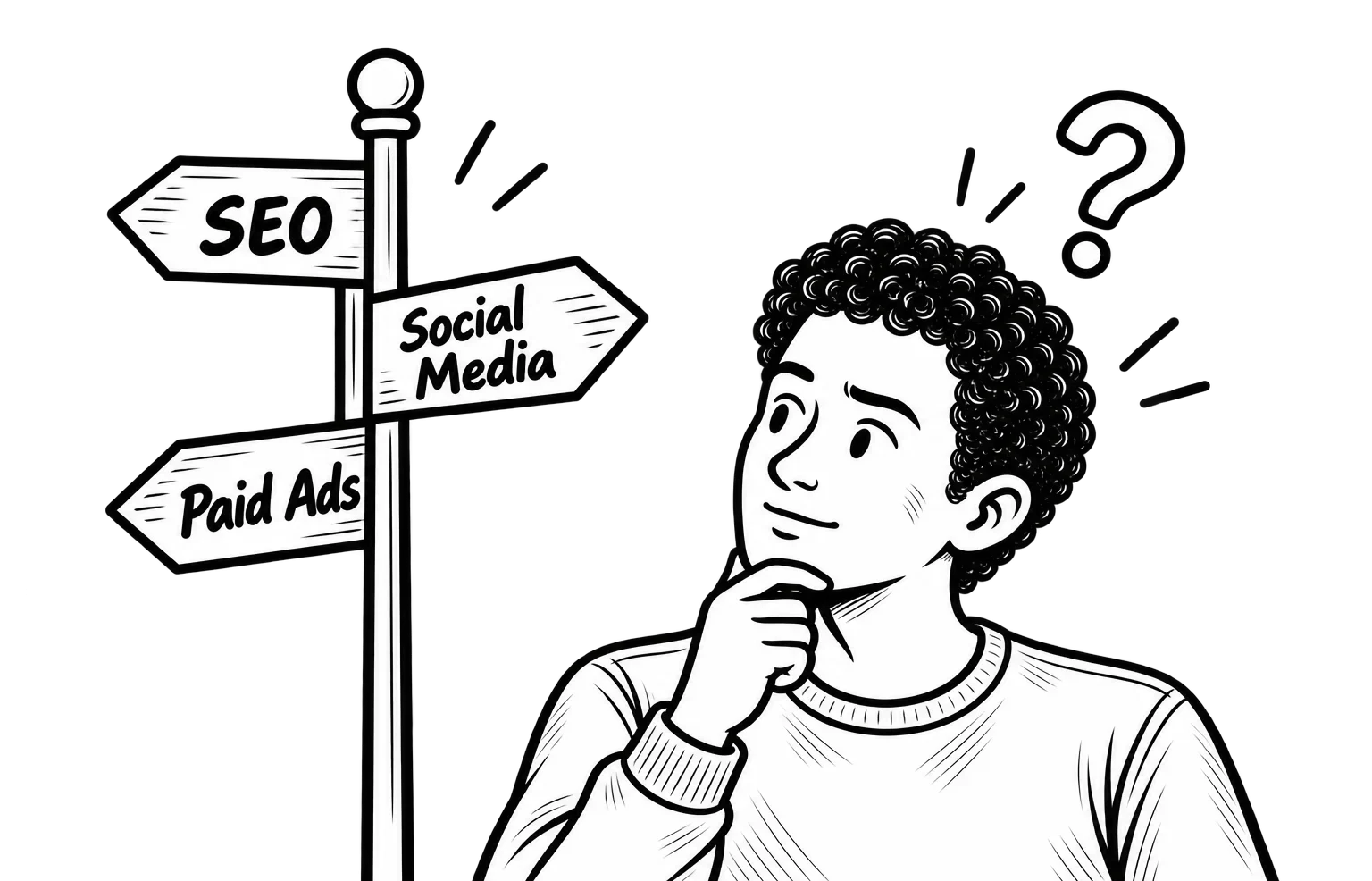
Before installing a plugin, start with the problem you are trying to solve.
Do you need to:
- Manage SEO settings?
- Improve website performance?
- Protect the website from common security threats?
- Build advanced forms?
- Create reliable backups?
- Compress and optimize images?
- Connect WordPress to a CRM or email platform?
- Add custom content or functionality?
- Improve accessibility?
Once you know what the website actually needs, you can choose the right tool instead of collecting plugins that overlap or sit unused.

SEO Plugins
An SEO plugin helps manage many of the technical and on-page elements that search engines use to understand your website.
Depending on the plugin, that can include:
- SEO titles and meta descriptions
- Canonical URLs
- XML sitemaps
- Robots directives
- Social sharing metadata
- Structured data
- Indexing controls
The important thing is to choose one primary SEO plugin and configure it correctly.
The SEO Framework, Yoast SEO, and Rank Math are examples of established options with different interfaces and feature sets. You do not need multiple SEO plugins trying to control the same metadata.
An SEO plugin also does not create an SEO strategy for you.
It can help manage the technical implementation, but search visibility still depends on useful content, search intent, website structure, internal linking, performance, authority, and the overall quality of the website.
Performance and Caching Plugins
Performance plugins can help reduce the amount of work required to load a WordPress page.
For example, WP Rocket can handle page caching and several other performance optimizations that reduce unnecessary processing and help pages load more efficiently.
But performance is one area where adding more plugins can easily backfire.
Your hosting environment may already include server-level caching or other optimization features. Running multiple caching and optimization systems without understanding how they interact can create conflicts instead of improving performance.
Before adding a caching plugin, find out what your host already provides.
Then measure the website.
Use real performance data to identify the problem before adding another optimization tool.
Security Plugins
A WordPress security plugin can add useful protection and monitoring to a website.
Wordfence, for example, includes features such as firewall protection, malware scanning, login security, and two-factor authentication.
Security plugins can be valuable, but they should be part of a larger security strategy.
A security plugin does not replace:
- Keeping WordPress core updated
- Updating themes and plugins
- Using strong passwords
- Limiting administrator access
- Using multi-factor authentication
- Maintaining reliable backups
- Monitoring the website
- Using secure hosting
Security is a system, not something you solve by installing one plugin.
Forms and Lead Generation
Most business websites need a way for visitors to take action.
That may be a simple contact form, but it can also include:
- Quote requests
- Appointment requests
- Conditional forms
- Surveys
- File uploads
- Registrations
- Payment forms
- Lead qualification
- Multi-step forms
For sites that need more than a basic contact form, Gravity Forms provides a flexible foundation for building advanced forms and connecting them to other systems.
Again, avoid unnecessary overlap.
If your website already has a form platform that handles what you need, adding another form builder usually creates more work rather than more value.
Backups and Migration
A backup is only useful if it is current, complete, stored somewhere safe, and can actually be restored.
Some managed hosting providers and website management platforms already handle backups. If yours does, verify how frequently backups run, how long they are retained, where they are stored, and how restoration works.
If you need a WordPress-based backup solution, tools such as UpdraftPlus can schedule backups and send copies to remote storage.
Migration tools can also be useful when moving a WordPress website between hosting environments. All-in-One WP Migration is one example designed to simplify exporting and importing WordPress installations.
You may not need either plugin permanently installed if those functions are already handled elsewhere.
Image Optimization Plugins
Large images can quietly become one of the biggest performance problems on a website.
Image optimization tools such as Imagify or Smush can help compress images and reduce unnecessary file size.
But a plugin cannot completely compensate for poor image practices.
You should still:
- Upload images at appropriate dimensions
- Avoid unnecessarily huge files
- Use modern web-friendly formats when appropriate
- Choose the right image for the space where it will appear
- Add meaningful alt text when an image conveys information
Image optimization works best as part of the publishing workflow, not as an emergency fix after hundreds of oversized images have accumulated.
Custom Fields and More Complex Websites
Not every WordPress site fits neatly into standard pages and blog posts.
A business may need structured information for things like:
- Team members
- Locations
- Properties
- Services
- Events
- Resources
- Products
- Case studies
- Directories
Advanced Custom Fields (ACF) can be useful when a website needs additional structured fields that editors can manage without manually changing layouts or code.
This is a good example of a plugin that can be extremely valuable on the right website and completely unnecessary on another.
Do not install advanced functionality unless the website actually needs it.
Marketing and CRM Integrations
WordPress can connect with the systems your business already uses for marketing, sales, and customer communication.
Platforms such as HubSpot and Mailchimp offer WordPress integrations that can help connect forms, contacts, email lists, analytics, and other marketing activity.
But the same principle applies here.
Install an integration because it supports an existing marketing process, not because it appears on a list of recommended plugins.
If your forms or website already send data directly to the platform you use, an additional plugin may not be necessary.
Accessibility Tools
Accessibility plugins can help identify or address certain common website accessibility issues.
For example, WP Accessibility provides tools designed to improve specific accessibility problems within WordPress.
That does not mean installing an accessibility plugin automatically makes a website accessible or compliant with every applicable standard.
Accessibility also depends on how the website itself is designed and maintained, including:
- Color contrast
- Keyboard navigation
- Form labels
- Heading structure
- Link context
- Image alternatives
- Focus states
- Video captions
- Content structure
- Interactive components
Use accessibility tools as part of the process, not as a substitute for accessible design and development.
What About Page Builders?
Elementor and other page-building tools have appeared on plenty of “must-have plugin” lists over the years.
But a page builder is not something every WordPress site needs to install.
If your website is already built with Avada, Elementor, Divi, Gutenberg, or another established building system, adding a second builder just because someone recommended it can create unnecessary complexity.
The builder is part of the website’s foundation.
Treat it differently from a small utility plugin.
Adding or replacing one should be a deliberate architectural decision, not an impulse installation.
Free vs. Paid WordPress Plugins: When Is Premium Worth It?
Free does not automatically mean limited, and paid does not automatically mean better.
The right choice depends on what the website needs.
Start With the Functionality
If the free version reliably handles everything you need, there may be no reason to upgrade.
Premium versions become more valuable when they provide functionality your business will actually use, such as:
- Advanced integrations
- Automation
- Additional customization
- More sophisticated workflows
- Premium support
- Better management tools
- Features that save significant staff time
Consider the Cost of Your Time
A free plugin that requires constant workarounds may ultimately cost more than a paid tool that does the job correctly.
For a business website, price should be considered alongside reliability, support, maintenance, and the amount of time the tool saves.
Pay for the Problem You Need Solved
Do not upgrade simply because a plugin keeps showing you premium features.
Know what problem the paid version solves before purchasing it.
How to Choose a WordPress Plugin
The WordPress ecosystem is enormous, and two plugins that appear to provide the same feature can be very different behind the scenes.
Before installing one, review several things.
Is It Actively Maintained?
A plugin that has been abandoned can eventually create compatibility or security problems.
Check whether development is active and whether the plugin supports current WordPress versions.
Does It Have a Good Reputation?
Look beyond the overall star rating.
Review user feedback, support activity, documentation, and the reputation of the developer or company maintaining the plugin.
Does It Duplicate Something You Already Have?
This is one of the easiest mistakes to make.
You generally do not need:
- Two SEO plugins managing metadata
- Several caching plugins
- Multiple security suites doing the same job
- Two page builders
- Several form plugins
- Multiple backup systems running without a reason
Overlap increases complexity.
What Will Happen If You Remove It?
Some plugins provide temporary functionality.
Others become deeply integrated into the content or architecture of a website.
Before depending heavily on a plugin, understand what happens to your content, forms, layouts, or data if you eventually stop using it.
Does Your Hosting or Existing Stack Already Handle It?
Caching, backups, security, image optimization, staging, redirects, and other functionality may already exist elsewhere in your website stack.
Do not install another plugin until you know what is already being handled.
Do Not Install a Plugin Just Because You Can
WordPress makes installing plugins extremely easy.
Removing the consequences of years of unnecessary plugins is much less easy.
Over time, websites often accumulate plugins because someone needed one feature, tested something, switched tools, or forgot what an old plugin was doing.
That creates technical debt.
Review your plugin list periodically and ask:
- Do we still use this?
- What does it actually do?
- Is another tool already doing the same thing?
- Is it still maintained?
- Would removing it break anything?
- Is it creating unnecessary performance or security risk?
If nobody knows why a plugin exists, that is a good reason to investigate it.
Not necessarily delete it immediately, but investigate it.
Final Thoughts
The best WordPress plugin setup is not the one with the most features.
It is the one that gives your website the functionality it needs without unnecessary complexity.
Choose a strong tool for each real requirement. Avoid overlapping plugins. Keep everything maintained. Understand what your hosting and existing technology stack already provide. And review the setup as your business and website evolve.
WordPress plugins are powerful because they allow your website to grow.
The key is making sure every plugin you add helps it grow in the right direction.